




Ask ten day traders which platform is "the best" and you will get ten different answers, and most of them will be wrong for you specifically. A scalper trading EUR/USD 500 times a week is not even close to a part-time trader checking out a crypto chart over lunch, but both make it into the same "top 10 brokers" lists every year. That approach is misguided. A trading platform is not a product you rank on a scale of one to ten. It is a tool that either fits your workflow or gets in its way.
U.S. listed options volume alone hit 15.2 billion contracts in 2025, a 26% jump over the previous record, with average daily volume around 61 million contracts. That kind of activity is a reminder that execution conditions change fast, and a platform that felt smooth in a quiet market can behave very differently once volume spikes. So instead of another ranked list, here is a breakdown of what separates a genuinely useful day trading setup from a pretty interface with a demo account attached.
What a day trading platform actually is
A long-term investing app and a day trading platform solve different problems. An investing app wants you to deposit, buy, and forget. A day trading platform needs to get you from chart to order ticket in seconds, show you live spread and margin data, and stay responsive when a hundred other traders are hitting the same order book at once.
It also helps to separate the platform from the broker behind it. The platform is the software you look at and click through. The broker is the entity that actually provides market access, sets your spreads, holds your funds, and decides which products you can trade. TradingView is a good example of why this distinction matters: it is a charting and screening tool used by millions of traders, but it is not a broker by default, and live execution still runs through a connected broker such as Vantage Markets or another supported provider. A brilliant chart with no execution behind it is just a picture.
The "type" of platform matters too. CFD platforms such as Pepperstone, Vantage Markets, or IC Markets give you leveraged exposure to forex, indices, and commodities without owning the underlying asset. Stock and options brokers like Charles Schwab's thinkorswim, TradeStation, or Interactive Brokers connect you to real exchanges with different margin rules entirely. Futures-capable platforms add contract expiries and standardized sizing into the mix. Crypto trading sits apart from all of it because exchanges never close and liquidity is scattered across dozens of venues instead of concentrated on one order book.
The questions that actually decide whether a platform works for you
Skip the marketing copy and ask four things. First, how fast does an order actually fill, and does the price you see match the price you get? Second, what is the real all-in cost per trade once spread, commission, and any swap or overnight fee gets added up? Third, can the platform handle real position sizes in the market you trade without the price moving against you before the order fills? Fourth, does it give you tools to control the downside, not just to chase the upside?
That third point, liquidity, is the entire game in crypto, but people comparing forex or CFD brokers constantly ignore it. A 2025 liquidity study, "Kaiko Research," covering centralized and decentralized exchanges found that market depth for stablecoin-to-fiat pairs on Binance was consistently shallower than crypto-to-crypto pairs, with roughly five million euros of depth within a 1% band for EUR-USDT compared to fifteen million dollars for BTC-USDT. The same study modeled a hypothetical trade of one million USDC into ETH on Uniswap V3 and found slippage swinging between 0.05% and nearly 5% depending on the day, driven almost entirely by how much the underlying asset had moved. Depth is not a side detail. It decides whether your entry price and your fill price are the same number.
IC Markets and Pepperstone for traders who live and die by execution
If your strategy depends on capturing a handful of pips several times a day, spread and fill speed matter more than anything else on this list. IC Markets runs an ECN-style model that connects directly to liquidity providers, with spreads that can run from 0.0 pips plus a per-lot commission. Pepperstone's Razor account works on a similar structure and supports MT4, MT5, cTrader, and TradingView, which suits traders who already have an automation setup they do not want to rebuild. Neither is beginner-friendly pricing, since the commission adds up fast if you are not trading often enough to justify it.
Interactive Brokers for traders who need real market breadth
Interactive Brokers is built differently from the CFD brokers above. Its Trader Workstation connects to more than 170 markets worldwide, covering stocks, options, futures, currencies, and bonds from a single account. That is genuinely useful if your day involves comparing an equity index future against a sector ETF before deciding where the liquidity actually is. The tradeoff is a steep learning curve; this is not a platform you open for the first time an hour before market open.
Mitrade and Vantage Markets for a simpler entry point
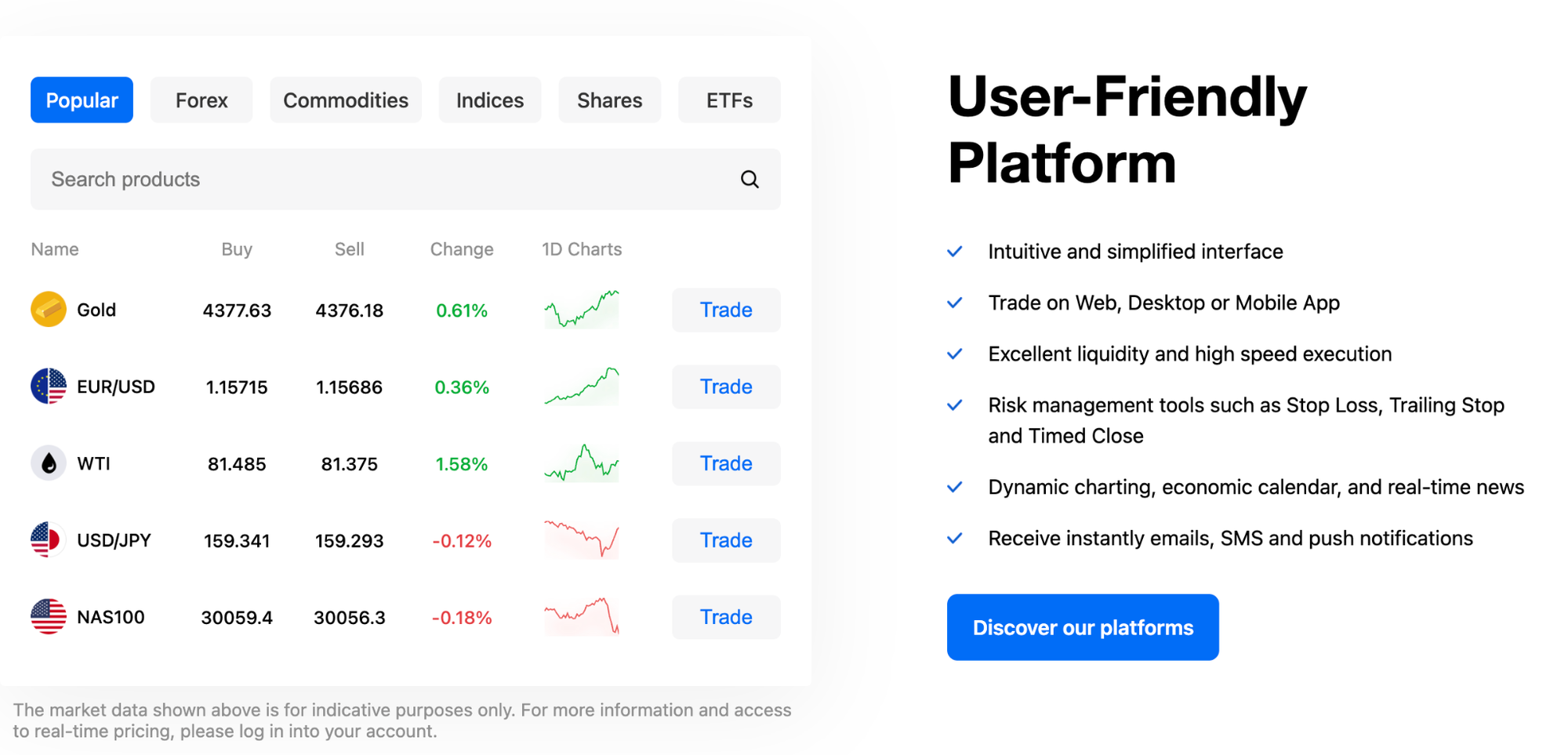
Not everyone wants a professional trading desk. Mitrade bundles charting, execution, and risk tools into one mobile-first screen, with a minimum deposit as low as AU$50 and a demo account that starts with AU$50,000 in virtual funds. Vantage Markets takes a broader approach, offering the same CFD instruments across MT4, MT5, TradingView, and its own web and mobile apps, letting a trader test several charting environments without opening separate broker accounts. Both are reasonable starting points, but CFD trading is leveraged trading no matter how simple the interface looks.
TradingView and Webull for research before you risk anything
TradingView earns its reputation as a charting and alerts engine, with Pine Script, screeners, and broker integrations layered on top of a genuinely large social network of traders sharing ideas. Webull leans harder into paper trading, letting users simulate stocks, ETFs, options, and futures in live market conditions before committing real capital. Paper trading has a real limit, though: it cannot reproduce the emotional pull of watching your money move, and traders who skip that step often get a rude surprise the first time a live trade goes against them.
Fees quietly decide who actually makes money
The spread you see advertised is rarely the full cost. A standard account with no commission can still cost more per trade than a raw ECN account with a $3.50 per-lot commission, depending on how often you trade. Inactivity fees, currency conversion charges, and overnight swap costs on leveraged positions all reduce returns that may look fine on paper. The crossover point between a commission-based account and a spread-based one depends entirely on your trading frequency, not on which account type sounds cheaper.
Regulation and risk tools are not optional extras
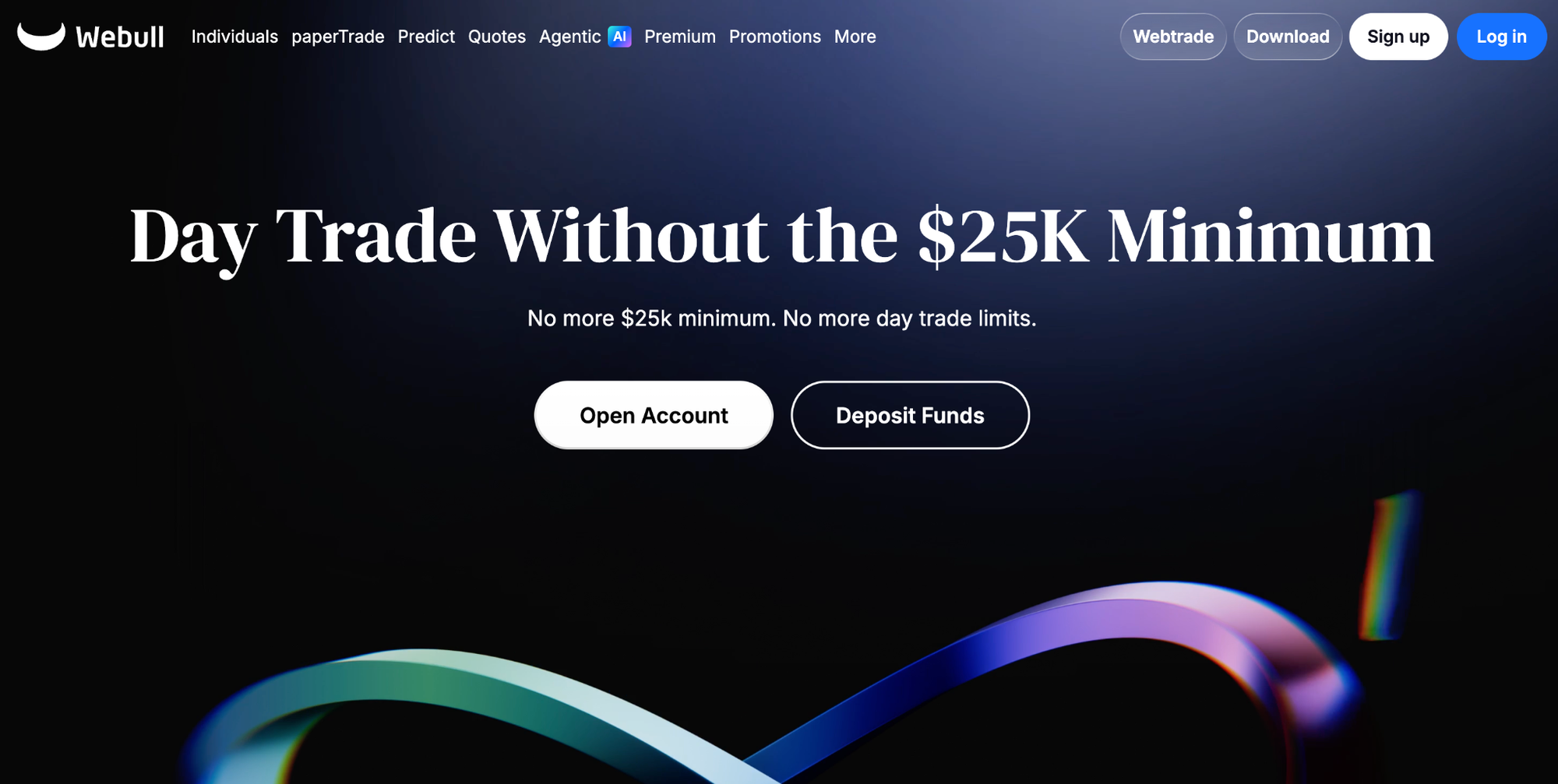
In the U.S., FINRA approved new intraday margin standards in April 2026, effective from June 4, replacing the old pattern day trader framework and removing the $25,000 minimum equity requirement and the trade-count-based PDT designation, though firms still monitor accounts against intraday margin rules. Outside the U.S., regulators like ASIC, the FCA, and CySEC require segregated client funds and impose leverage caps, and tools like negative balance protection or AvaTrade's AvaProtect exist specifically to cap how much a bad trade can cost you. None of this guarantees profit. It just means the platform is not the reason you lose money.
Where most day traders actually go wrong
The recurring mistake is not picking the wrong broker. It is picking a broker before deciding what you are actually trading and how often. A trader chasing tight EUR/USD spreads on an ECN account while placing three trades a week is paying for infrastructure they never use. A crypto trader ignoring order book depth during a volatile hour is the same story as the Uniswap slippage example above, just with real money instead of a hypothetical million tokens. And a beginner who skips the demo account entirely, convinced their strategy is obviously correct, tends to relearn every lesson in this guide the expensive way.
 Gunel Ismayilova
Disclaimer: All materials on this site are for informational purposes only. None of the material should be interpreted as investment advice. Please note that, despite the nature of much of the material created and hosted on this website, HODL FM operates as a media and informational platform, not a provider of financial advisory services. The opinions of authors and other contributors are their own and should not be taken as financial advice. If you require advice, HODL FM strongly recommends contacting a qualified industry professional.