


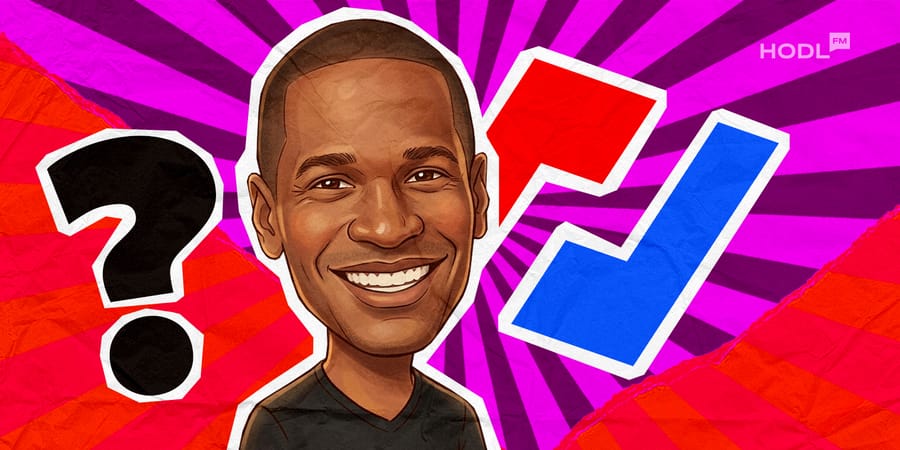



Arthur Hayes co-founded BitMEX in 2014 and invented the perpetual swap contract, the derivative instrument that now accounts for the majority of global crypto trading volume. He pleaded guilty to a federal compliance charge in 2022 and paid a $10 million personal fine. President Donald Trump pardoned him in March 2025. Today he runs Maelstrom, a family office fund, and publishes macro essays that a large section of the crypto market actively trades on.
If you have spent any time in crypto and wondered where perpetual swaps came from, or why 100x leverage is a standard feature on major exchanges, the answer traces back to Hayes and BitMEX. His net worth is estimated between $200 million and $300 million, based on Arkham data, his residual equity stake in BitMEX, and the Maelstrom fund.
The Wall Street years that made Hayes
Hayes was born in 1985 in Detroit, Michigan, to parents who worked for General Motors. His family later relocated to Buffalo, New York, where he attended the Nichols School, a private preparatory school, before he graduated from the Wharton School of the University of Pennsylvania in 2008 with a Bachelor of Science in economics.
He moved to Hong Kong immediately after graduation to join Deutsche Bank as an equity derivatives trader and head ETF market maker, a role he held from 2008 to 2011. After Deutsche Bank, he joined Citibank as a Delta One trader until Citibank laid him off in 2013. By then, Hayes had five years of direct experience with derivative instruments in one of the world's most active financial centers.
The crypto market in 2013 had genuine price action but no professional-grade leverage infrastructure. Spot exchanges existed and basic futures were available on a handful of platforms, but traders had no way to maintain continuous leveraged exposure without the friction of contract expirations and rollovers. Hayes identified that gap from a derivatives background and had the technical tools to design a solution.
The perpetual swap that changed everything
In 2014, at 28, Hayes co-founded BitMEX with Ben Delo and Samuel Reed. The exchange launched in November 2014 and introduced a product with no equivalent anywhere in the market: the perpetual swap contract. Unlike traditional futures, it had no expiration date, which removed the rollover burden that made those instruments awkward for crypto traders. A funding rate mechanism kept the contract price anchored to the underlying spot market through periodic payments exchanged between long and short position holders. Maximum leverage was set at 100x.
The product attracted adoption quickly. By 2019, BitMEX reported $1 trillion in annual trading volume and held a 57% share of the global crypto derivatives market, ahead of Deribit and the CME Group. TokenInsight data from 2025 shows that perpetual swap volume still outpaces spot trading by a factor of four to six times across major exchanges. The format Hayes built in 2014 became the standard for directional crypto positions.
The Bank Secrecy Act case
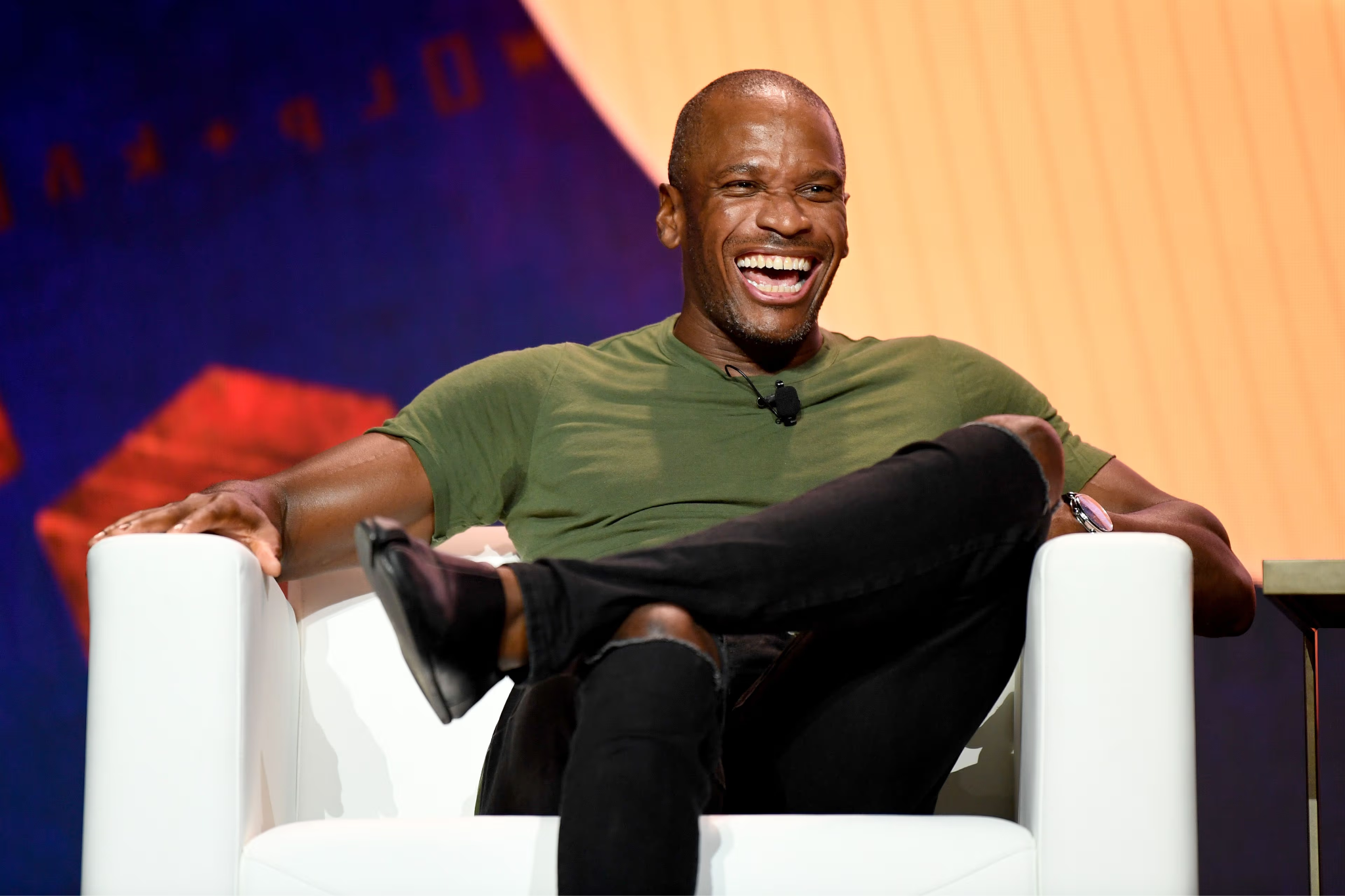
In October 2020, the U.S. Department of Justice and the Commodity Futures Trading Commission indicted Hayes alongside co-founders Delo and Reed, and Gregory Dwyer, BitMEX's head of business development and first employee. The charge was specific: BitMEX had not implemented the anti-money laundering program required by the Bank Secrecy Act. That law requires covered businesses to report transactions above $10,000 and to verify client identities through Know Your Customer procedures. Prosecutors said BitMEX had served thousands of U.S.-based customers on a platform not registered in the United States, with many using virtual private networks to conceal their locations. BitMEX became the first crypto exchange charged under that statute.
Hayes stepped down as CEO immediately after the indictment. He surrendered to U.S. authorities in Hawaii in April 2021 and pleaded guilty on February 24, 2022, to willfully failing to establish and maintain an adequate anti-money laundering program at BitMEX.
The court sentenced him to six months of home confinement and two years of probation. He paid a $10 million personal fine. BitMEX settled separately with the CFTC for $100 million without admitting or denying the charges, as reported by the Wall Street Journal. Hayes had no prior criminal record and a documented history of charitable giving, including a $2.24 million donation to the Jackie Robinson Foundation Scholars program in 2019, described at the time as the largest-ever gift from a program alumnus. On March 29, 2025, President Donald Trump granted a full federal pardon to Hayes and his three co-defendants.
What Hayes does now
Hayes began writing publicly on Medium in early 2021 with his first piece on the GameStop saga, then later cross-posted to Substack. His tone is direct and his recurring thesis holds that persistent credit expansion and fiat debasement will eventually push capital toward Bitcoin and other supply-constrained assets. In early 2025, he called Bitcoin's correction to the $70,000-$75,000 range before the April pullback that followed Trump's tariff announcements. He then issued a forecast for Bitcoin at $250,000 and Ethereum at $10,000 by year-end.
In 2023, Hayes established Maelstrom, a family office fund he leads as Chief Investment Officer, focused on early-stage investments in decentralized finance and Web3 infrastructure. Because the crypto community tracks his verified wallet addresses through tools like Arkham Intelligence, significant capital moves by Maelstrom frequently trigger copy-trading across major exchanges. Arkham data shows Hayes purchased 1,750 ETH worth approximately $7.43 million in early August 2025 when his prior holding stood at 4,424 ETH. Further purchases in September brought that total to 6,511 ETH, and in June 2026 he added 1,500 ETH tokens valued at $2.6 million. His largest tracked position at the time of writing is approximately $14 million in USDC.
That market influence showed clearly in June 2026. HYPE dropped 10% after Hayes disclosed he had sold his entire position, worth roughly $18 million, as HodlFM reported earlier in June, and Worldcoin fell more than 25% after he exited a stake he had publicly promoted days earlier.
 Anastasiia G
Disclaimer: All materials on this site are for informational purposes only. None of the material should be interpreted as investment advice. Please note that, despite the nature of much of the material created and hosted on this website, HODL FM operates as a media and informational platform, not a provider of financial advisory services. The opinions of authors and other contributors are their own and should not be taken as financial advice. If you require advice, HODL FM strongly recommends contacting a qualified industry professional.