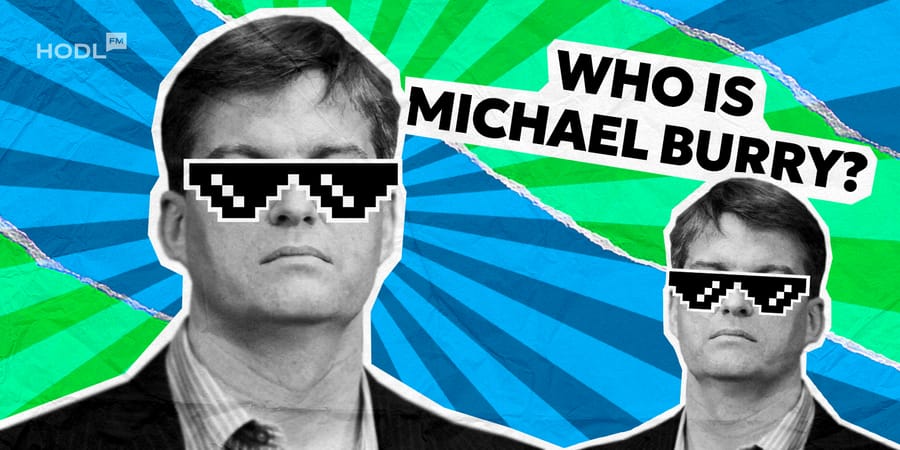



Michael Burry, a former doctor turned investor, became famous for forecasting the 2008 collapse of the housing market, a story later popularized in The Big Short. He founded Scion Capital and Scion Asset Management and has earned a reputation as one of Wall Street’s most contrarian thinkers. Burry is known for his deep, independent research and willingness to bet against market consensus and has consistently positioned himself as an early warning voice on financial bubbles and speculative excess.
Who is Michael Burry?
Michael Burry was born in 1971 in San Jose, California, and lost his left eye to retinoblastoma at the age of two. He studied economics and pre-medicine at UCLA and then received an MD from Vanderbilt University School of Medicine in 1997. He started a neurology residency at Stanford University Medical Center but never finished it. While off duty, he ran financial analysis and posted on Silicon Investor, a stock discussion site, starting in 1996. His early picks attracted interest from Vanguard, White Mountains Insurance Group, and investor Joel Greenblatt. He left medicine to start Scion Capital, named after Terry Brooks' novel The Scions of Shannara, funded by family loans and an inheritance.

The Big Short and the 2008 financial crisis
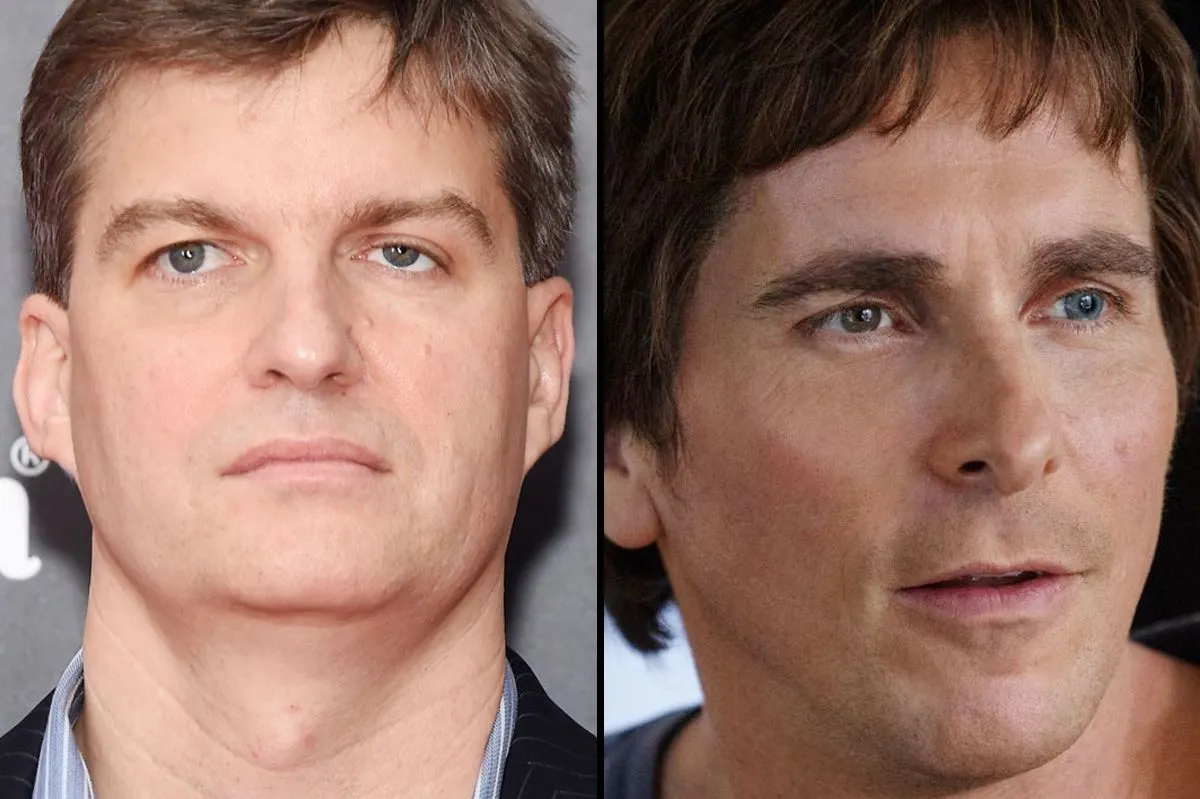
Burry's defining trade began in 2005 when he turned his focus to the subprime mortgage market. His review of lending practices from 2003 and 2004 convinced him that mortgages with "teaser" rates, which reset sharply higher within two years, would collapse once those resets hit. He persuaded Goldman Sachs and other banks to sell him credit default swaps against the weakest subprime deals. Investors in his fund revolted. Some demanded their money back. Then the market broke. Burry made a personal profit of $100 million and generated more than $700 million for his remaining investors. The trade was later chronicled in Michael Lewis's The Big Short and the 2015 film, where Christian Bale portrayed him.
Michael Burry's investment philosophy
Burry has cited Benjamin Graham and David Dodd's 1934 book Security Analysis as the foundation of his approach.
"All my stock picking is 100% based on the concept of a margin of safety," he has said.
His method relies on independent research, deep data analysis, and a willingness to hold positions that run against consensus.
He has also described the cost of outside pressure on conviction:
"I hated discussing ideas with investors because I then become a Defender of the Idea, and that influences your thought process."
Over the years, Michael Burry’s portfolio has included water rights, farmland, gold, and distressed equities, assets chosen for fundamental value rather than market enthusiasm.
Recent market predictions and positions
In 2025, Scion Asset Management's 13-F filings disclosed put options against Nvidia worth roughly $187 million and against Palantir worth roughly $912 million, a combined bearish position exceeding $1.1 billion, as HodlFM reported. Both stocks fell after the disclosure. NVIDIA dropped about 4% and Palantir tumbled 8% in the immediate aftermath. Burry also closed Scion's SEC registration in November 2025 and launched a Substack newsletter, Cassandra Unchained, priced at $379 per year, to outline his concerns about an AI bubble.
By May 2026, his warnings were more direct.
"Absolutely non-stop AI. Nobody is talking about anything else all day," Burry wrote on Substack.
He compared the Philadelphia Semiconductor Index's 65% gain in 2026 to the trajectory of tech stocks before the March 2000 crash:
"Stocks are not up or down because of jobs or consumer sentiment. They are going straight up because they have been going straight up. On a two letter thesis that everyone thinks they understand. ... Feeling like the last months of the 1999-2000 bubble."
His GameStop position also drew attention. In January 2026, he disclosed he had started buying shares again, not as a meme stock bet, he said, but on what he called an "Instant Berkshire" thesis: disciplined capital allocation, minimal debt. That thesis collapsed in May 2026 when GameStop made an unsolicited bid to acquire eBay at approximately $55.5 billion, requiring a reported $20 billion financing letter from TD Bank. Burry exited in full and wrote on Substack:
"I sold my entire GME position. Any which way I sliced it, the Instant Berkshire thesis was never compatible with >5x Debt/EBITDA, never ok with interest coverage under 4.0x." He added: "Never confuse debt for creativity."
Michael Burry and crypto
Burry has been consistently skeptical of cryptocurrency. In 2021, he drew parallels between crypto, meme stocks, electric vehicle companies, and the dot-com bubble. Those markets later fell hard. In February 2026, he posted a chart on X that compared bitcoin's then-current state to the 2021-2022 crypto collapse, raising the prospect of a deeper reset. His skepticism toward digital assets fits within his broader pattern: when speculative volume detaches from fundamentals, he treats it as a warning.
Is it a pattern if it happened once?
— GSR (@GSR_io) February 5, 2026
Criticism and controversy
Burry's critics note that timing his calls has proved difficult. His bearish positions have often come early, sometimes years early, which can be costly for anyone who follows him closely. Palantir CEO Alex Karp fired back on CNBC after the short positions became public:
"The two companies he's shorting are the ones making all the money, which is super weird." Karp added: "He's actually putting a short on AI. ... It was us and Nvidia."
NVIDIA's Jensen Huang took a calmer position, stating he does not believe the world is in an AI bubble. Paul Tudor Jones, who also drew comparisons to 1999, told that the rally may still have another year or two to run and that a correction, when it comes, could be dramatic.
What investors can learn from Michael Burry
Burry's record points to a few consistent practices. He reads primary source documents, mortgage filings, SEC disclosures, and corporate filings, rather than relying on summaries or consensus narratives. He holds positions under investor pressure when his original analysis holds. He exits cleanly when the facts change, as the GameStop situation demonstrated. He avoids debt-heavy structures and distrusts acquisition strategies financed primarily through leverage. And he operates outside the financial media cycle; he went years without a public presence and spent much of his career posting anonymously before his name became widely known.
Burry’s influence is far beyond The Big Short. His approach is the same: dig deeper than others, stay patient, and exit when the thesis breaks. His track record suggests that ignoring his warnings, whether early or right, has often been costly.
 Tanya Petrusenko
Disclaimer: All materials on this site are for informational purposes only. None of the material should be interpreted as investment advice. Please note that, despite the nature of much of the material created and hosted on this website, HODL FM operates as a media and informational platform, not a provider of financial advisory services. The opinions of authors and other contributors are their own and should not be taken as financial advice. If you require advice, HODL FM strongly recommends contacting a qualified industry professional.