


Whenever bitcoin's price rises, mining apps quickly climb the app store charts, and searches for "mine bitcoin on phone" or "free crypto mining apps" surge too. Most people downloading these apps are hoping to make money with little effort. But after installing, the experience can be very different from what was expected. The term "mining app" covers so many types that it hardly means one thing, and the difference between what is promised and what is delivered often surprises users.
What really counts as a crypto mining app
The term "crypto mining app" actually refers to three different things, which is why people often get confused. First, there is real mining software, which is a desktop program that uses your hardware, like a GPU or ASIC, to mine on a network. Second, there are cloud mining apps, where a company runs the mining equipment and pays you a share. Third, there are mobile crypto mining apps, which usually do not interact with a blockchain at all. Instead, they track how often you open the app and give you tokens later. If you search for "bitcoin mining app" or "bitcoin miner" in an app store, you will rarely find the first type.
Why can't your phone really mine Bitcoin
Phones are not designed for mining. Modern ASICs are much more powerful than smartphone processors when it comes to Bitcoin's hashing algorithm. So, any app that claims to mine directly on iOS or Android is either just showing you a cloud contract as if it is running on your device, or it is not doing any real computing. If you try to mine on a phone, you will quickly notice your battery drains, your phone gets hot, and you get no real results. This is why real mining is done on desktops with proper cooling. Even then, the software has limits. Whether mining is profitable depends mostly on electricity costs and how effective your hardware is, with network difficulty making things even harder. For most people at home, the profit after paying for electricity is very small or even negative unless you have very cheap power.
How to tell a legitimate mining app from a scam
Apps like Pi Network and StormGain are free to install. That low barrier to entry is the main reason for their download numbers, not mining effectiveness. But free does not mean there are no strings attached. To decide if a mining app is legitimate, look for a few clear signs instead of trusting your instincts. Does the app clearly explain where the computing power comes from? Can you find the company's business registration outside of its own website? Cloud mining apps often promise a fixed daily return, but real mining cannot guarantee this because difficulty and prices change all the time.
Trend Micro researchers found a wave of fake Android mining apps with names like BitScam, CloudScam, and MineBit Pro. These apps only showed an animation of coins increasing, but did not do any real mining. People spent real money on upgrades linked to numbers that were never real. The same kind of scam can happen on a larger scale. For example, in December 2025, the SEC accused the founder of VBit Technologies of misusing $48.5 million after selling more hosting agreements than the company had mining equipment for. Whether it is a small app or a big company, the scam works the same way.
Mining apps actually worth knowing in 2026
A few platforms have been around for a while and have been honest about their services.
NiceHash
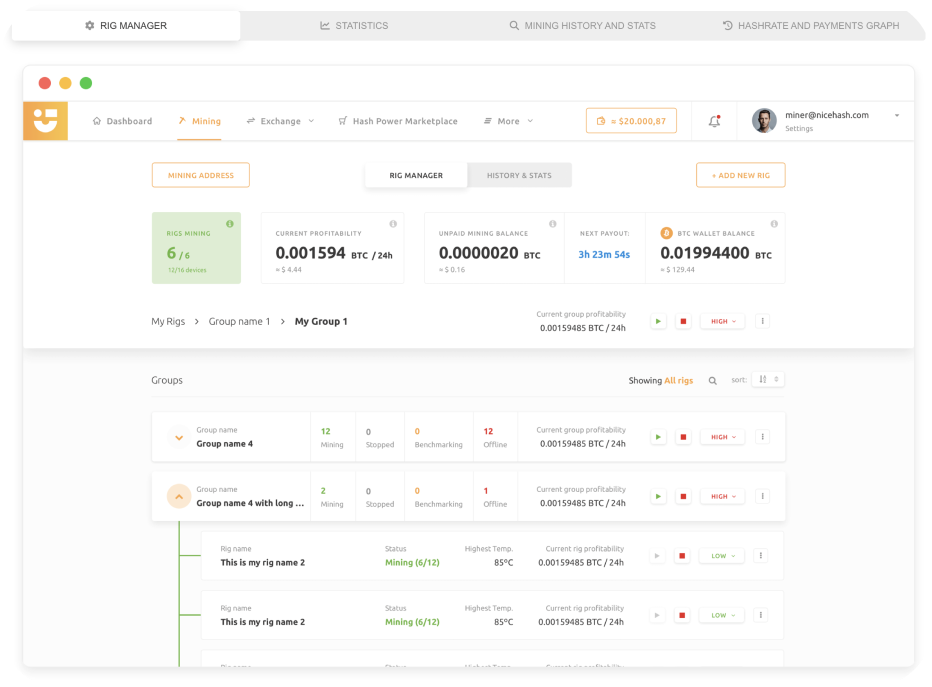
It holds a mining license and a longer history than most cloud mining brands, but mixed reports on fee transparency make reading the terms worth the time. NiceHash Miner or QuickMiner lets you rent out your GPU's extra capacity to the highest bidder, and you get paid in Bitcoin, no matter which coin was mined. NiceHash takes about 2% of your earnings as a fee for each payout, plus a small fee for conversions. You do not have to deal with altcoin wallets or manage different pools, which makes things easier. However, your earnings depend on the overall hashpower market instead of a specific coin, and because of past security issues, it is best not to keep more than a working balance on the platform.
Cudo Miner
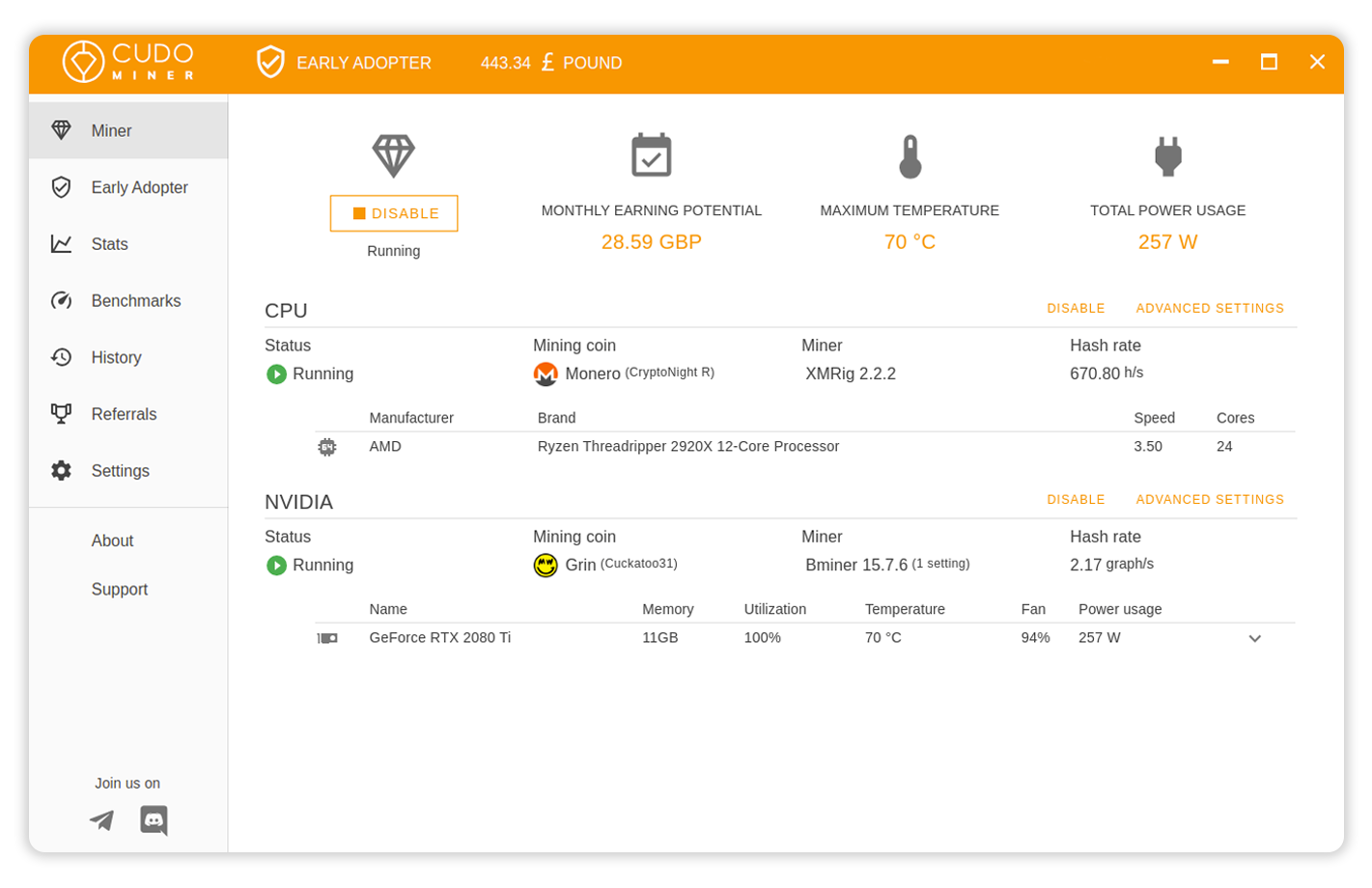
Cudo Miner has been around longer than most crypto mining software, operating since 2017. It automatically switches between coins to find what is most profitable for your hardware. The software works on Windows, macOS, and Linux for headless rigs. Fees depend on your monthly mining volume, starting at 6.5% for small miners and dropping to 1.5% if you mine more than 10 BTC a month. There is no fee to withdraw. You can get paid in crypto, cash, or vouchers, instead of holding onto volatile coins. As with any GPU miner, if you do not have a good graphics card and cheap electricity, your power bill will likely be higher than your earnings. Stered in Armenia's free economic zone, selling fixed-term contracts rather than software you install. Contracts start around $150, and the app is mainly a dashboard for tracking output and requesting payouts, not computing anything itself. That means trusting ECOS to run the hardware behind your contract. It holds a mining license and a longer history than most cloud mining brands, but mixed reports on fee transparency make reading the terms worth the time.
StormGain
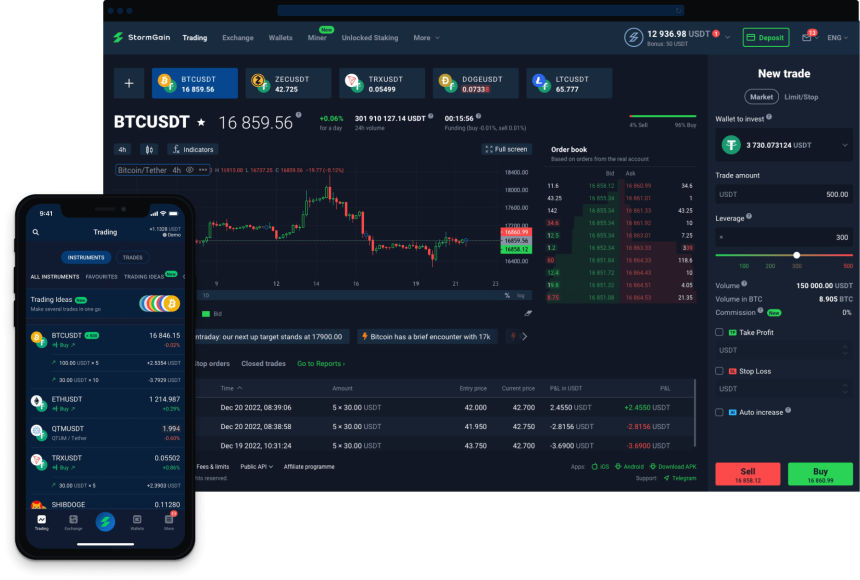
First and foremost, it is a crypto trading platform with some kind of "cloud mining" tool attached to it. This one turns out to be an engagement timer for four hours disguised as something else. It is called that way because StormGain says so in its support documents; there is neither any mining activity nor blockchain validation going on there. All you get from it is some cents, or, better put, fractions thereof. It takes several months of daily clicks even to get past the minimum withdrawal level. No one takes money away from your deposit, but people expecting Bitcoin mining would be disappointed.
Pi Network
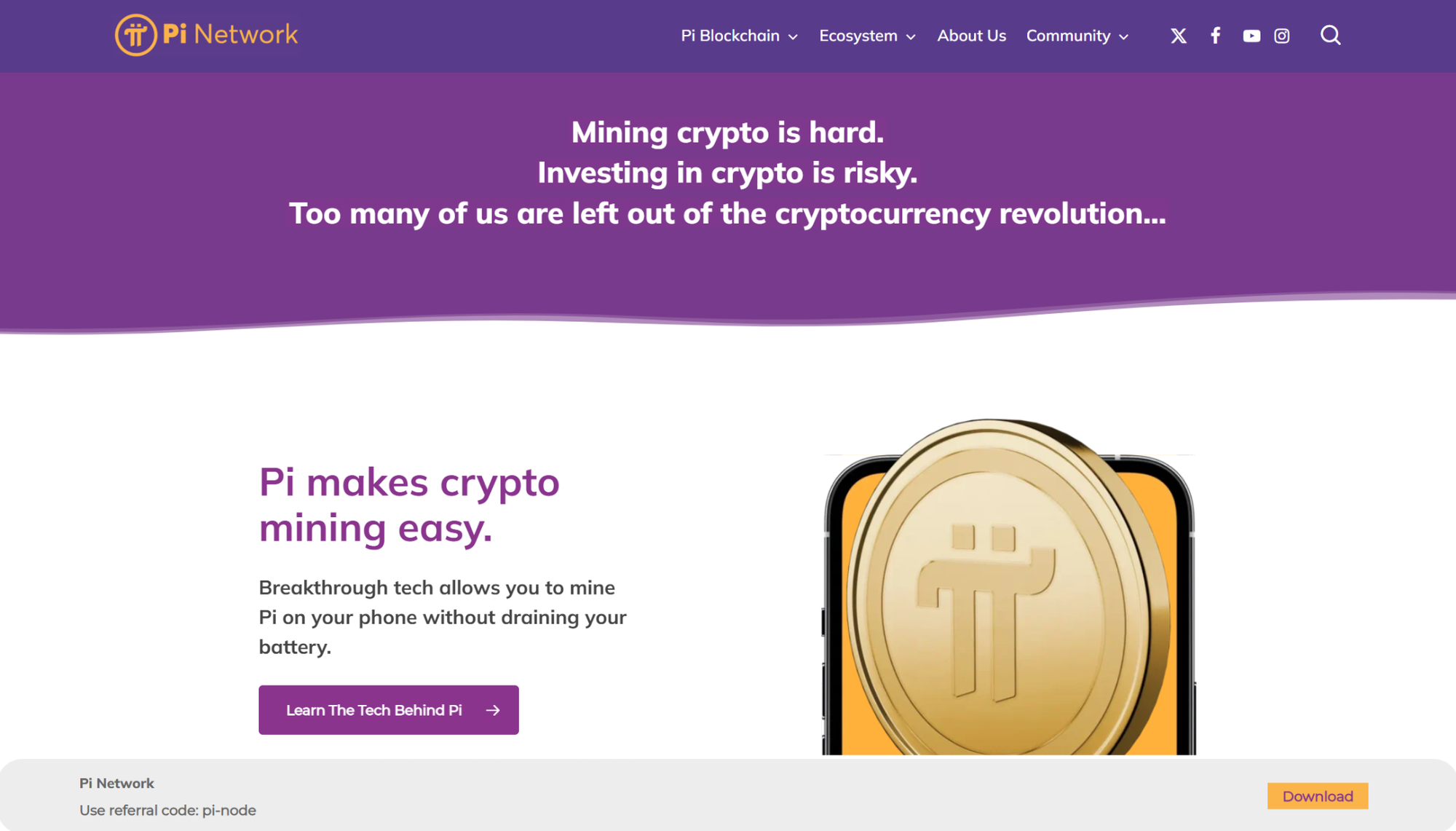
Pi Network is likely the most downloaded app that uses the term "mining" in a very loose way. When you open the app and tap a button once a day, your phone does not do any real computation. The project says its process is battery-friendly and is more about building a network of verified users using a Stellar-based consensus system than solving proof-of-work puzzles. Pi now has a working mainnet with millions of KYC-verified users, so it is not fair to say it does nothing. Still, it is mainly an engagement tool. It is not mining in the sense that NiceHash or Cudo Miner use the word.
Where the fees go and what payouts actually look like
Fees and payouts usually work the same way: the company running the mining infrastructure takes a share before you get paid. Platforms that disclose less about their operations tend to take a larger cut. In reality, minimum withdrawal amounts are often more important than the listed fee, because if an app pays only tiny amounts, it can take months before you can withdraw your money.
Security and privacy: why the app stores cracked down
Any app that asks for your wallet address or identity documents is handling sensitive information and should be treated with the same caution as an exchange. Check what data the app stores on its servers and whether it requires two-factor authentication before you can withdraw funds. This one security feature can be the difference between a small problem and losing your money.
This is also why the app stores have become stringent in regard to mining apps. The guidelines of Apple’s App Store prohibit any kind of crypto mining within the phone; rather, it can happen only when the mining process takes place outside the phone, as in the case of a cloud contract. On the other hand, Google Play also prohibits any kind of on-device mining, yet permits apps that mine cryptos remotely. In October 2025, Google introduced new guidelines for crypto apps in numerous countries. If you want to mine bitcoin using your phone, this has been banned in both app stores for quite some time now.
Mining pools and staking as the alternative
If you would like to try mining without being concerned about the legitimacy of a particular application, you can get into a public mining pool. You will use applications provided by various mining pools, such as Foundry USA and F2Pool, and be able to monitor your hash rate and earnings on the website. The other approach that is becoming increasingly popular is staking. Unlike mining, staking involves locking your coins in order to ensure the security of proof-of-stake networks.
Ethereum staking through platforms like Coinbase or Kraken typically requires no minimum for pooled staking, though running your own validator needs 32 ETH. Annual yields generally range from 3% to 7%, depending on network conditions and the platform's fee cut. Solana and Cardano staking work similarly through wallets like Phantom or Daedalus, with yields often higher but more volatile. The main risk is the lock-up period: some networks let you unstake within days, others hold your coins for weeks during an unbonding period, during which you can't sell even if the price drops.
Who these apps actually make sense for
The desktop-based software solutions, such as NiceHash or Cudo Miner, should be considered as the best choice in case the user owns a capable GPU and affordable energy costs, since the application is only an interface in this case, and the economics do the choosing. The cloud-based contracts are for people who would like to get involved in mining without investing in any hardware, provided that one reads the contract and accepts all risks associated with it. And how about mobile apps offering passive earnings through mining? Well, the majority of them offer time-gated rewards programs, not mining.
 Tanya Petrusenko
Disclaimer: All materials on this site are for informational purposes only. None of the material should be interpreted as investment advice. Please note that, despite the nature of much of the material created and hosted on this website, HODL FM operates as a media and informational platform, not a provider of financial advisory services. The opinions of authors and other contributors are their own and should not be taken as financial advice. If you require advice, HODL FM strongly recommends contacting a qualified industry professional.