


Crypto doesn't run on anyone's schedule. A protocol can get drained at three in the morning, and a regulator can drop a filing before most newsrooms have finished their coffee. An exchange can freeze withdrawals without warning, too. Keeping up with crypto news today looks different than it did even two years ago, with fewer newsrooms covering more ground, and following that pace isn't really about reading everything that gets published. It's about knowing which handful of sites to check first, and understanding what each one actually does well.
None of the crypto news websites covered here is "the best" one, and treating this as a ranking misses how differently each is built. Some chase a headline within minutes of it breaking. Others spend weeks on a single investigation before publishing anything. A few exist mainly to make the space less confusing for someone who bought their first Bitcoin last month. Asking which are the best crypto news websites, or hunting down a single list of the best crypto news sites, usually turns up the same ten names reshuffled in a different order. The more useful question is which of the top crypto news websites actually match what a given reader needs this week. Reading two or three regularly, rather than defaulting to one outlet, tends to produce a clearer picture of the latest crypto news than any single cryptocurrency news site manages alone.
What actually counts as a crypto news website
A lot of what gets called crypto news in casual conversation isn't news at all. CoinGecko and CoinMarketCap track prices, trading volume, and market capitalization in real time, but neither runs a newsroom or publishes original reporting. Platforms like Messari and Nansen sit closer to research terminals, producing charts, on-chain datasets, and paid reports rather than dated articles with a byline attached. General financial outlets add a third category. Bloomberg and Reuters cover crypto through dedicated desks, but crypto there competes for space against equities and bonds, not a story treated as its own beat. A genuine cryptocurrency news website sits apart from all three. It employs people whose full-time job is covering this industry, and it publishes dated articles under a named reporter. That reporting stays separate from whatever price charts or research sit elsewhere on the same domain.
Frequency matters here too. A site publishing hourly updates serves a different reader than one publishing two deeply reported pieces a week, and both can be reputable without being the same kind of resource.
A working list of crypto news sites for 2026
CoinDesk is usually the first name newcomers reach for. It has covered the industry since 2013 under a few different owners, most recently Bullish, the exchange operator that acquired it in 2023.
CoinDesk
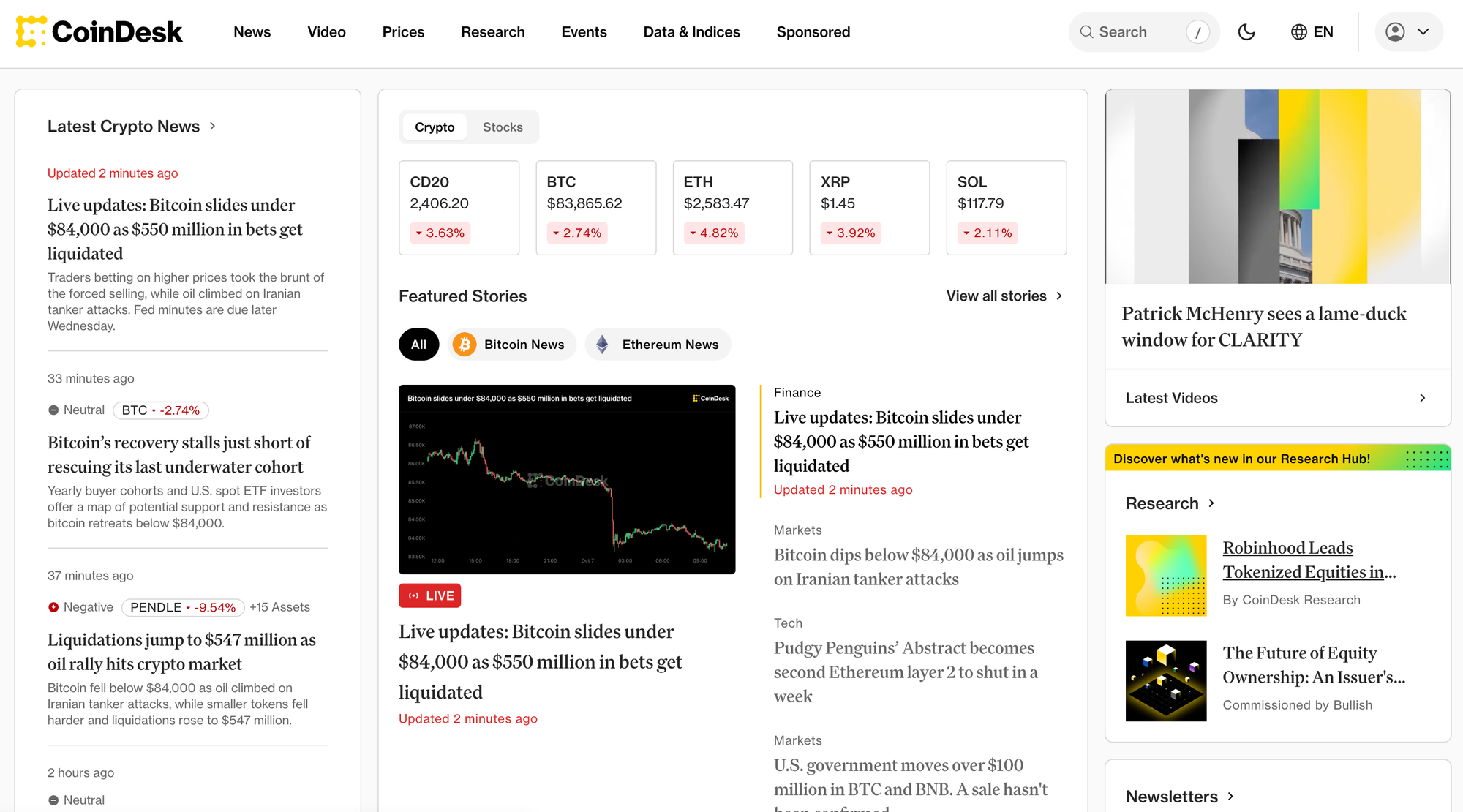
CoinDesk is usually the first name newcomers reach for, having covered the industry since 2013 under a few different owners, most recently Bullish, the exchange operator that completed its acquisition in 2023. CoinDesk's policy desk is also a common first stop when a regulatory story breaks, whether that's an SEC enforcement action or new stablecoin legislation. That ownership history hasn't gone unquestioned, and CoinDesk now runs a public disclosure explaining how its newsroom stays separate from Bullish's own business interests, worth reading before assuming a story about one of Bullish's competitors is written at arm's length.
Cointelegraph
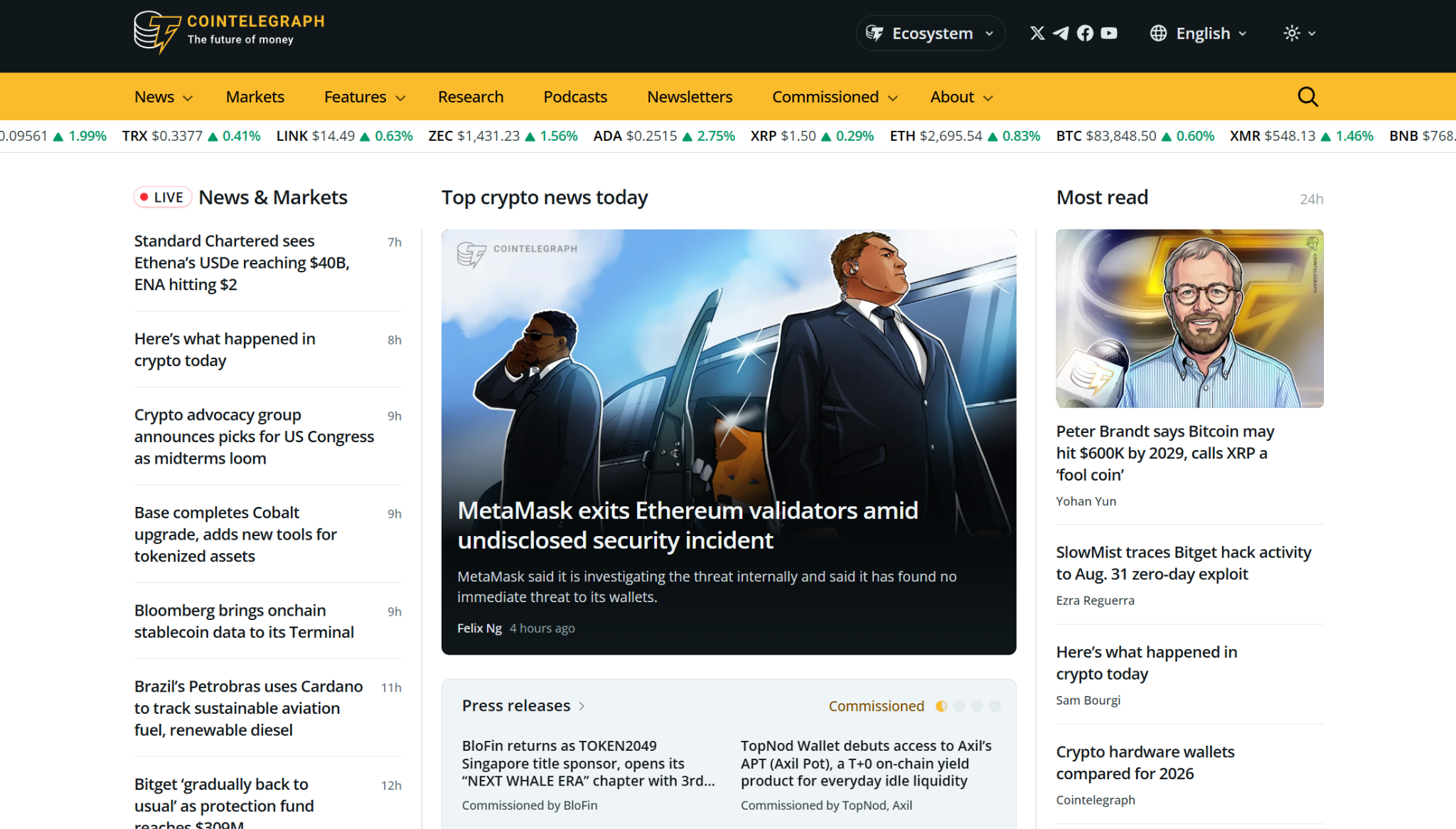
Cointelegraph covers similar ground at much higher volume, running a team spread across more than fifty countries and publishing far more stories per day than most competitors attempt. That reach cuts both ways. Scanning Cointelegraph is a fast way to see what the broader retail crowd is reacting to, though depth on any individual story varies more than it does at smaller, more selective blockchain news websites.
HODLFM

HodlFM News takes a different angle on that same daily cycle. Headline coverage sits alongside a newsletter and a podcast, with explainer pieces built in for readers still working out how the industry fits together. It's a reasonable fit for someone who wants the day's cryptocurrency news without being assumed to already know what a liquidity pool or a basis trade is.
Watcher.Guru
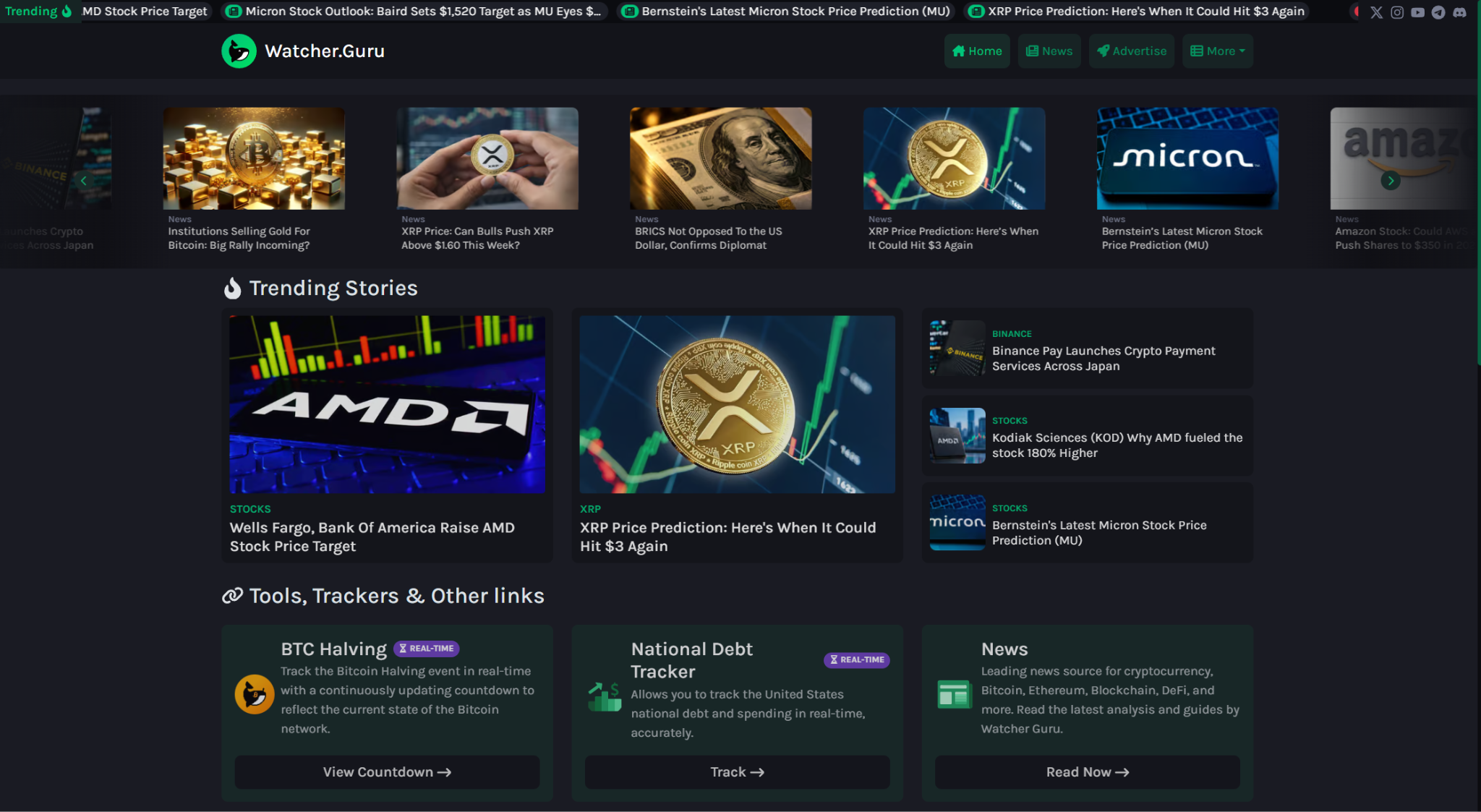
Watcher.Guru pushes the speed angle further, posting market-moving headlines to its social accounts in a blunt "JUST IN" format before a full article even exists, on the logic that a trader reacting a few minutes late has already missed the move. The tradeoff is context. Those early posts carry almost none, and the fuller writeup that follows sometimes lands well after the initial reaction has already priced itself in.
Decrypt
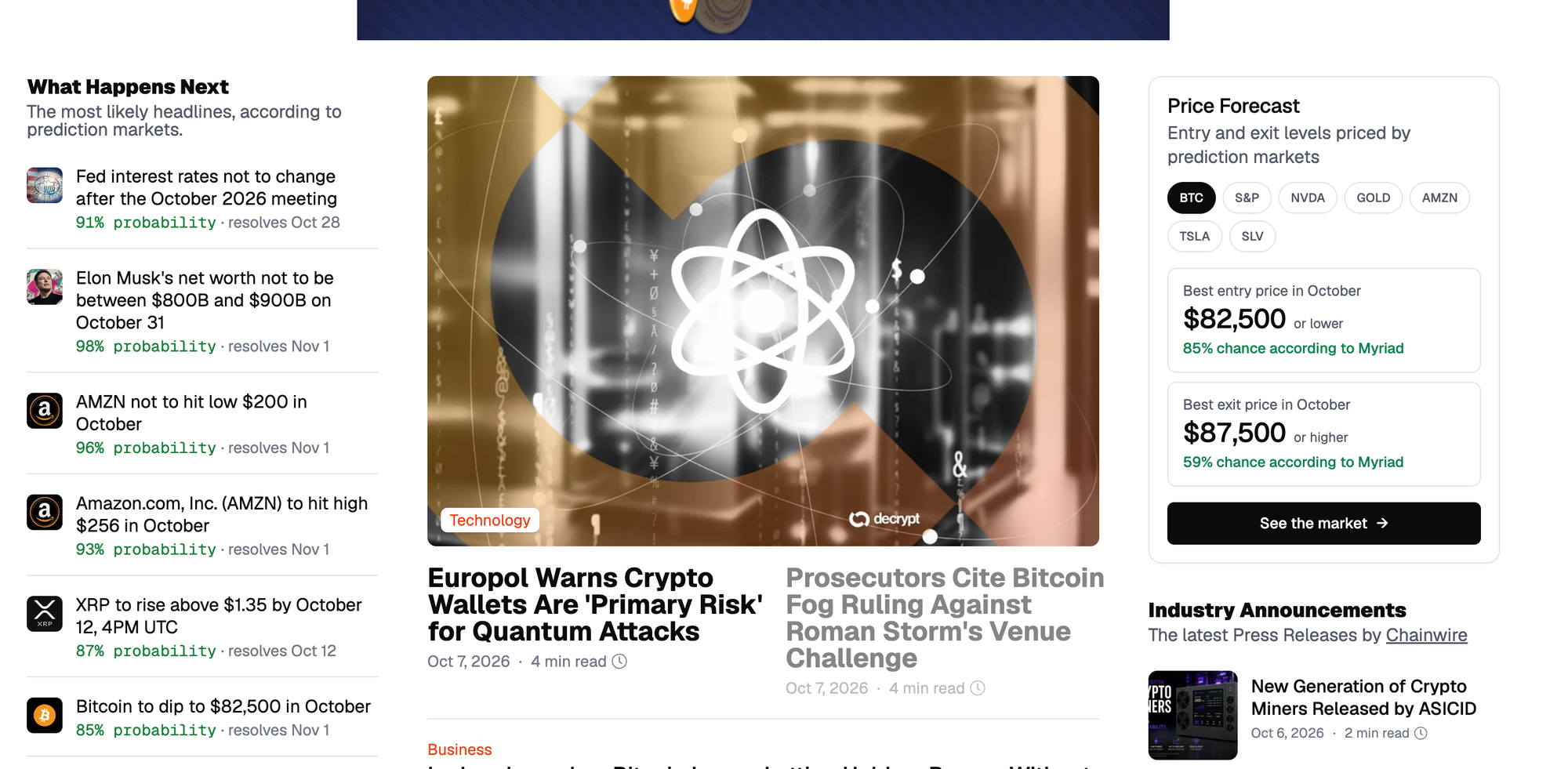
Decrypt leans toward the cultural and consumer side of the industry, covering NFTs, gaming, and Web3 adoption with an explicit goal of making a confusing field legible to newcomers, a mission it has stuck to since launching in 2018. Among Web3 news websites aimed at a general audience, it reads like a technology publication that happens to focus on crypto rather than a wire service.
Decrypt also runs Decrypt U, a set of free courses on topics like proof-of-stake staking or decentralized finance, with an NFT certificate issued once a course wraps up. That approach carries into the rest of the site too, pairing daily reporting with material meant for someone still learning the vocabulary, not just the headlines.
The Block
The Block built its reputation differently, growing out of a 2018 newsroom into a company that now runs research and on-chain data products alongside daily reporting. Institutional adoption and exchange-specific stories tend to get heavier treatment here than at outlets built mainly around retail-facing headlines. Foresight Ventures, a Singapore-based venture firm, bought an 80% stake in 2023, and The Block still attaches a disclosure to stories that touch Foresight's own portfolio.
CryptoSlate
CryptoSlate takes a similar data-plus-reporting approach with a smaller team, having published more than 26,000 articles since launching out of Seattle in 2017. Price data and project directories sit on the same site as the reporting, which makes it one of the more useful cryptocurrency news sites for someone who wants both without switching tabs.
The Defiant
DeFi news gets more dedicated attention from The Defiant, founded in 2019 by Camila Russo, a former Bloomberg reporter, specifically to track a corner of the industry most general outlets only cover once something breaks.
Protos
Protos takes the opposite approach to specialization, running fewer, longer investigations into exchange collapses and executive misconduct instead of chasing daily headline volume.
One recent example shows the approach in practice. In September 2026, Protos reported on allegations from BlockTower Capital founder Ari Paul, who accused Coinbase of concealing more than a billion dollars in hack losses and failing to return $25 million owed to his fund. Coinbase disputed the claims, and Protos noted that no independent evidence had surfaced to confirm either side, treating the story as an open allegation rather than a settled fact.
Bitcoin Magazine
Among Bitcoin news websites specifically, Bitcoin Magazine has run continuously since Vitalik Buterin and Mihai Alisie launched it in 2012, staying narrowly focused on Bitcoin and mostly skipping altcoin and DeFi coverage in favor of a maximalist lens on the asset it was built around.
Why one outlet is never enough
Crypto media has gotten smaller over the past year, which is its own argument against leaning on a single source. Blockworks shut down its entire news division in October 2025 to focus on data and analytics instead, and DL News, a DeFi-focused outlet with a strong reputation for investigative reporting, closed in May 2026 after traffic across the industry contracted faster than its revenue could keep up. Outlets that looked permanent two years ago aren't guaranteed to still be publishing by the time this gets read, so it's worth checking whether a site is still active before treating it as a regular source.
Cross-checking a story against a second outlet catches more than people expect. A number transcribed wrong, or a quote stripped of its original context, is easy to miss on a single read. Primary sources settle most disputes faster than any outlet's word against another's: a company's own announcement, a regulatory filing on the SEC's EDGAR database, on-chain data pulled straight from a block explorer, or an official statement from the protocol or exchange involved. News sites interpret those documents. They aren't a substitute for reading the document itself once a claim actually matters.
Matching the source to what you're actually trying to do
A trader glued to five-minute candles wants Watcher.Guru or CoinDesk's market desk open in a tab, not a four-thousand-word investigation that took three weeks to report. A long-term investor is usually better served by The Block's data products or CryptoSlate's project directories than by chasing every headline as it lands. A Web3 developer tends to care less about market commentary and more about protocol-specific coverage, which is where The Defiant's DeFi focus earns its keep. Someone newer to cryptocurrency news altogether gets more out of Hodl.fm News or Decrypt's explainer-driven approach than out of a wire service that assumes prior knowledge.
Every outlet on this list runs sponsored posts or press releases alongside its reporting, and not every one draws a clear line between a news story and an opinion column. A sponsored piece praising a token's fundamentals can read uncomfortably close to an analyst's take unless the site marks which is which, and market speculation dressed up as analysis is a recurring problem across the industry, not one outlet's failing in particular. Checking whether a piece carries a byline and reads like reporting rather than marketing is a habit worth building, regardless of which of these sites happens to be open.
 Matvii Diadkov
Disclaimer: All materials on this site are for informational purposes only. None of the material should be interpreted as investment advice. Cryptocurrency investments involve significant risk of loss. Please note that, despite the nature of much of the material created and hosted on this website, HODL FM operates as a media and informational platform, not a provider of financial advisory services. The opinions of authors and other contributors are their own and should not be taken as financial advice. If you require advice, HODL FM strongly recommends contacting a qualified industry professional.