




Caladan estimates the sector has absorbed roughly $15 billion since 2021, and more than 90% of the resulting GameFi projects are now dead Web3 games, tokens trading at a fraction of launch prices, and studios going quiet on Discord one server at a time. Five years have been wasted by Web3 gaming waiting for its breakout year, and 2026 is when this promise has finally faced its auditing. In 2022, the bear market provided an excuse for failed games; now, as the funding situation has improved, there was nowhere for failed games to hide.
The first four companies to get their names in the book of failures are Pirate Nation, Nyan Heroes, Ember Sword, and Wildcard. There were different reasons behind each failure, and thus it would be wrong to see them as just one case. Some did not have enough resources to complete their development; some managed to develop but could not raise enough money to support them.
A shutdown, a studio closing, and a pivot aren't the same failure
Web3 games go dark, studios fold, and projects pivot, but news coverage lumps everything together, making an important distinction difficult to maintain. When a game goes dark, it means the working game itself goes dark, which is what happened to Pirate Nation in August 2025. The shutdown of the studio comes later and is a different event in August 2026; Pirate Nation’s parent company, Proof of Play, folded after continuing to develop the game for another year. When projects pivot, it's yet another different kind of thing. Wildcard had the web3 layer on its multiplayer game go away, but the game underneath remained alive. These distinctions are important because they help determine where the failure lies.
Four collapses, four different failure modes
None failed the same way.
Pirate Nation
The Pirate Nation shutdown came in two stages. Proof of Play raised $33 million in a 2023 seed round co-led by a16z and Greenoaks, enough to build Pirate Nation on two dedicated Ethereum layer-3 chains, Apex and Boss, at a combined cost of roughly $120,000 a month. The studio ended the game's gameplay and token rewards about 30 days after announcing the shutdown on August 18, 2025. It kept building on its Arcade platform for another year before closing entirely in August 2026, saying it had failed to prove its thesis that blockchain games could power a new decentralized internet. In-game points were never redeemable for anything, though the Founder's Pirates NFT artwork was released into the public domain under a CC0 license.
Nyan Heroes
The Nyan Heroes shutdown had the opposite problem. The Solana shooter from 9 Lives Interactive drew over a million playtesters across four test phases and 250,000 wishlists on Steam and Epic, numbers most web3 titles never approach. However, it was shut down on May 16, 2025, as it was impossible to raise funds to complete the project.
"NYAN has tried everything from exploring publishing and raising fresh funds, applying for grants, to being acquired by another company."
The company saw its stock value fall by 98.5% from its peak in 2024 just one day after the news broke. Nyan Heroes refutes the argument that player interest alone can save a web3 studio.
Ember Sword
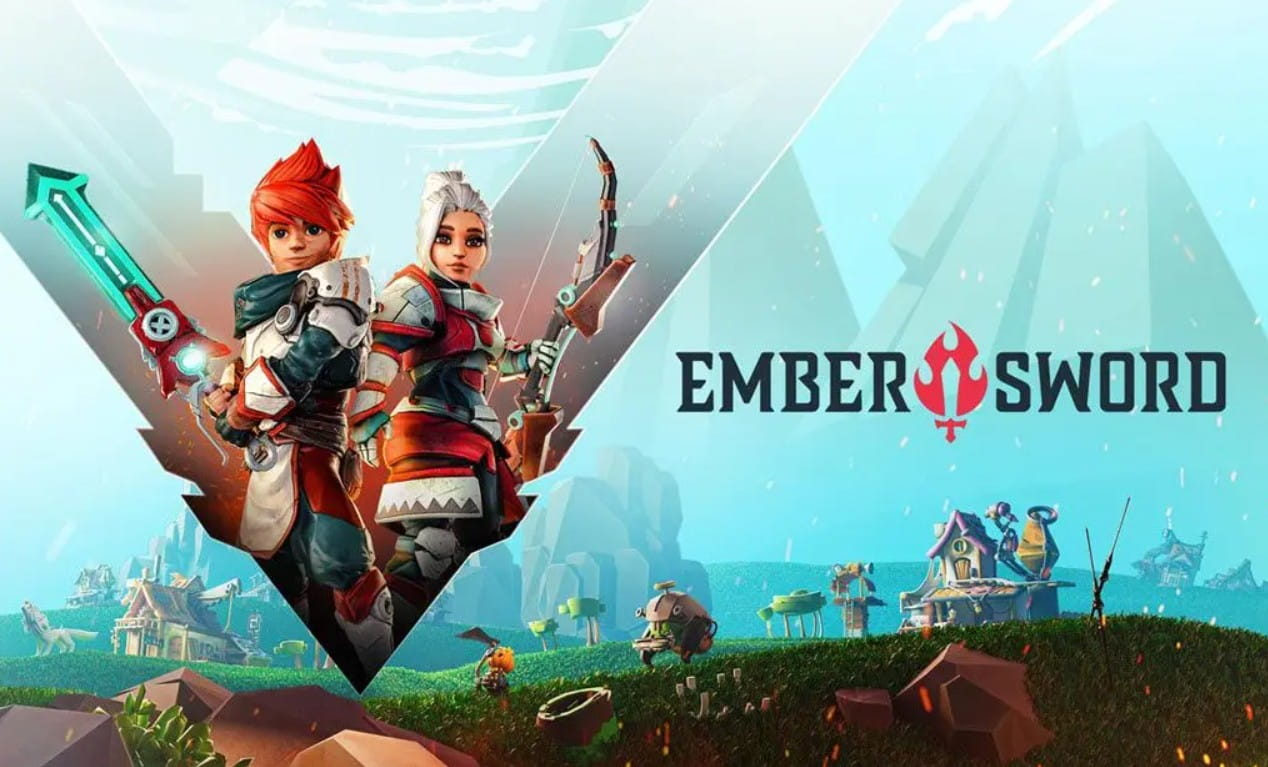
The Ember Sword shutdown capped seven years of underfunded development. Bright Star Studios raised roughly $8 million in venture funding, while a 2021 land sale drew pledges topping $203 million from about 35,000 applicants. Landholders were promised utility that never shipped: early access didn't launch until December 2024, and the game closed May 21, 2025, less than six months later. EMBER is down more than 96%, and the studio has offered no refund or compensation plan for landholders. That gap between speculative demand and operating cash is the real story: a land sale measures belief in a game's future, not cash on hand.
Wildcard
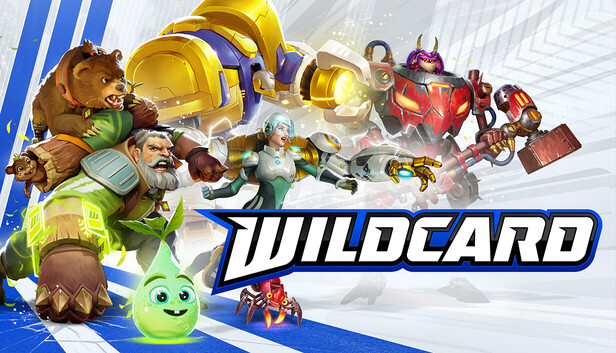
The Wildcard Web3 shutdown played out in layers. Playful Studios raised $46 million in a Series A for its web3 division, the Wildcard Alliance. That funded Wildcard, a PC MOBA, and Thousands, a streaming and tournament layer with its own WC token and a franchise system, the Wildcard Premier League. Competitive multiplayer was suspended on April 27, 2026, and Thousands closed entirely by May 7. Franchises received an airdrop of their share of the USDC reserves; any remaining WC tokens have been burned, and a scheduled launch of the THOU token did not happen. That which has survived is the actual game itself; according to Playful, “the best of Wildcard is in the Champions and its underlying technology.”
The rest of the graveyard
The four games mentioned above are the most evident examples, but the list of crypto games that stopped working in 2026 is actually longer, and the motives remain the same. GensoKishi Online is one of the blockchain games that ceased operation this year; the date of closure was April 30, when the statistics themselves proved that: about 10 million yen in monthly costs against 2 million yen in revenue. Bloktopia, the Polygon metaverse that raised $4.9 million in a 2021 round led by Animoca Brands, closed on January 6, five years after launch, with its BLOK token now trading close to zero. Forgotten Runiverse went offline January 27, and Pixiland dropped its token plans for a web2 pivot January 15, both citing costs their teams couldn't carry alone. Ndus Interactive paused Xociety, a Sui shooter that had raised roughly $9 million, citing ongoing profitability issues while it looks for a buyer. And 77-Bit, five years into development with roughly a million players tested, ran out of money to scale its infrastructure and is now seeking funding to keep a skeleton crew running.
The pattern underneath the pattern
Retention of players, token economics, and the funding cycle continue to recur in these Web3 gaming failures as one and the same failing in disguise. Pirate Nation and Nyan Heroes both had active communities but failed on the funding front, proving that sound design does not solve the funding problem in Web3 games. Ember Sword and Bloktopia represent the opposite example: sizable amounts of nominal funding from land sales or token sales that weren’t ever liquid funds that the studios could use; consequently, their books looked healthy until they didn’t. GensoKishi is a particularly vivid example of an expense that exists in a more subdued form in other titles: these games incur blockchain maintenance costs, audits, that conventional studios do not have to bear. This is not solved by a booming market, which is why so many failed Web3 games still had a community when their servers went down.
Would these games have failed without the blockchain
Not necessarily; it is the difference between them that holds the true lesson behind these failures in Web3 gaming. The root problem of Ember Sword is a seven-year-long development with fewer and fewer people involved, as well as incomplete beta version, which suffices to put a nail into the coffin of any traditional MMORPG. Yet the land sale made it possible to finance the game development several years ahead of having something playable, and such possibility does not exist outside the blockchain world. Wildcard is the most clear example when the game itself worked well and the crypto layer failed, as the MOBA game managed to retain its players even after its token/tournaments structure ceased functioning.
What happens to the people who bet on these games
The end results were far more diverse than suggested by the rug pull narrative: the owners of the franchises run by Wildcard received a proportionate share of their treasury airdrop, the artwork of Pirate Nation became free for use under public domain license, and its points became worth nothing; the landowners of Ember Sword got nothing, while the owners of Nyan Heroes saw their tokens lose 98.5 percent value without there ever being a completed game, although the 9 Lives project continues to explore a potential acquisition opportunity for the brand.
What the survivors are doing differently
Not every one of 2026's crypto gaming failures ends the same way.
Gods Unchained kept its card economy running through the downturn by letting NFT cards trade independently of its token, so secondary-market liquidity held even when the token didn't. Illuvium routes game revenue directly to ILV stakers, tying token value to activity rather than speculation. Off The Grid shows that a successful game and a successful token don’t necessarily coincide, as the former made it to Epic’s list of best free-to-play games despite its token suffering from many years of dilution because of a circulation amount of less than 6% at the time of launch. Axie Infinity shifted to a skill-based system in the Origins version, away from the reward-farming strategy that brought it success in 2021. None of this means anything for sure. But here is the proof of the fact that surviving games value their tokens more.
 Gunel Ismayilova
Disclaimer: All materials on this site are for informational purposes only. None of the material should be interpreted as investment advice. Please note that, despite the nature of much of the material created and hosted on this website, HODL FM operates as a media and informational platform, not a provider of financial advisory services. The opinions of authors and other contributors are their own and should not be taken as financial advice. If you require advice, HODL FM strongly recommends contacting a qualified industry professional.