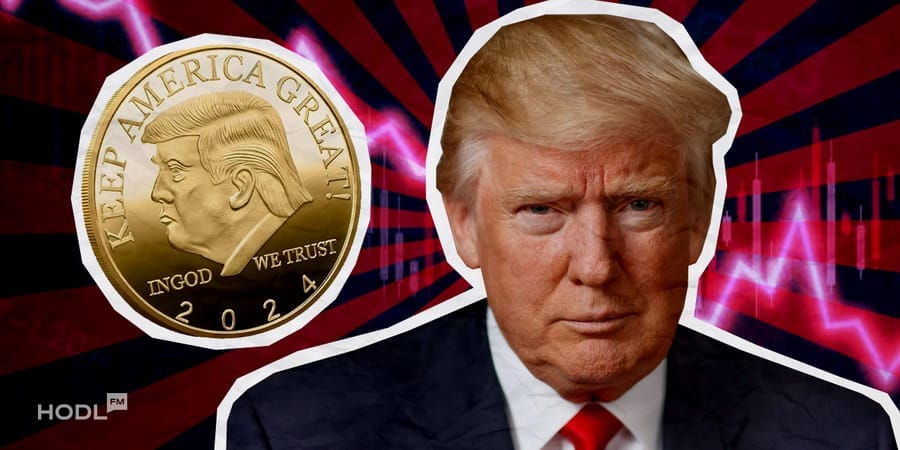



Roughly 989,000 buyers of the Official Trump memecoin lost a combined $3.81 billion on the token through the end of June, while President Donald Trump earned $636 million from the same asset, according to an analysis by blockchain analytics firm Nansen cited by The New York Times.
The Nansen data covers all 1.48 million wallets that have purchased TRUMP since its January 2025 launch. Of those, 988,905, or approximately two thirds, are underwater. The 492,285 wallets in profit are up a combined $4.04 billion. Nansen said gains were concentrated among a small number of early buyers who acquired the token before it reached its peak, while the broad retail majority absorbed the losses.
TRUMP launched on the Solana blockchain on January 17, 2025, three days before Trump's second inauguration. The token surged to a high above $73 within days, briefly giving it a fully diluted market capitalization above $75 billion. It now trades near $1.66, down more than 97% from that peak, according to CoinMarketCap data. A $10,000 investment made on inauguration day would be worth approximately $364 today. Since launch, roughly $71 billion in total value has moved through the token.
Trump's $636 million from the memecoin came through CIC Digital LLC, a Trump Organization affiliate, under a licensing agreement with an entity called Celebration Coins, listed in his 927-page financial disclosure released by the Office of Government Ethics on June 30. The structure ensures Trump earns royalties and transaction fees each time the token changes hands, regardless of its price direction.
"In the days when Trump was a developer, he boasted about playing on people's fantasies. Here, he seems to have encouraged his supporters to invest, hoping for wealth, even as he profited," said New York University law professor Stephen Gillers.
How the token's ownership structure works
Of the one billion TRUMP tokens created, 80% are held by two Trump-affiliated entities, CIC Digital and Fight Fight Fight LLC. Those holdings follow a three-year unlock schedule, with approximately 900,000 tokens entering circulation daily.
The token launched into a regulatory environment the president was simultaneously reshaping. The SEC has dropped or paused nearly 60% of its crypto enforcement cases since Trump took office. Trump signed the GENIUS Act in July 2025, creating the first federal stablecoin framework, but the law contained no provisions addressing memecoins or tokens issued by elected officials.
In an interview with CNBC on Thursday, Trump said there was "nothing illegal" and "nothing wrong" with his disclosed crypto profits. He told the network he was unaware of the extent of his holdings and had handed day-to-day control of his businesses to his two eldest sons before taking office without divesting.
The White House has previously denied that the president profited at the expense of investors, framing the administration's crypto stance as an effort to develop the United States as a global industry hub.
World Liberty Financial buyers also mostly underwater
Nansen's analysis extended to World Liberty Financial, the decentralized finance platform that lists Trump and his three sons as co-founders. Trump's financial disclosure shows the platform generated approximately $800 million for a business entity tied to Trump in 2025, as that entity collects 75% of all WLFI coin sale revenue.
Of the 26,663 wallets Nansen tracked buying WLFI on secondary markets, 22,715 are underwater, approximately 85%, with combined losses of $83 million against $23 million in profit across the remaining wallets. WLFI now trades near $0.056 per token, down more than 80% from its peak. Nansen noted the loss figure excludes buyers who purchased through ICO rounds where secondary market data is not publicly available, suggesting the total number of loss-making holders is likely higher.
A May dinner and the question of access
On May 22, 2025, Trump hosted a black-tie dinner at his Virginia golf club for the top 220 holders of the TRUMP token, who had collectively spent $148 million on the coin. Justin Sun, a Chinese-born crypto investor and at the time the subject of paused SEC fraud charges, was among the guests as the token's largest holder. A Bloomberg analysis found that 19 of the top 25 wallets attending were almost certainly controlled by individuals outside the United States.
Senator Kirsten Gillibrand has proposed banning elected officials and their spouses from issuing or promoting crypto tokens. She pushed for similar provisions during GENIUS Act negotiations, but those restrictions were removed from the final legislation.
Senator Elizabeth Warren separately called for the inclusion of a ban on crypto earnings for the president, vice president, administration officials, members of Congress, and their families in the CLARITY Act. Lawyers interviewed by the Times said Trump could face class-action lawsuits from investors after his presidential term ends, despite the memecoin website's disclaimer that the token is not intended as an investment vehicle.
 Gunel Ismayilova
Disclaimer: All materials on this site are for informational purposes only. None of the material should be interpreted as investment advice. Please note that, despite the nature of much of the material created and hosted on this website, HODL FM operates as a media and informational platform, not a provider of financial advisory services. The opinions of authors and other contributors are their own and should not be taken as financial advice. If you require advice, HODL FM strongly recommends contacting a qualified industry professional.