




Bitcoin gets talked about as the people's money. No single government controls it. No bank keeps it. True at the protocol level. But zoom into the actual ownership data, and the picture shifts.
A small number of wallets hold a huge share of all the Bitcoin that exists. These big holders, called bitcoin whales, can move prices and quietly remove BTC from circulation every time they accumulate. Tracking the top Bitcoin holders is genuinely useful for anyone trying to understand why prices move the way they do.
Here's a current look at who actually owns the most BTC right now.
What does it mean to be a Bitcoin whale?
The word 'whale' in crypto just means someone holding enough Bitcoin to move the market. For BTC specifically, the common threshold is 1,000 BTC or more. At current prices, that puts entry-level whales at roughly $75 million in a single asset.
Arkham Intelligence data shows fewer than 100 entities control a combined total of roughly 4.2 million Bitcoin right now. That's around 20% of Bitcoin's entire 21 million hard cap in very few hands.
And it gets more concentrated from there. River's analysis shows that the four wealthiest Bitcoin addresses together hold more than 663,000 BTC, and the next 82 largest holders own about 14% of the total supply.
One factor that makes monitoring large stakeholders difficult: whales tend not to hold all their crypto on a single wallet. Corporations, governments, and investment funds allocate their Bitcoins across various wallets for safety purposes. This is the reason Arkham consolidates wallets associated with the same party into an entity.
Top Bitcoin holders in the world
Here's who's sitting on the biggest stacks right now.
Satoshi Nakamoto
Every bitcoin holders list starts here. Satoshi Nakamoto, the anonymous creator of Bitcoin, holds roughly 1.096 million BTC mined between 2009 and 2010. At current prices, that's around $82 billion.
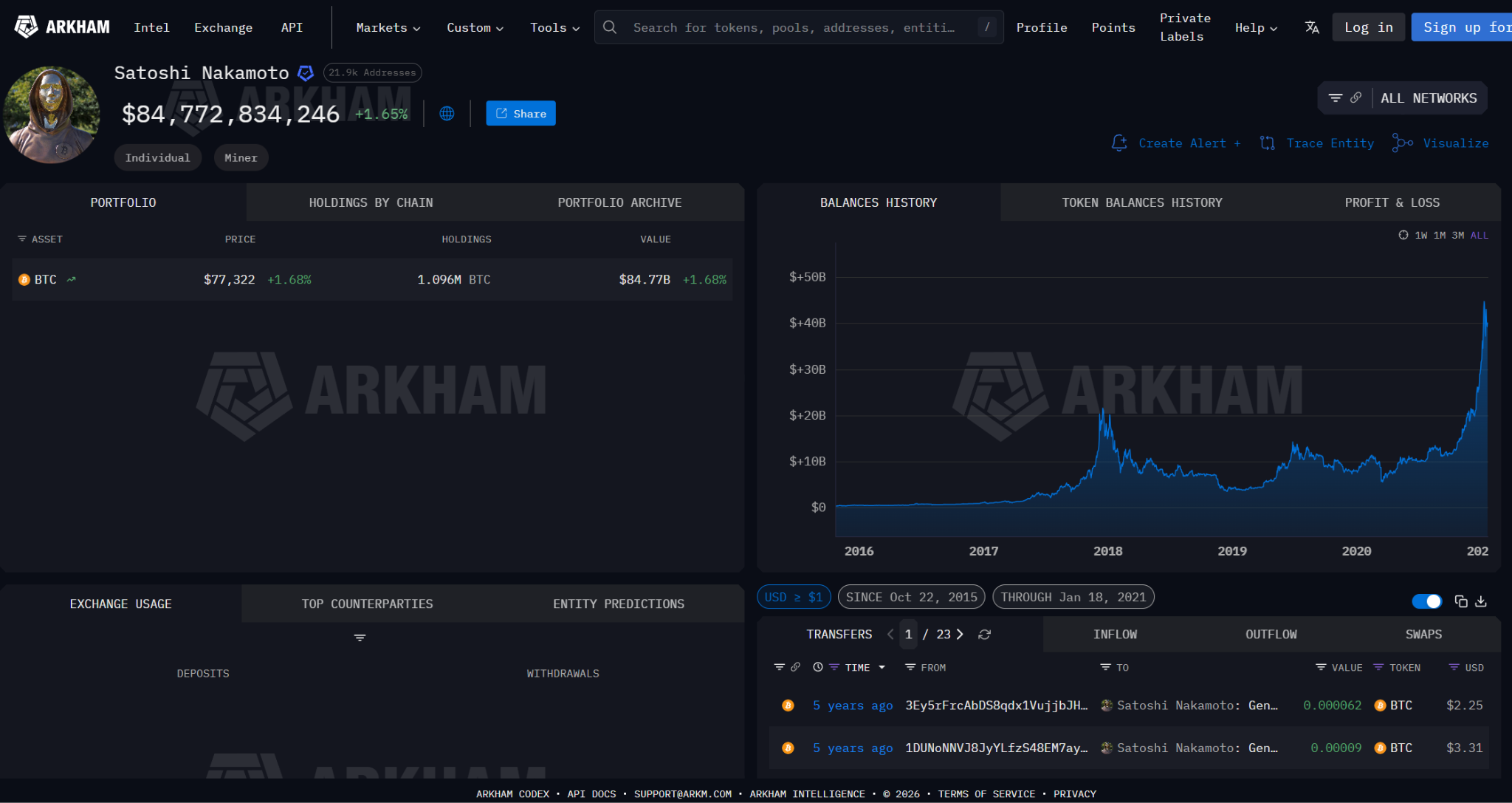
The unusual part goes beyond the size. Not a single coin has ever moved. Over 15 years of crashes and bull runs, Satoshi's wallets have stayed completely still. Whether the person behind the name is still alive or simply gone is unknown. Either way, this stays at the top of the largest bitcoin holders list indefinitely.
Michael Saylor and Strategy

No individual has done more to normalize corporate Bitcoin buying than Michael Saylor. His company, Strategy (previously MicroStrategy), started buying BTC in August 2020 and hasn't stopped since.
Strategy owns 818,334 BTC as of April 26, 2026, acquired for approximately $61.8 billion at $75,537 per coin. This translates to about 3.9% of all the bitcoin that will ever be created by one company. According to Fortune, Strategy has purchased over 100,000 BTC between March and April of 2026.
Saylor personally last disclosed 17,732 BTC in his own name, separate from the company's treasury.
Tyler and Cameron Winklevoss
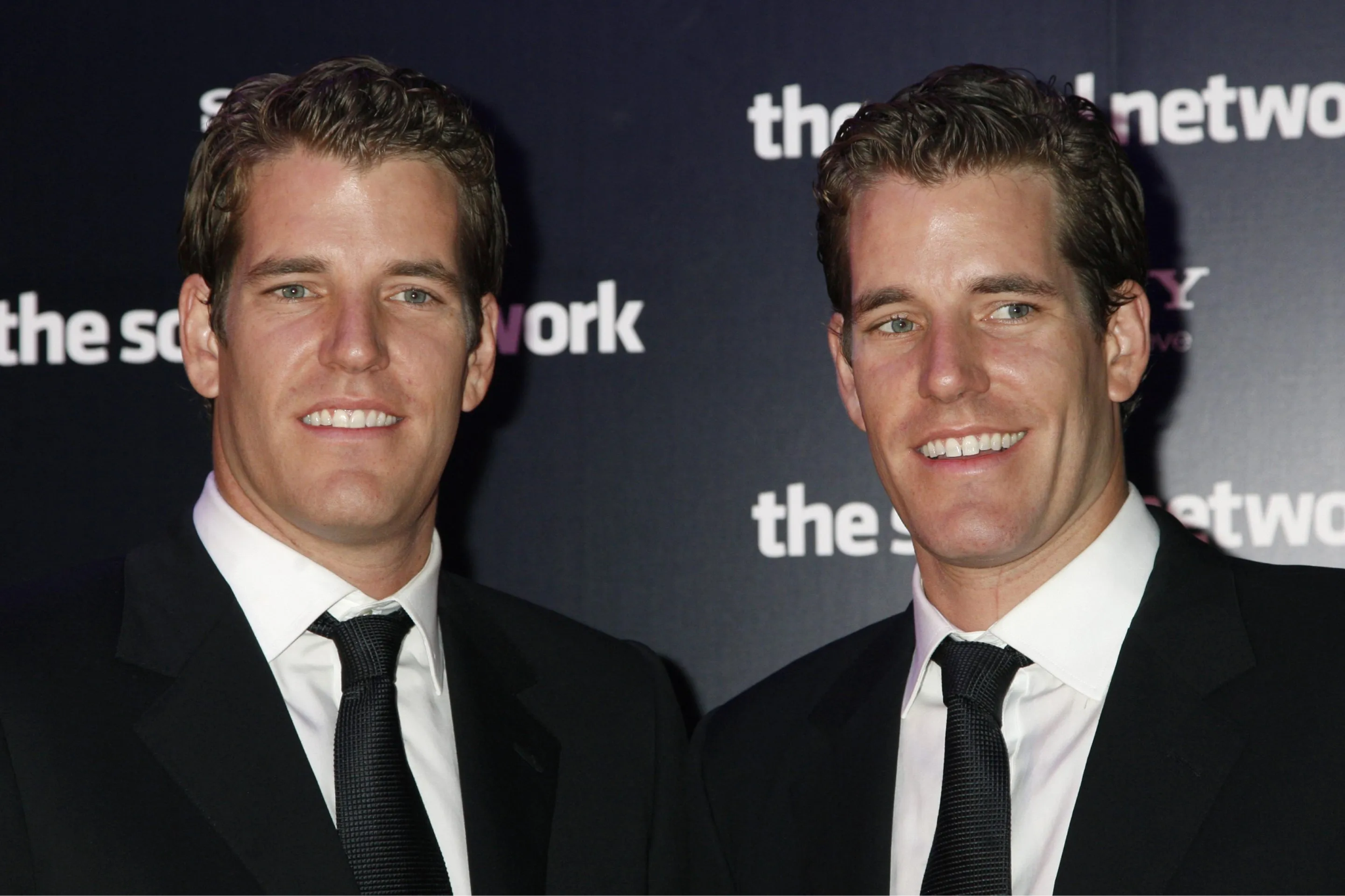
The Winklevoss twins bought into Bitcoin in April 2013, spending $11 million on roughly 100,000 BTC at about $120 a coin. They used money from their Facebook settlement with Mark Zuckerberg, which was around 1% of all Bitcoin in circulation at the time.
Their stack has moved around a lot since. In March 2026, they sold $130 million worth, then bought back in. Arkham tracked their current stack at around 9,328 BTC.
Gemini, the exchange they founded, went public on Nasdaq in September 2025 at $28 per share, valuing the company at $3.3 billion.
BlackRock
BlackRock entering Bitcoin wasn't just another name on the Bitcoin holders list. It changed the whole conversation about what kind of asset Bitcoin actually is.
Its iShares Bitcoin Trust (IBIT) launched in January 2024 and now holds roughly 810,000 BTC, making it the largest institutional Bitcoin holder on earth. It overtook Grayscale's decade-old GBTC within its first year.
Important to mention: this is not Blackrock's bitcoin as well. They hold it for investors via an ETF scheme. Pension funds, wealth managers, and individuals purchasing IBIT stocks become economic owners. However, the actual impact on supply is identical: this BTC is held in institutional custody and thus not available for trading.
The U.S. Government
The U.S. government didn't plan to become a major player in Bitcoin ownership. It got there through law enforcement.
Federal agencies accumulated Bitcoin through operations like the Silk Road takedown, the 2022 Bitfinex hack recovery (around 94,000 BTC), and other seizures. Then in January 2025, Executive Order 14178 established the U.S. Strategic Bitcoin Reserve, directing agencies to hold seized BTC rather than auction it off.
The government currently controls around 328,372 BTC worth approximately $21.84 billion. Any announcement that these coins might be sold would likely shake markets almost immediately.
Tim Draper
Venture capitalist Tim Draper is one of the more interesting names on any bitcoin holders list because of how he got there. He had already lost 40,000 BTC in the Mt. Gox collapse before deciding to buy back in at a government auction in 2014.
At that auction, he picked up 29,656 BTC at roughly $632 a coin. That's coins seized from the Silk Road darknet market, sold off by the U.S. Marshals Service. Today, that same stack is worth north of $2 billion.
Draper has stayed publicly bullish on Bitcoin for over a decade and remains one of the most recognizable long-term believers in the asset.
Coinbase and Binance
Exchanges show up near the top of every largest bitcoin wallets ranking, but there's an important distinction to understand: that Bitcoin belongs to customers, not to the exchanges themselves.
The Coinbase platform contains around 957,000 BTC of user and institutional assets. Furthermore, it acts as the custodian for BlackRock’s IBIT and various spot ETFs, thereby becoming the one institution that is most systemically important to the Bitcoin framework at present.
Binance holds around 634,000 BTC in user deposits and maintains a proof-of-reserves ratio above 100%. This means they hold more BTC than they owe customers. That standard became an industry requirement after FTX's collapse in November 2022.
Block.one
Block.one, the firm behind the EOSIO blockchain software, reportedly holds 164,000 BTC worth around $10.9 billion. That puts it at the top of the private company category by disclosed figures.
The catch is that these holdings can't be verified on-chain, and the company has said very little publicly about its Bitcoin treasury for years. It's one of the more opaque entries on the biggest holders of bitcoin list.
How whale activity affects regular investors
This is what makes all of this relevant, even if you do not own millions worth of Bitcoin.
Whales can quietly accumulate BTC, reducing its availability in the open market. This means reduced supply coupled with constant demand leads to price increases. It's not necessarily manipulation; it's how the fixed supply asset behaves in the face of large accumulations.
CoinDCX on-chain data tracked whale investors buying around 270,000 BTC in a single 30-day window. This is the largest month-on-month purchase made by these investors in over 13 years. There has been a massive drop in the BTC balance held by exchanges during this period.
KuCoin's market analysis noted that the entire U.S. spot Bitcoin ETF sector now holds over 1.3 million BTC, around 6.2% of total supply. And despite having around 500 million global users, only 800,000 to 850,000 wallets hold 1 BTC or more. Most people in crypto own fractions. The top holders own blocks.
Final thoughts
The bitcoin holders list of 2026 looks nothing like what anyone imagined when Satoshi mined the first block. A pseudonymous creator sits at the top with coins untouched for 15 years. Below that sits a public company with nearly 4% of all Bitcoin ever minted. A Wall Street giant manages nearly 800,000 BTC for its clients. The U.S. government became a top holder through nothing but law enforcement seizures.
None of this changes how Bitcoin works. The protocol runs the same regardless of who controls Bitcoin. But knowing who the biggest bitcoin holders are helps investors read price movements more clearly. Large wallets making large moves stop looking random once you know who's behind them.
Tracking the top bitcoin holders won't predict tomorrow's price. But it's some of the most useful context any investor can have.
 Tanya Petrusenko
Disclaimer: All materials on this site are for informational purposes only. None of the material should be interpreted as investment advice. Please note that, despite the nature of much of the material created and hosted on this website, HODL FM operates as a media and informational platform, not a provider of financial advisory services. The opinions of authors and other contributors are their own and should not be taken as financial advice. If you require advice, HODL FM strongly recommends contacting a qualified industry professional.