

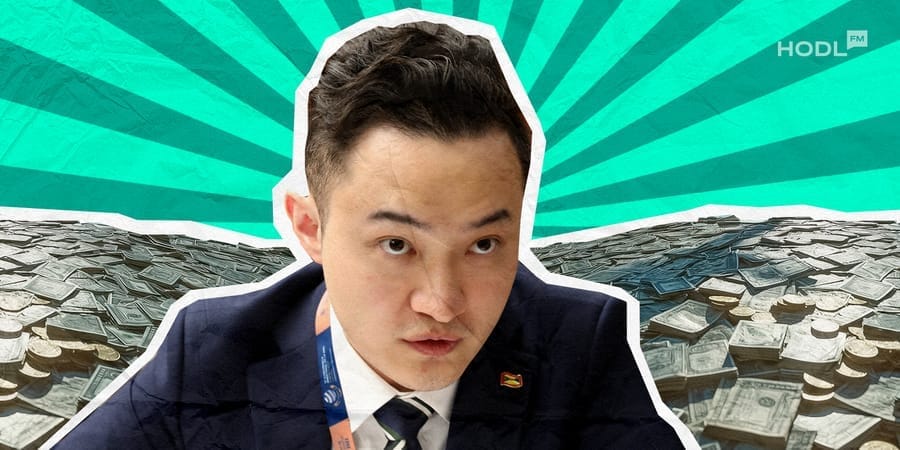



Tron founder Justin Sun is asking a federal court to sanction World Liberty Financial and its lawyers. He accuses the Trump family-linked crypto company of submitting a misleading court disclosure about its ownership in a dispute over his $45 million WLFI token investment. Sun announced the motion on X on Nov. 3.
Last night, my lawyers moved to sanction World Liberty Financial @worldlibertyfi for failing to disclose, until months into my litigation against the company, that it is a citizen of the UAE 🇦🇪 . #WLFI #USD1
— H.E. Justin Sun 👨🚀 🌞 (@justinsuntron) November 3, 2026
For those who are new to this dispute, I was one of World Liberty’s…
What the sanctions motion says
According to Sun's filing, World Liberty first told the court that Florida was its only citizenship. Nearly three months later, the company amended the disclosure to identify 22 individuals and entities in its ownership chain. It claimed citizenship in Florida, Delaware, Puerto Rico and the United Arab Emirates.
The timing matters. The amended disclosure came six days after a federal judge questioned World Liberty's bid to move Sun's claims into arbitration. World Liberty's lawyers then argued that its UAE citizenship removed the federal court's jurisdiction, because foreign parties now sit on both sides of the case.
Sun's post explains the legal logic. A company like World Liberty takes on the citizenship of each of its owners, so one foreign owner makes it foreign. A foreign plaintiff can generally sue an American defendant in federal court but not a foreign one.
In an Aug. 26 email in the court exhibits, World Liberty's lawyer Sam Cleveland said his team had "recently" learned of additional citizenship information. He maintained that World Liberty already had UAE citizenship when Sun filed the lawsuit in April.
Where the $263,821.20 comes from
The sworn declaration of Sun's attorney, Edward Moss, covers the figure. The request is for fees for four attorneys' work opposing arbitration. It excludes other lawyers' fees and costs related to jurisdictional discovery and the sanctions motion.
Sun's lawyers also sought corporate records and testimony on when World Liberty's attorneys learned of the UAE connection. They allege that World Liberty provided limited documentation but declined to explain why its original disclosure omitted that information.
"World Liberty presumably always knew who its owners were," Sun said. "When we asked how this happened, World Liberty refused to tell us."
Sun also pointed to the company's own marketing. He posted excerpts from World Liberty's gold paper that describe it as "an American, tax-paying, corporation." In his words, the company was proudly American when it was selling tokens and found its UAE roots only when it needed a way out of an American federal courtroom.
Sun plans to refile in California state court after the sanctions question is settled. A hearing is set for Dec. 10. World Liberty did not immediately respond to a request for comment.
How the feud began
The dispute dates to the WLFI token launch in September 2025. Sun had agreed in November 2024 to buy $30 million of WLFI and later raised his total to $45 million. The freeze was triggered after Sun transferred roughly $9 million worth of WLFI to external wallets, a move World Liberty characterized as a potential violation of his investor agreement. The tokens moved to the HTX exchange, which Sun is linked to. The frozen amounts have been reported at between roughly 540 million and 595 million unlocked tokens.
Sun's lawsuit, filed April 21, 2026, alleges that World Liberty froze billions of his tokens through a blacklisting function added to the token's smart contract. It also alleges that co-founder Chase Herro threatened to burn the tokens. World Liberty has defended the blacklist as a standard compliance tool comparable to those used in USDT or USDC.
World Liberty has fought back. It filed a defamation lawsuit against Sun in Florida in May, accusing him of damaging the project through allegedly false public statements. The company has also alleged in court that Sun shorted WLFI and drove down its price. Sun denies the allegations.
A past alliance and a UAE stake
Sun was once one of the Trump family's most visible crypto backers. Besides investing in World Liberty, he bought President Donald Trump's TRUMP memecoin and topped its leaderboard for a May 2025 dinner with Trump, with holdings valued at about $18.5 million.
The UAE link is not new. In January 2025, a UAE-supported investment entity purchased a 49% stake in World Liberty for $500 million. The stake is the likely context for Sun's argument, though the sanctions motion concerns the ownership chain listed in the court disclosure, and the two should not be treated as identical.
Sun says the motion is also about holding projects to account.
"Token holders deserve to know whether the projects they invest in are telling the truth, both to the public and to courts," he wrote.
 Matvii Diadkov
Disclaimer: All materials on this site are for informational purposes only. None of the material should be interpreted as investment advice. Cryptocurrency investments involve significant risk of loss. Please note that, despite the nature of much of the material created and hosted on this website, HODL FM operates as a media and informational platform, not a provider of financial advisory services. The opinions of authors and other contributors are their own and should not be taken as financial advice. If you require advice, HODL FM strongly recommends contacting a qualified industry professional.