




This week’s digest covers a mixed market picture in crypto alongside major shifts in AI and regulation. Several tokens posted strong double- and triple-digit gains, while others saw sharp declines as volatility returned across the sector. Beyond price action, key developments from Nvidia’s new AI model, ongoing stablecoin policy debates in the UK, U.S. retirement crypto discussions, and expanding regulated derivatives from Kalshi show how technology, policy, and digital assets continue to evolve in parallel.
Top gainers and losers of the week
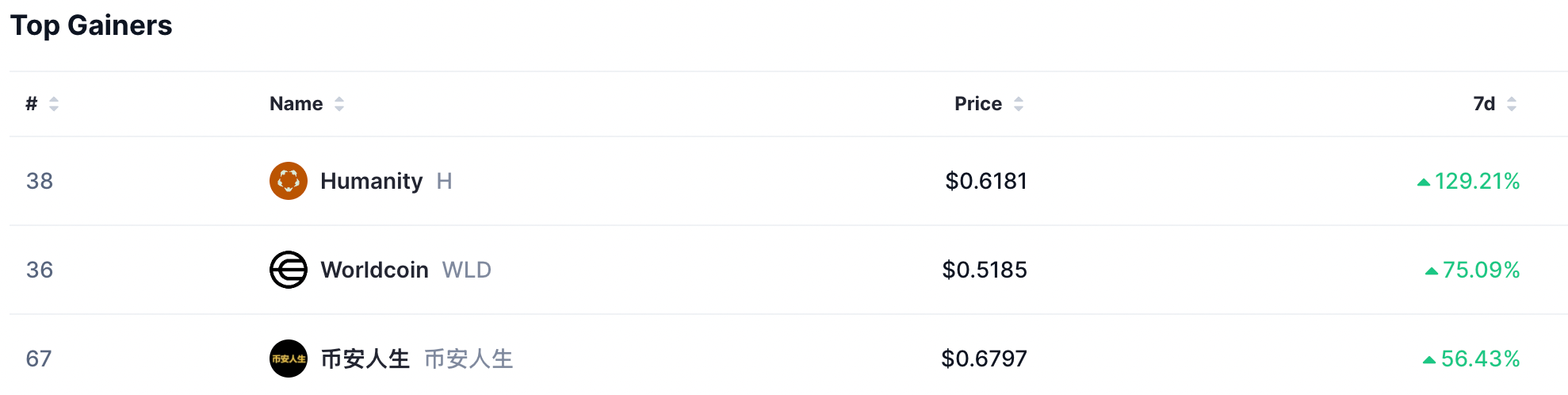
- Humanity (H) - soared by 129.21% to $0.6181 this week;
- Worldcoin (WLD) - surged 75.09% during that time to reach a price of $0.5185;
- 币安人生 (币安人生) - The price went up 56.43% to $0.6797.
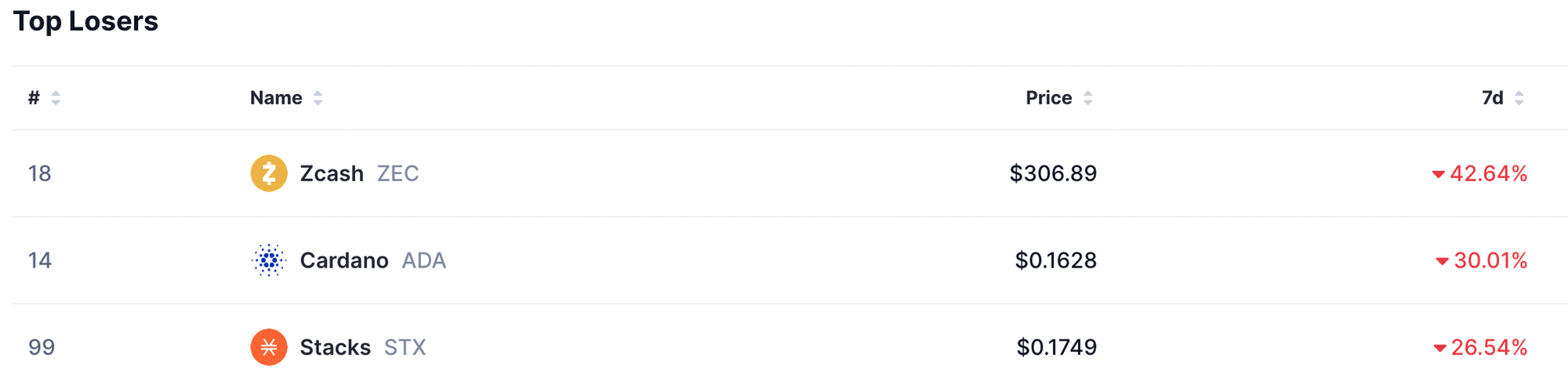
- Zcash (ZEC) - end week price of $306.89, down this week by 42.64%.
- Cardano (ADA) - lost 30.01% to end the week at a price of $0.1628.
- Stacks (STX) - ended the week down 26.54%, at $0.1749;
Nvidia unveils Nemotron 3 Ultra, but China stays ahead in AI race
Jensen Huang unveiled Nemotron 3 Ultra at Computex in Taipei, presenting it as Nvidia’s most advanced open AI model and the strongest open-weight system built in the United States. The release highlights Nvidia’s push into large-scale open AI, though benchmark data shows Chinese models still lead in overall intelligence scores.
Nemotron 3 Ultra contains around 550 billion total parameters, with 55 billion active at any time through a mixture-of-experts design. This structure activates only selected parts of the model per task, reducing compute costs while maintaining scale. Nvidia claims up to 5x faster inference and about 30% lower cost compared with similar open-weight models.
Artificial Analysis rated the model at 48 on its Intelligence Index. It ranks ahead of Google’s Gemma 4 31B at 39 and OpenAI’s gpt-oss-120b at 33, and also surpasses Nemotron 3 Super by 12 points.
NVIDIA just announced the release of Nemotron 3 Ultra in Jensen Huang's Computex keynote: at 550B parameters (55B active), this is the largest Nemotron 3 model to date, and it is the most intelligent US open weights model
— Artificial Analysis (@ArtificialAnlys) June 1, 2026
We partnered with @nvidia to evaluate this model for… pic.twitter.com/WPXZGLBOn8
The model supports a 1-million-token context window and uses a hybrid architecture combining Transformer layers and Mamba-2 components. Pre-release tests showed more than 300 tokens per second in output speed.
Despite these gains, China’s Kimi K2.6 from Moonshot AI still leads at 54 on the same index, showing a continued gap in open-model performance. Nvidia confirmed Nemotron 3 Ultra ships June 4 as part of its broader $26 billion open AI strategy.
UK Lords warn BoE stablecoin rules could slow GBP tokens
A House of Lords committee has warned that proposed Bank of England stablecoin rules could restrict the growth of pound-backed tokens before the market develops. While lawmakers supported the creation of a clear UK framework, they said several design elements risk making issuance commercially unattractive.
The Financial Services Regulation Committee said the UK is “lagging behind” the United States and the European Union in stablecoin regulation. It noted that dollar-backed tokens such as USDT and USDC continue to dominate global usage, while uncertainty in the UK has slowed domestic investment.
Peers backed core safeguards, including full reserve backing for fiat-linked stablecoins and a Bank of England backstop lending facility for systemic issuers. However, concern centered on a proposal requiring systemic issuers to hold at least 40% of backing assets in unremunerated central bank deposits. The committee said this rule had drawn “considerable criticism” due to potential pressure on issuer profitability.
The report also questioned proposed holding caps of £20,000 for individuals and £10 million for businesses, warning they could “unnecessarily inhibit the growth of GBP stablecoins.”
Regulators are also debating whether issuers should be allowed to pass on interest or offer rewards, an issue the committee said requires clear justification if restricted.
The Lords urged UK regulators to align timelines and ensure rules support both financial stability and market development.
Sanders and Warren oppose crypto in 401(k) plans
Senators Bernie Sanders and Elizabeth Warren are calling on the Trump administration’s Labor Department to withdraw a proposed rule that would allow Bitcoin and other cryptocurrencies in 401(k) retirement accounts. In a letter sent Monday to Acting Labor Secretary Keith Sonderling, the lawmakers warned that the plan puts retirement savings at risk.
The proposal, introduced after an executive order signed by President Trump in August, would allow fiduciaries to include crypto, private equity, and private credit in retirement portfolios if they follow a defined evaluation process. The lawmakers argue this weakens long-standing fiduciary protections under the Employee Retirement Income Security Act.
“The proposed rule is harmful to American workers and counter to statute, Congressional intent, existing regulations, and case law,” the letter reads.
Sanders and Warren cited Financial Industry Regulatory Authority warnings that crypto carries high volatility and a risk of total loss. They also referenced FBI data showing more than $11 billion in crypto fraud losses in 2025.
The letter further raised conflict-of-interest concerns tied to Trump family crypto ventures, which have reportedly generated billions.
The Trump administration defended the rule as expanding investment choice. Acting Labor Secretary Keith Sonderling said fiduciaries must still follow a prudent process when selecting assets.
Kalshi launches Ethereum perpetual futures under CFTC oversight
Kalshi, a CFTC-regulated prediction market operator, has launched Ethereum perpetual futures, expanding its crypto derivatives offering after introducing Bitcoin perpetual contracts last week. The company calls the products “American Perpetuals” and says they operate under a regulated U.S. framework.
Ethereum Perpetuals are now live for trading.
— Kalshi (@Kalshi) June 4, 2026
American Perpetuals.
Only on Kalshi. pic.twitter.com/80hhIsfDD8
The Ethereum contract joins Bitcoin as the second asset in Kalshi’s perpetual lineup. The firm is also waiving trading fees for users who join its waiting list as it pushes deeper into crypto derivatives.
Perpetual futures differ from traditional futures because they do not expire. Instead, they use funding payments to keep prices aligned with the spot market, allowing positions to remain open indefinitely.
Kalshi CEO Tarek Mansour described perpetual futures as the “purest form of trading.” Market commentator Scott Melker said the product gives U.S. traders regulated leveraged exposure to Ethereum without expiration constraints.
The trade Americans weren't allowed to make is now legal. https://t.co/zA1n7I3qft
— The Wolf Of All Streets (@scottmelker) June 4, 2026
Global perpetual futures activity remains large, with Reuters reporting $61.7 trillion in volume in 2025 and offshore markets exceeding $92 trillion.
At launch, Ethereum traded near $1,769, down more than 3% on the day. Market data showed open interest fell over 6% to $26.48 billion.
Kalshi has also filed for additional crypto perpetual contracts, including XRP, Solana, and Dogecoin, though each asset requires separate CFTC approval.
 Matvii Diadkov
Disclaimer: All materials on this site are for informational purposes only. None of the material should be interpreted as investment advice. Please note that, despite the nature of much of the material created and hosted on this website, HODL FM operates as a media and informational platform, not a provider of financial advisory services. The opinions of authors and other contributors are their own and should not be taken as financial advice. If you require advice, HODL FM strongly recommends contacting a qualified industry professional.