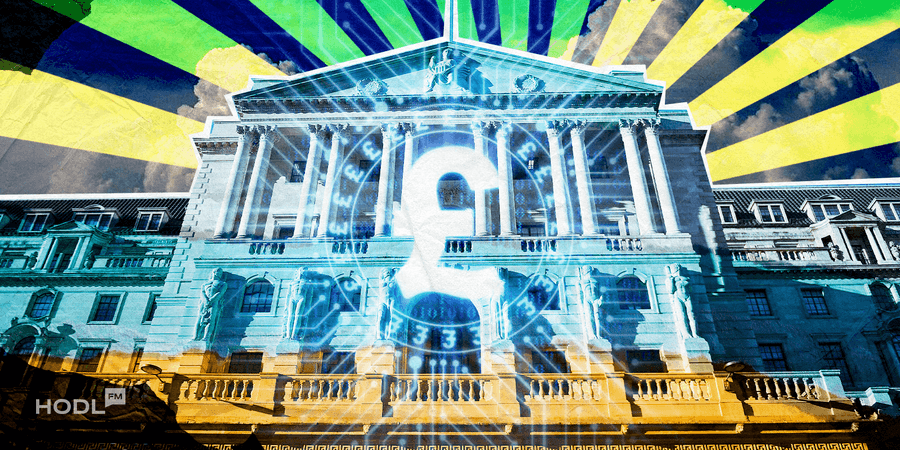



Andrew Bailey, governor of the Bank of England, warned that global regulators face a “coming wrestle” with the United States over how stablecoins should operate across borders. His remarks, delivered at a central bank conference and reported by Reuters, highlight a growing divide between Washington’s push for rapid adoption and Europe’s preference for tighter safeguards.
“If we want stablecoins to be part of the architecture of payments globally ... they're only going to work if we have international standards,” Bailey said.
He added that engagement with the U.S. administration will likely become contentious as both sides pursue different regulatory priorities.
Bailey’s concerns center on how stablecoins function under stress. Some dollar-backed tokens cannot be redeemed directly for cash without routing through crypto exchanges. He argued that such limitations could expose weaknesses during periods of market panic, when immediate convertibility becomes critical.
Convertibility risks come into focus
Bailey pointed to a structural issue that has shaped the Bank of England’s regulatory stance. In his view, stablecoins must maintain their nominal value and offer reliable redemption mechanisms if they are to function as money-like instruments.
He warned that in a crisis scenario, holders may abandon tokens with weaker redemption guarantees and move funds into jurisdictions with stricter rules.
“We know what would happen if there was a run on a stablecoin; they’d all turn up here,” Bailey said, according to Reuters.
The warning reflects concerns shared across European institutions. On the same day, Christine Lagarde of the European Central Bank argued that even euro-denominated stablecoins could disrupt financial stability and monetary policy transmission.
Together, the statements signal coordinated resistance from Europe’s most influential central bankers against a global stablecoin model shaped largely by U.S. regulation.
Diverging paths between the UK and the US
The policy gap has widened since U.S. lawmakers advanced a domestic framework for stablecoins. President Donald Trump signed the GENIUS Act into law in July 2025, establishing rules for issuers and encouraging broader adoption of dollar-backed tokens.
Under that framework, issuers must hold full reserves and provide regular disclosures. However, it does not require direct redemption access without intermediaries, a point that Bailey and other regulators view as a critical weakness.
In contrast, the UK has pursued a more conservative approach. The Bank of England proposed that systemic stablecoin issuers hold at least 40% of reserves in non-interest-bearing accounts at the central bank, with the remaining funds placed in short-term government debt. The structure aims to ensure liquidity during stress events and preserve confidence in redemption.
The central bank also introduced temporary holding limits of £20,000 for individuals and £10 million for businesses. After industry feedback, officials signaled openness to revising those caps, with updated proposals expected in the coming months.
Financial stability concerns remain central
Bailey’s position aligns with his broader role as chair of the Financial Stability Board, which coordinates global financial regulation. The FSB has issued recommendations on stablecoins since 2020, but those guidelines are still non-binding.
He reiterated that stablecoins still pose a potential threat to financial stability, particularly if they expand without consistent oversight. The market, now valued at more than $317 billion according to CoinGecko data, continues to be heavily concentrated in dollar-pegged assets backed by cash and U.S. Treasury bills.
Regulators outside the United States have repeatedly warned that such growth could challenge traditional banking systems. The concern extends to competition with bank deposits, especially if stablecoins offer yield-like incentives through third-party platforms.
Legislative pressure builds in Washington
Debate over stablecoin rules continues in the United States as lawmakers refine broader crypto legislation. The Senate Banking Committee is scheduled to review a market structure bill that includes provisions on stablecoin rewards.
Negotiations have exposed divisions between crypto firms and banking groups. The latest draft prohibits rewards on idle stablecoin balances but allows other forms of customer incentives. Talks on stricter limits failed to produce a full agreement after months of discussion.
These domestic developments add another layer to the international tension Bailey described. While U.S. policymakers focus on fostering innovation and strengthening the dollar’s global role, European authorities emphasize systemic risk and monetary control.
Global standards stay uncertain
Whether global standards will emerge depends on the willingness of major jurisdictions to align their approaches. Bailey’s remarks suggest that such alignment is still distant.
The Financial Stability Board will play a key role in shaping any consensus, but its recommendations lack enforcement power. The United States has historically shown limited appetite for binding multilateral rules in crypto policy.
For now, the trajectory points toward fragmentation. As stablecoins expand into cross-border payments, differences in convertibility, reserve structures, and oversight could define how the market evolves.
Bailey’s warning frames the stakes in clear terms. Without common standards, stablecoins may struggle to function as a reliable global payment layer. With them, regulators face a complex negotiation that could reshape the future of digital finance.
 Roman Zaika
Disclaimer: All materials on this site are for informational purposes only. None of the material should be interpreted as investment advice. Please note that, despite the nature of much of the material created and hosted on this website, HODL FM operates as a media and informational platform, not a provider of financial advisory services. The opinions of authors and other contributors are their own and should not be taken as financial advice. If you require advice, HODL FM strongly recommends contacting a qualified industry professional.