


Say "crypto startup" in 2021 and most people still picture a token launch with a pitch deck attached. That's not what's getting funded anymore. The founders raising real money in 2026 build settlement rails for asset managers, fraud detection for exchanges, or identity systems that tell humans apart from the AI agents transacting alongside them. A whitepaper and a Discord server used to be enough for a seed round. The investor today demands a product that works, a paying customer who uses the product, and a legitimate reason why the blockchain is needed as opposed to a database that is supplemented with more steps. The criteria have sifted through the market, resulting in a smaller set of projects with defensible business models covering infrastructure, stablecoins, tokenization, and security. Whether any of them will count three years down the line cannot be determined by looking at the money poured in via venture capital or token pricing. Usage metrics should be considered instead.
Where the venture money actually went
Crypto venture funding never fully recovered to its 2021 peak, and it cooled further this year, which says a lot about which blockchain companies are worth taking seriously right now.
a16z crypto's fifth fund closed at $2.2 billion in May, even as total capital raised across five funds passed $9.8 billion. Money that used to spread across hundreds of small seed rounds now concentrates into fewer, larger checks aimed at infrastructure, stablecoins, and tokenization.
There are some characteristics of those crypto startups that managed to survive worth mentioning. First, there was a fee-producing product already in operation before the release of their tokens. Second, their clients included not only individual but also institutional clients. Third, they had done the compliance work ahead of time rather than scrambling when getting subpoenas. And fourth, there was some investment in less visible infrastructure, for example, a wallet embedded for developers, which falls under the pick-and-shovels type of investing popular all cycle long. These are the standards the crypto startups should meet today; hence, so many crypto projects of 2021 did not survive.
Startups actually shipping this cycle
The following seven firms are not among the best-valued Web3 firms but rather occupy various corners of the sector; these selections are made for their utility, not their hype.
Monad Labs, infrastructure

Ethereum-compatibles have been known to conduct transaction processing one by one, limiting their throughput capacity. Monad Labs was established by Keone Hon and a team consisting of alumni from the crypto trading desk of Jump Trading and reconstructed the process of execution to be conducted in parallel, yet maintain their byte-code compatibility with Ethereum tools so that no code needs to be rewritten to deploy them.
Following the launch of mainnet in November 2025, Monad has seen more than 130 million transactions and $6.5 billion in DEX volume through 125+ live applications. Other competing chains have also adopted this model, which means that throughput is now the metric to watch.
Ethena Labs, decentralized finance
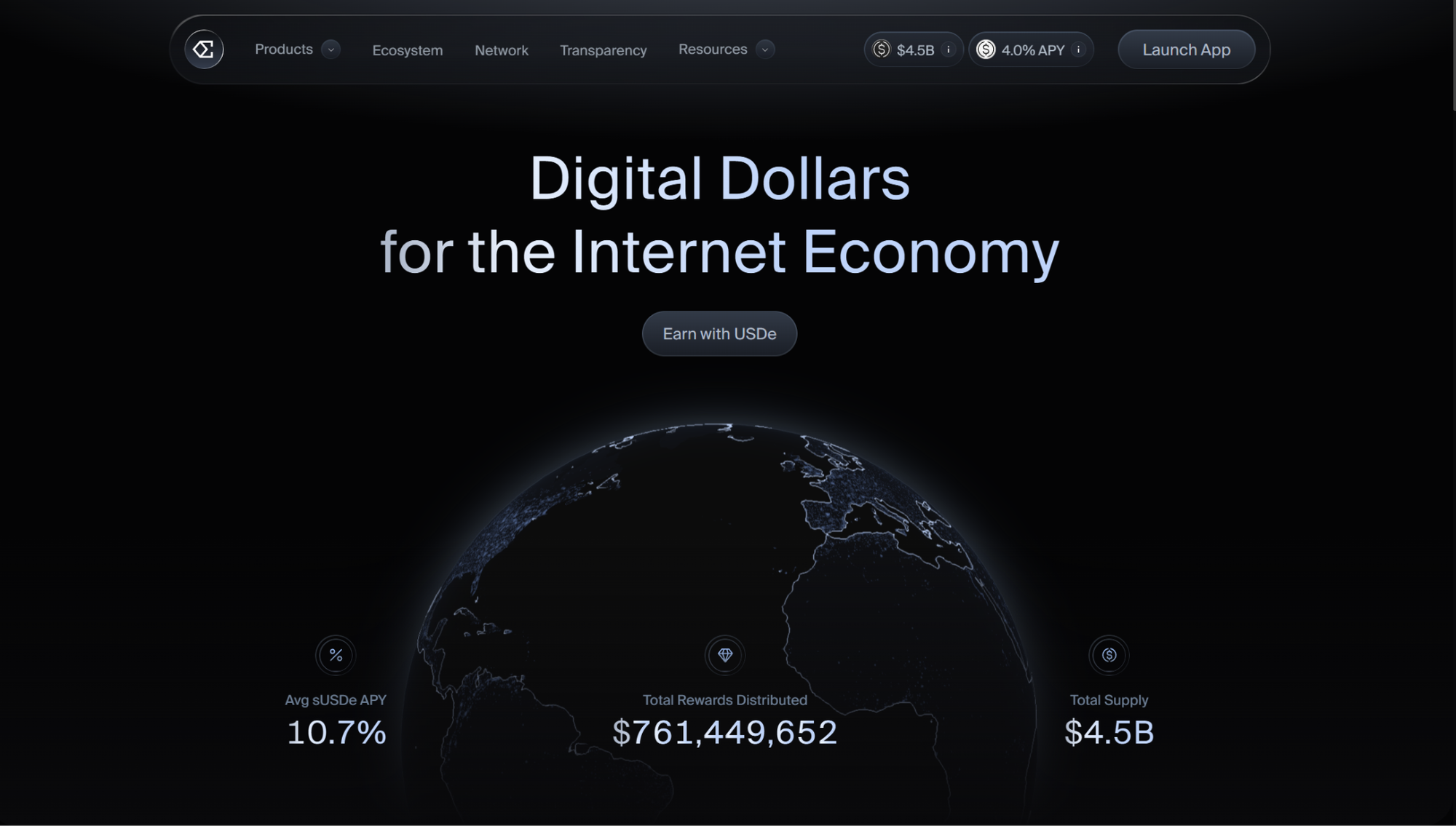
Dollar-backed stablecoins generally rely on bank connections that can be difficult to understand, or on significant over-collateralization. USDe is a synthetic dollar developed by Ethena in February 2024 by Guy Young, with initial funding links to Arthur Hayes. The currency reached its highest supply at $14 billion in 2025, and since then contracting to roughly $4.4 billion by mid-2026, per Ethena's transparency dashboard. That contraction is the more revealing number of the two: most synthetic-dollar designs don't survive a real drawdown at all, and USDe did. Yield comes from funding-rate arbitrage rather than token issuance, and this performed much better once the market mood shifted. USDe still provides the best real-world example of whether the synthetic-dollar model survives a downturn.
Bridge, stablecoins and payments
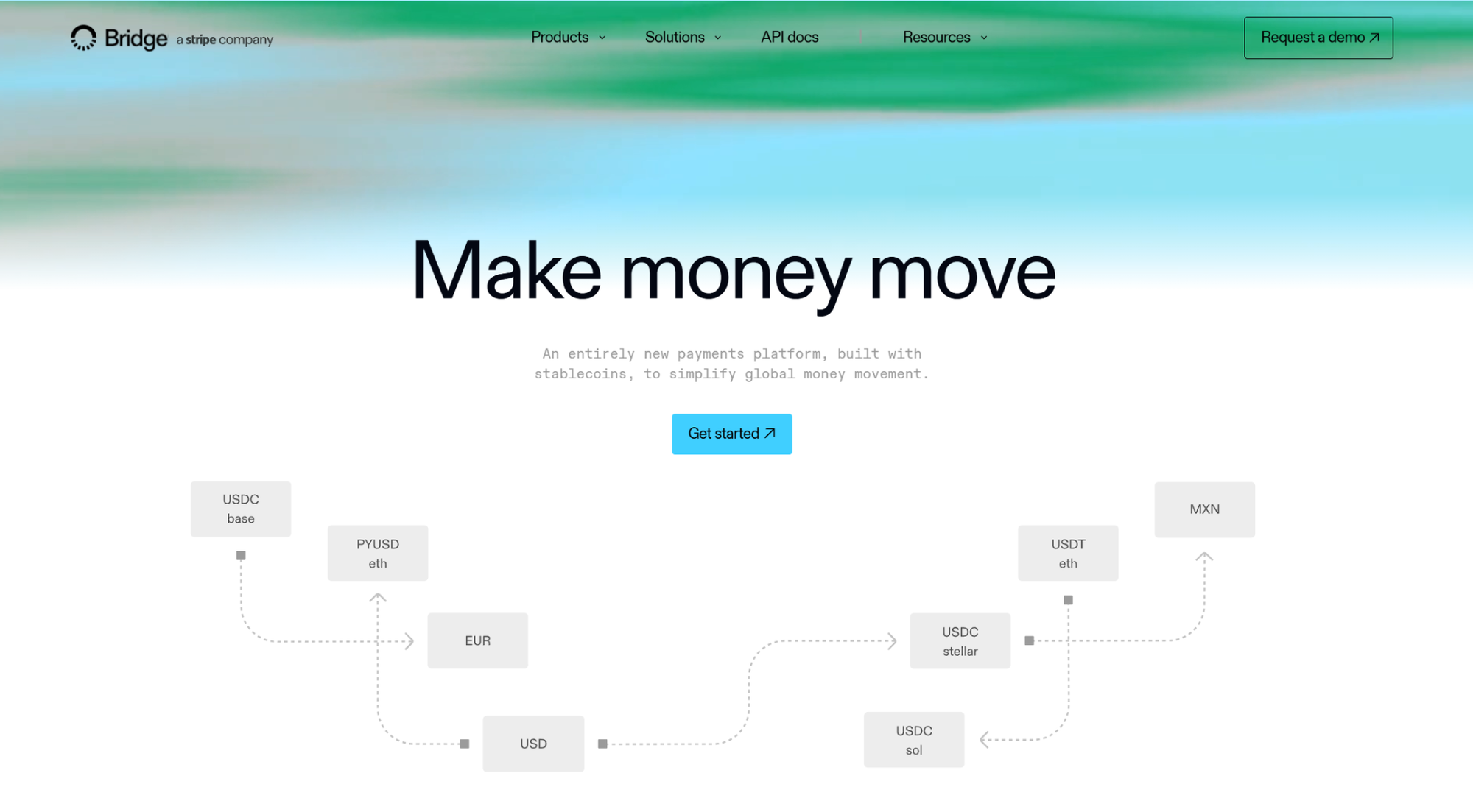
Businesses moving money in stablecoins still need a fiat-to-onchain conversion layer, and building the compliance and banking relationships that requires is more than most companies can take on alone. Bridge, founded by Coinbase alumni Zach Abrams and Sean Yu, built API infrastructure for exactly that.
Stripe closed a $1.1 billion acquisition of Bridge in February 2025, one of the largest stablecoin infrastructure deals to date. What Bridge built: API infrastructure giving businesses a fiat-to-onchain conversion layer, plus the compliance and banking relationships most companies can't take on alone. Founded by Coinbase alumni Zach Abrams and Sean Yu, it filled a gap incumbents were slow to fill. This year Bridge and Visa began rolling out stablecoin-linked cards to more than 100 countries, letting fintechs offer stablecoin spending at Visa's merchant locations through Stripe's existing base.
Securitize, tokenization

Tokenized funds offered by asset managers require more than just a smart contract; they must have a registered transfer agent and broker-dealer structure that conforms to the requirements of securities laws. In 2017, Securitize, co-founded by Carlos Domingo and Jamie Finn, registered with the Securities and Exchange Commission as a transfer agent long before tokenization was ever promoted, and thus became BlackRock's tokenization partner for the BUIDL fund. The BUIDL fund was launched on the Ethereum blockchain in March 2024 and continues to grow, with assets near $2.7 billion as of August 2026 across six blockchains. Regulatory registrations that took years to secure are hard to replicate, and tokenized treasuries remain one of the few crypto use cases institutions have actually adopted.
Hypernative, security
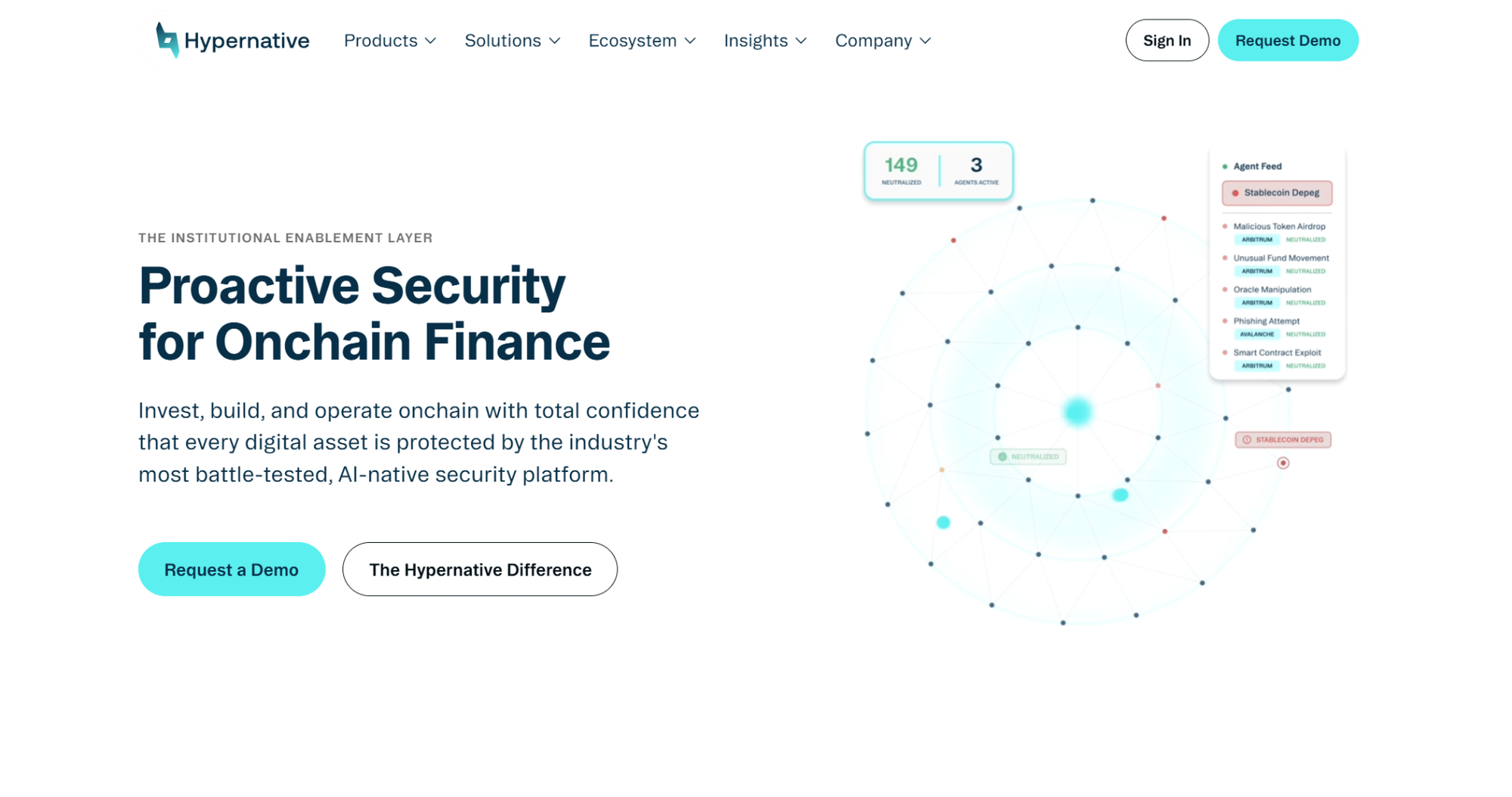
Exploits occur more rapidly than can be detected through manual analysis, and typically, most protocols realize they have been drained after funds have been withdrawn. At Hypernative, with a cyber intelligence team on board, a detection system that monitors for anomalies on-chain even before any transaction takes place was developed. It triggered a $40 million Series B in June 2025 led by Ten Eleven Ventures and Ballistic Ventures, bringing total funding to $68 million, and says it has helped secure more than $100 billion in value across 200-plus web3 projects. Built around prevention instead of forensics, it sits inside a protocol's stack before an incident hits.
Virtuals Protocol, AI and crypto convergence

Constructing and making money off of AI agents used to require centralized platform infrastructure, without an easy way to provide it with an on-chain wallet or a token for the purposes of collective ownership. Virtuals Protocol was created on Base and allows anyone to co-own and launch AI agents with tokenized ownership. Activity increased throughout 2025 and 2026, and the platform now counts more than 18,000 agents and $470 million in cumulative agentic economic activity. It launched a Revenue Network in February 2026, letting agents settle payments with each other directly. Whether that first-mover move holds up once bigger platforms build their own rails is still open.
Tools for Humanity, consumer applications

Tinder now shows a verified-human badge on some profiles, and Zoom can flag when a call participant might be an AI-generated deepfake. Both features run on World ID, the biometric proof-of-personhood system built by Tools for Humanity, founded by Sam Altman and Alex Blania alongside the World App wallet. Proving an account belongs to a real human is harder now that AI content and autonomous agents multiply online. The company pushed a major World ID upgrade through 2026, Orb-verified users have now grown to around 18 million in 160 countries, with Tinder and Zoom being two of the partner companies which have already started verifying their users and blocking any deepfake content generated by AI. Altman’s association with OpenAI makes the pitch even more credible for that audience segment.
Institutional rails and the regulatory line startups are building around
This list provides a glimpse of a trend: institutional capital and regulatory stance are influencing product choices right from the start rather than being added later after a company starts gaining some momentum. Institutional adoption looks more like boring enterprise product decisions rather than partnership announcements in press releases: permissioned settlement layers and compliance APIs get developed ahead of a company trying to attract consumers, just like in the cases of Securitize and Bridge discussed above. Regulation is becoming an element of fundraising as well.
Bitcoin-specific infrastructure deserves a quick aside here too, even outside the seven profiles above. Lightspark, founded by David Marcus, a former PayPal and Meta executive, creates Lightning Network settlement solutions for banks instead of betting on one consumer application, proving that, when a bitcoin company launches in 2026, there is an equal chance of developing a payments infrastructure rather than a wallet or exchange. AI usage in this context goes beyond just agent tokenization as well. In fact, some of the aforementioned companies already use AI technology within their companies for fraud detection, smart contract auditing, or research purposes, even though AI is not the selling point of their product.
What actually separates a company from a charlatan
None of this requires a summary nearly as much as it requires an answer to the key question: how do you differentiate between a true company and a well-marketed one? In each of these companies, there is resistance that does not get reflected in the headlines about funding rounds. Regulatory ambiguity in certain regions hinders enterprise sales cycles for longer than anticipated, and the struggle to recruit top engineers remains prevalent throughout the entire industry.
Token prices and funding totals are the easiest numbers to report, and the least reliable signal of whether a company is working. Recurring revenue or fee volume says more about durability than either one, and so does whether enterprise customers still show up a year after the partnership announcement, once incentive emissions dry up. The crypto startups worth watching among web3 companies in 2026 are the ones whose usage numbers would still make sense if the token disappeared tomorrow.
 Gunel Ismayilova
Disclaimer: All materials on this site are for informational purposes only. None of the material should be interpreted as investment advice. Please note that, despite the nature of much of the material created and hosted on this website, HODL FM operates as a media and informational platform, not a provider of financial advisory services. The opinions of authors and other contributors are their own and should not be taken as financial advice. If you require advice, HODL FM strongly recommends contacting a qualified industry professional.