






Bitcoin traded sharply lower over the week, slipping below $80,000 and briefly touching an intraday low near $76,500 before stabilizing around the $77,000 zone. The decline extended a broader pullback from levels above $81,000 recorded earlier in the week, leaving the asset down roughly 5% over seven days. At press time, Bitcoin stood near $77,400, according to HodlFM's price page data.
The move placed BTC in a fragile technical range where repeated tests of $76,700–$77,000 have begun to define short-term direction. Ethereum followed a similar path with a deeper percentage loss, while major altcoins including Solana, XRP, BNB, and Dogecoin recorded declines between 5% and 13% during the same period.
Liquidations across derivatives markets added pressure. CoinGlass data shows more than $690 million in positions were wiped out over 24 hours, with long positions accounting for nearly 95% of forced closures. That imbalance reflected heavy leverage on the bullish side before the downturn.
$1 billion leaves US Bitcoin ETFs as inflow streak breaks
US-listed spot Bitcoin ETFs recorded about $1 billion in net outflows over the past week, based on data from SoSoValue. The withdrawal ended a six-week streak of consecutive inflows that had previously added about $3.4 billion into the products.
The latest figure represents roughly 14,000 BTC in net exits over seven days. It also marks a pause in institutional accumulation that had supported Bitcoin’s recovery from earlier spring levels.
The prior week showed $706.1 million in inflows, which highlights the abrupt shift in positioning across two consecutive reporting periods.
Inflation data drives repricing across risk assets
The change in ETF demand aligns with renewed inflation pressure in US economic data. Coinbase noted that hotter-than-expected Consumer Price Index and Producer Price Index readings forced markets to reassess the inflation outlook.
Inflation is back, limiting crypto’s liquidity rally potential.
— Coinbase Institutional 🛡️ (@CoinbaseInsto) May 15, 2026
Key Takeaways:
• Hotter CPI and PPI forced markets to reprice inflation risk.
• Real wages and sentiment fell; jobless claims remain low.
• Crypto upside exists, but beta expansion likely requires improved… pic.twitter.com/hVLaJtBIT4
Core inflation and core services inflation showed continued strength, which suggests persistent price pressure rather than a temporary spike driven by energy costs. Real wages declined while consumer sentiment weakened, which added to signs of economic strain.
Coinbase stated that inflation trends are limiting expectations for near-term Federal Reserve easing. That adjustment reduced appetite for risk exposure across equities and crypto markets.
Treasury yields and oil reinforce market pressure
US Treasury yields remained elevated during the same period. The 10-year yield reached 4.599%, while the 30-year yield climbed to 5.131%, its highest level since May 2025. These levels increased the relative attractiveness of fixed-income assets compared with non-yielding assets such as Bitcoin.
Geopolitical developments added another layer of pressure. Brent crude moved above $111 per barrel, while WTI traded above $107, driven by renewed tension involving US–Iran relations and concerns over supply disruptions.
Higher oil prices increased the risk of sustained energy-driven inflation. That dynamic reinforced expectations that the Federal Reserve would maintain restrictive policy conditions for longer.
Market structure tightens around key Bitcoin levels
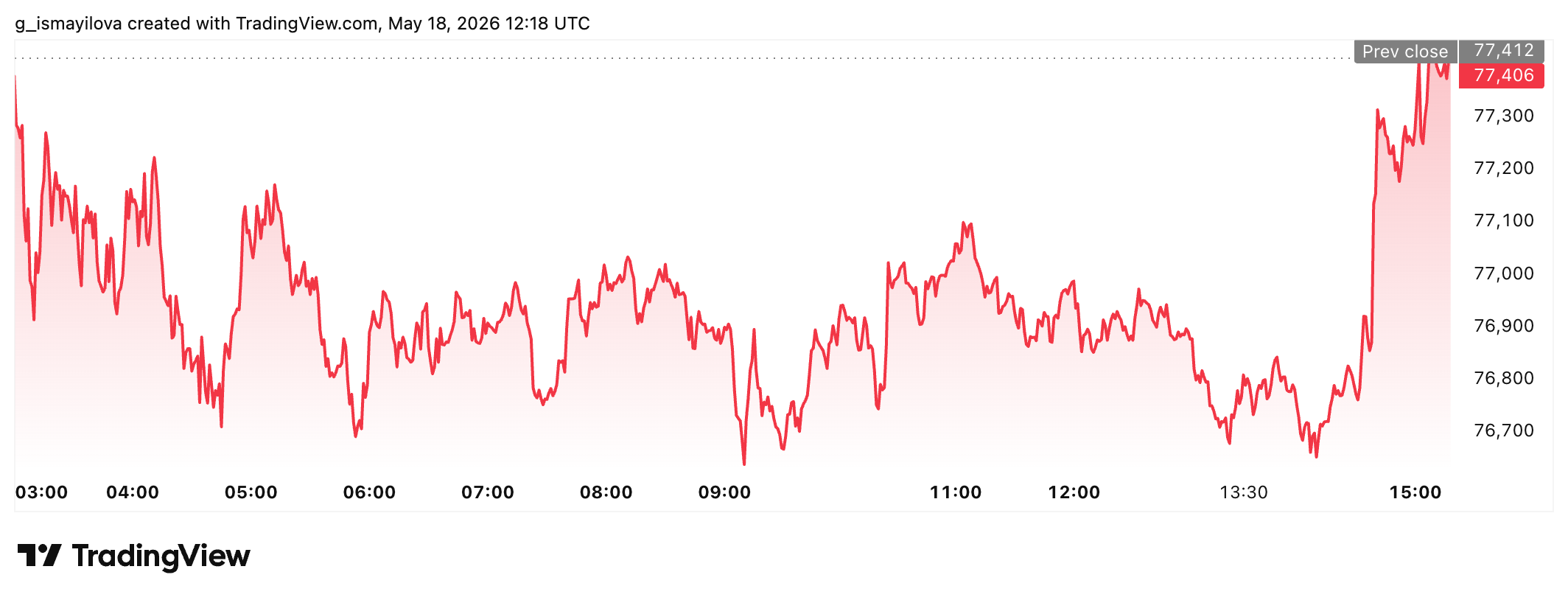
Bitcoin’s recent price action has concentrated around a defined support band between $76,500 and $77,000. A breakdown below $76K would expose downside levels near $75,500, followed by $74,000, where historical dip-buying activity has emerged.
A recovery above $80,000 would ease immediate pressure and signal stabilization in the current correction. A stronger move above $82,000 would place Bitcoin back above its recent technical ceiling and reset the short-term trend structure.
K33 data show Bitcoin’s correlation with Nasdaq futures above 0.7, which reinforces its sensitivity to broader equity market movements. That linkage has intensified during recent sessions as both stocks and bonds responded to inflation and yield shocks.
ETF flows remain tied to macro direction
Despite the $1 billion weekly outflow, structural demand indicators remain intact. The broader recovery pattern for Bitcoin ETFs has not broken, since cumulative inflows over recent months remain positive.
The key variable going forward is whether ETF outflows continue or stabilize. Sustained withdrawals would indicate weakening institutional absorption of macro pressure. Stabilized flows would support a base formation around current price levels.
Renewed liquidity expansion or a sustained decline in inflation would be required to restore stronger upward momentum. Until then, Bitcoin is likely to remain closely aligned with Treasury yields, inflation expectations, and risk asset sentiment.
 Roman Zaika
Disclaimer: All materials on this site are for informational purposes only. None of the material should be interpreted as investment advice. Please note that, despite the nature of much of the material created and hosted on this website, HODL FM operates as a media and informational platform, not a provider of financial advisory services. The opinions of authors and other contributors are their own and should not be taken as financial advice. If you require advice, HODL FM strongly recommends contacting a qualified industry professional.