




South Korea runs one of the tightest crypto regulatory environments globally, and Coinone has been part of it since 2014. It's one of five exchanges that cleared the country's strict 2021 compliance requirements, meaning it holds the bank partnerships and certifications that most smaller platforms couldn't secure. For Korean residents, it meets all current KFIU and ISMS regulatory requirements and has maintained a clean security record since 2014. For everyone else, this review will explain quickly why it likely won't be available to you.
What is Coinone, and how does it work?
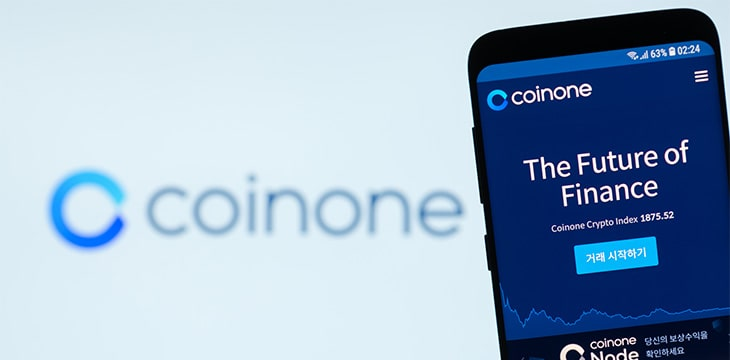
Coinone is a Seoul-based exchange built around Korean won (KRW) trading. It launched in 2014 and sits alongside Upbit and Bithumb as one of the country's established domestic platforms. It's registered as a Virtual Asset Service Provider (VASP) with the Korea Financial Intelligence Unit, holds ISMS (Information Security Management System) certification, and is a member of DAXA, the industry group that sets conduct standards for Korean exchanges.
KRW gets deposited from the user’s bank account in Korea, trades cryptocurrencies, and withdraws money into the user’s bank account. No such facility exists for USD, EUR, or any other fiat money. This is intentional, because Coinone is tailored to the needs of the Korean market and not of international retail investors.
Features of Coinone
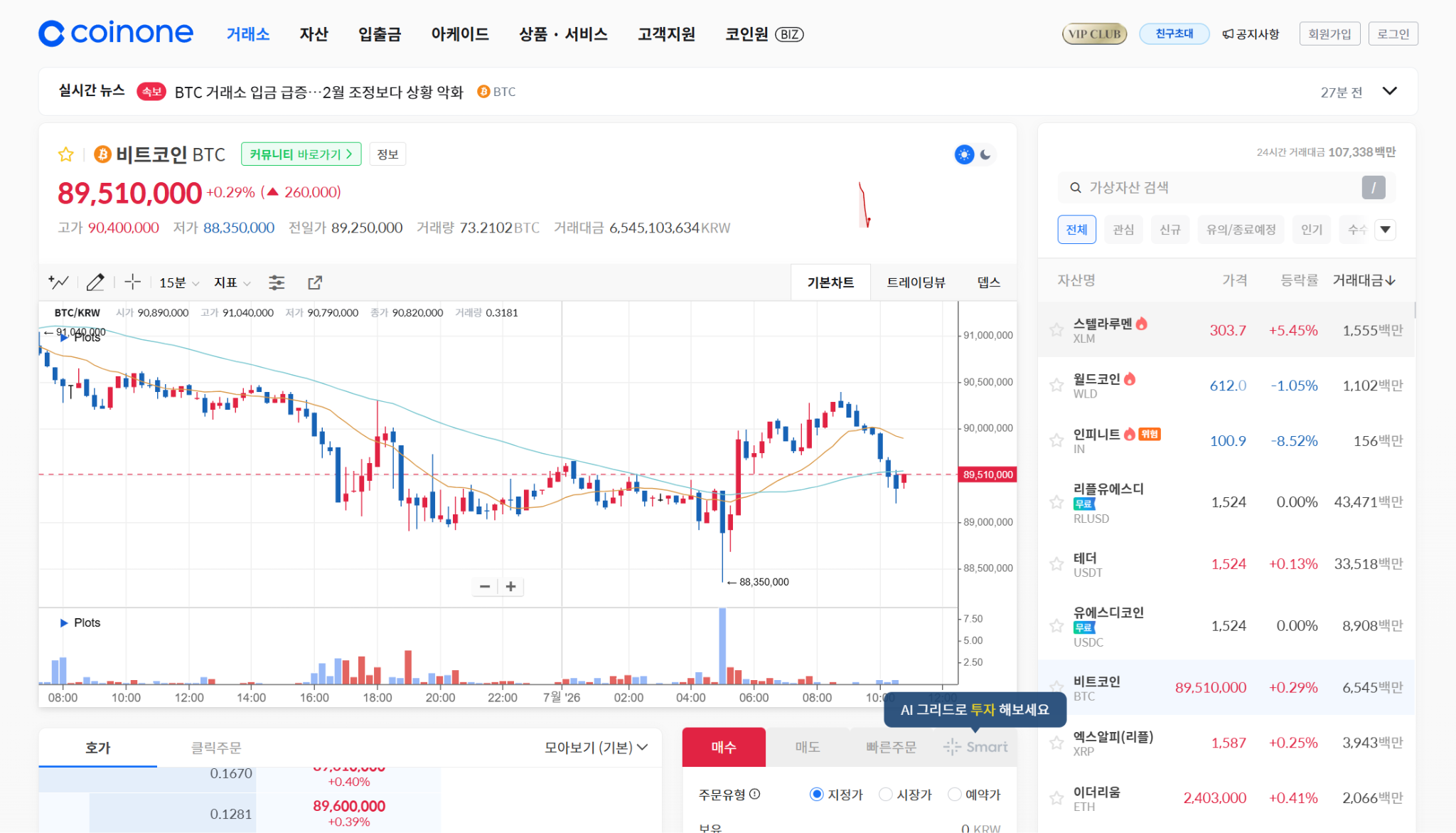
The exchange covers more than just basic spot trading. It has built out a few additional product lines that make it more competitive against domestic rivals.
Spot trading
Coinone lists over 240 cryptocurrencies for KRW trading, covering major assets like Bitcoin, Ethereum, XRP, and Solana alongside a broad selection of altcoins. The trading interface has two modes: a simplified layout for casual users and a pro view with order book depth and charting tools.
Staking
Coinone supports proof-of-stake networks including Ethereum and Solana. Liquid ETH staking is available, which gives you a tradeable representation of your staked position so you don't have to wait through unstaking queues to access liquidity.
Crypto borrowing
Coin Borrowing (코인빌리기) by Coinone has some differences with crypto-backed loans offered by other global platforms: users use their deposits in Korean won to receive loans in cryptocurrency rather than vice versa. The highest lending ratio that can be requested from Coinone is stated in the application process within the app, and is not available as a publicly known ratio. In case the ratio of the deposit and the sum borrowed becomes higher than the threshold established by Coinone, then the loan will be automatically returned using the deposit made in KRW (similar to the liquidation on other platforms), thus depriving the borrower of access to their deposit until they pay back their loan. Since the ratio, fee, and repayment conditions become apparent only during the application process within the app, potential borrowers need to consider them in the app itself.
KRW banking integration
The exchange collaborates with Kakao Bank to make local deposits and withdrawals possible. The Kakao Bank integration enables direct KRW deposits without a currency-conversion step.
Is Coinone legit?
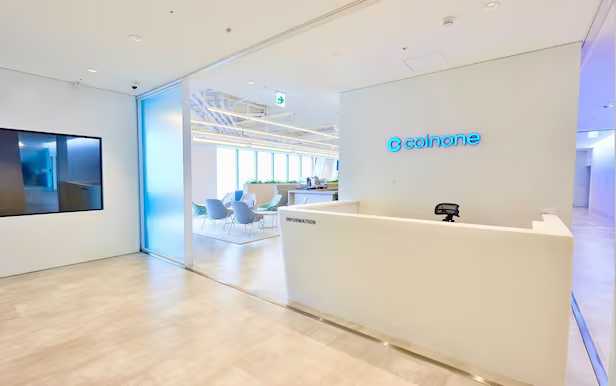
Coinone is one of 27 registered VASPs in South Korea as of January 2026, confirmed by the Korea Financial Intelligence Unit. It's also one of only five exchanges that obtained both ISMS certification and a real-name bank account partnership after South Korea's September 2021 regulatory deadline, which effectively shut out hundreds of unlicensed platforms.
The security record is clean. No major successful hack since 2014. The platform keeps the majority of user assets in cold storage, requires two-factor authentication, and runs anti-phishing measures as standard.
Coinone has a Trustpilot score of 1.7 out of 5, driven largely by complaints about withdrawal delays and undisclosed fees. The fact that the company is regulated does not necessarily mean that its customers will have no difficulties.
Trading experience and interface
The CoinOne mobile application can be downloaded for both iOS and Android users and includes both basic and advanced views of trading. For Korean users accustomed to fintech applications in their country, the design is quite intuitive.
The access restriction is high as CoinOne verifies only through Korean mobile operators (SKT, KT, LG U+) and only allows KRW deposits via a Korean bank account. As a result, virtually all foreign users (US, UK, Indian, etc.) are prohibited from accessing the exchange. Moreover, there are no futures or options markets on the platform.
Fees and costs of Coinone exchange
Regular spot trading is set at a uniform rate of 0.2%. There is a special tier system available for active users where maker fees are charged between 0% and 0.1% and taker fees are set between 0.02% and 0.1%, depending on the amount traded monthly. Traders who trade an average of 3 billion KRW per month ($2.2M USD) are eligible for VIP discounts of a 0% maker fee and a 0.01% taker fee.
The fee for bank withdrawals is 1,000 KRW. Fees for cryptocurrency withdrawal are charged according to crypto assets; Bitcoin withdrawal is set at approximately 0.0015 BTC, depending on the network. Fees are quite reasonable for Korean exchange standards, although globally competitive maker discounts are usually offered.
Pros and cons of Coinone
Coinone's advantages are concentrated in its regulatory standing; its weaknesses are largely structural: limited market access and no derivatives:
Coinone alternatives
If Coinone does not suit your needs, there are more regulated choices to choose from in South Korea. Upbit leads the domestic market on trading volume, while Bithumb is the longest-established exchange. Korbit is often cited for regulatory compliance, and Gopax sits at a similar regulatory tier to Coinone but at smaller scale.
Final thoughts
Coinone's regulatory position is well established, but Korean traders should weigh its Trustpilot track record against Upbit and Bithumb, especially before using the borrowing product.
 Tanya Petrusenko
Disclaimer: All materials on this site are for informational purposes only. None of the material should be interpreted as investment advice. Please note that, despite the nature of much of the material created and hosted on this website, HODL FM operates as a media and informational platform, not a provider of financial advisory services. The opinions of authors and other contributors are their own and should not be taken as financial advice. If you require advice, HODL FM strongly recommends contacting a qualified industry professional.