



Bitcoin fell sharply late Wednesday, sliding below the $62,000 mark and erasing weeks of recovery as multiple pressures converged at once. The world’s largest cryptocurrency dropped to $61,463.22 around 10:00 PM EDT, down from a 24-hour high of $67,416.50. The move marked a near 8% decline within a single day and pushed Bitcoin close to the psychologically important $60,000 level.
The decline leaves Bitcoin about 51% below its all-time high of $126,277 recorded in October 2025. The speed and scale of the drop reflected a broader loss of confidence that had already begun building beneath the surface.
Strategy sale breaks long-standing narrative
A key moment came earlier in the week after a filing with the U.S. Securities and Exchange Commission showed that Strategy sold 32 Bitcoin between May 26 and May 31. The sale generated about $2.5 million at an average price of $77,135 per coin.
The amount itself remained small compared to the firm’s holdings of more than 818,000 BTC. The signal it sent carried more weight. The transaction marked the first disclosed net reduction in years and broke with the company’s long-promoted stance of never selling Bitcoin.
The proceeds funded dividend obligations tied to its STRC preferred shares, which carry an annual variable yield of 11.5%. Despite that explanation, the market reacted immediately. Bitcoin dropped below $72,000 after the disclosure, while Strategy shares declined close to 6% on the same day.
ETF outflows reveal sustained institutional retreat
Selling pressure extended beyond a single corporate move. U.S. spot Bitcoin ETFs recorded a streak of 11 to 12 consecutive days of net outflows, the longest since launch, according to SoSoValue data. Total withdrawals reached about $3.45 billion during that stretch.
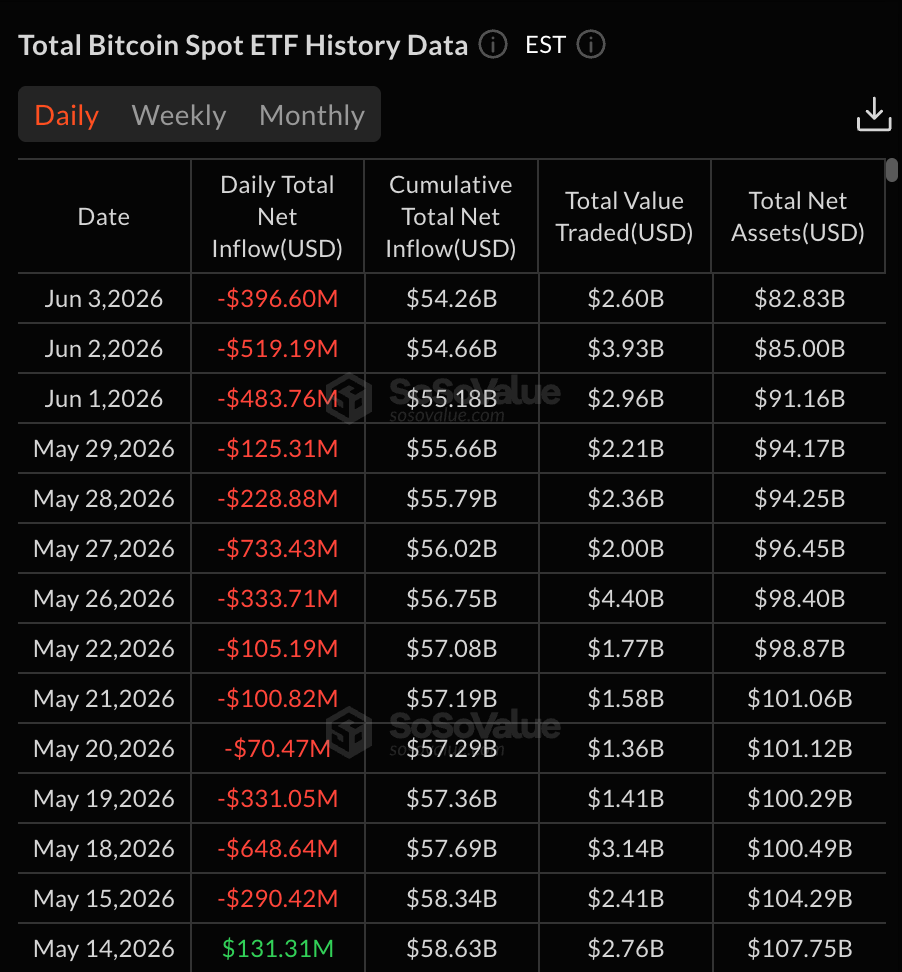
The week ending May 29 alone accounted for $1.42 billion in outflows, ranking as the third-largest weekly withdrawal on record. For the full month, net outflows totaled $2.30 billion, even though Bitcoin’s price declined only 3.69% during the same period.
That divergence suggested that institutions reduced exposure steadily, even when price movements did not fully reflect the shift.
A notable transaction occurred on May 26, when BlackRock’s IBIT ETF recorded a $1.26 billion off-exchange block trade. Research firm NYDIG described the move as a large investor cutting exposure rather than executing a hedge-related strategy.
Liquidations accelerate the decline
As prices moved lower, leveraged positions began to unwind rapidly. Data from CoinGlass showed that more than $749 million in Bitcoin positions were liquidated within 24 hours. Long positions accounted for over $631 million of that total.
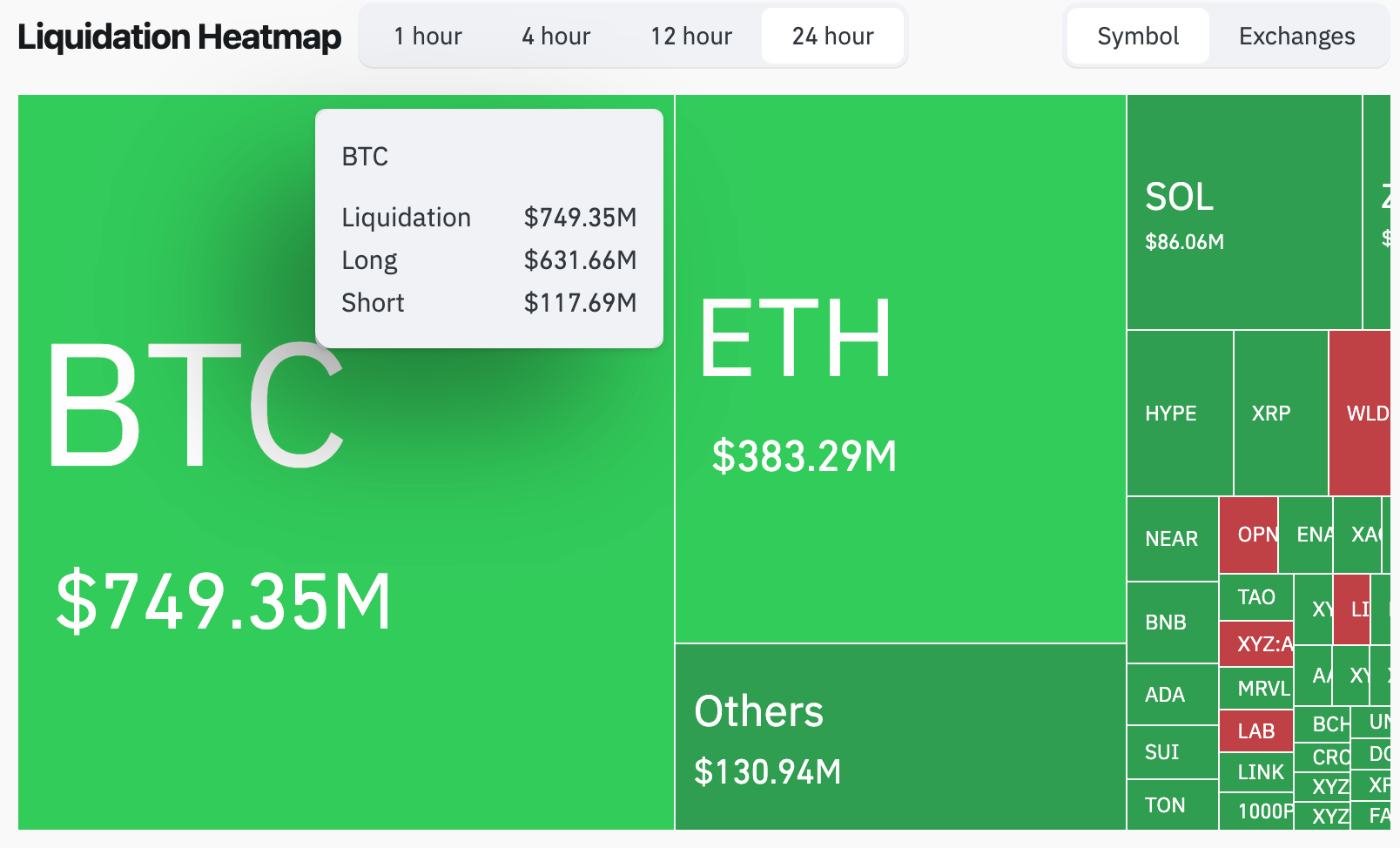
The scale of liquidations highlighted how heavily traders had positioned for further upside. Once prices broke lower, forced selling amplified the decline.
Bitcoin briefly dropped toward $61K before rebounding near $63,690, according to Hodlfm data. The recovery coincided with reports of a ceasefire agreement between Israel and Lebanon, which eased some geopolitical tension and supported risk assets.
Macro pressure and shifting capital flows
Broader economic conditions added further strain. Escalating tensions involving the United States and Iran pushed investors toward safer assets, reducing demand for high-volatility markets such as cryptocurrencies.
Capital shifted toward other opportunities. Artificial intelligence-related equities, along with anticipated IPOs from major technology firms, attracted growing investor interest. Private market activity also expanded, with large valuations drawing speculative attention.
Jim Ferraioli, director of digital currencies research and strategy at Charles Schwab, said momentum has moved away from crypto.
“Bitcoin has been in a bear market since October,” Ferraioli said. “Not to say it’s as simple as that, but it’s kind of simple as that.”
He pointed to changing investor behavior rather than a lack of positive developments. Over the past year, the crypto sector achieved ETF approvals, drew institutional capital and moved closer to regulatory clarity in the United States. Those factors failed to generate sustained upward momentum.
“Crypto investors historically just go wherever the momentum is,” Ferraioli said. “And momentum is out of crypto at the moment.”
Technical outlook keeps both scenarios open
On the technical side, Bitcoin continues to trade near its 200-week simple moving average, which sits around $61,800. This level has served as a key support zone in previous market cycles.
A sustained hold above that level could support a move back toward $70,000. Some traders pointed to the recent rebound as a possible sign of short-term stabilization.
The broader chart structure still reflects a potential bear flag breakdown. That setup leaves open the possibility of a deeper move toward the $50,000 to $52,000 range if selling pressure resumes.
Seasonal trends may add another layer of caution. Trading activity often slows during the summer months, which has historically aligned with weaker Bitcoin performance.
For now, the market faces a mix of reduced institutional demand, shifting investor priorities and lingering macro uncertainty, all of which continue to weigh on price direction.
 Jordan V.
Disclaimer: All materials on this site are for informational purposes only. None of the material should be interpreted as investment advice. Please note that, despite the nature of much of the material created and hosted on this website, HODL FM operates as a media and informational platform, not a provider of financial advisory services. The opinions of authors and other contributors are their own and should not be taken as financial advice. If you require advice, HODL FM strongly recommends contacting a qualified industry professional.