


Sixty-plus crypto firms folded between January and July 2026, a faster clip than the industry saw even during the 2022 contagion year. The list includes Layer-1 chains nobody uses and DeFi protocols that got emptied overnight; however, the entities that drive the market movements include exchanges, the venues where people deposited their money, trusting these venues to operate safely. What is remarkable about this is the timing of these changes. The regulators in the United States, Europe, and all over Asia promised a clear rulebook for the industry in the span of two years, and 2026 marks the year when this rulebook comes into effect.
Crypto exchanges have failed in the past as well, but the thing that sets the crypto exchange failure cycle apart this time is the cause behind it. For most of 2022, the reason behind failures was due to one lousy balance sheet that was propped up by nothing more than egotistical self-interest on the part of the founder.
The names that actually shut down
Three of 2026's clearest cases collapsed within about a month of each other, and each one failed for a different reason.
BitMEX
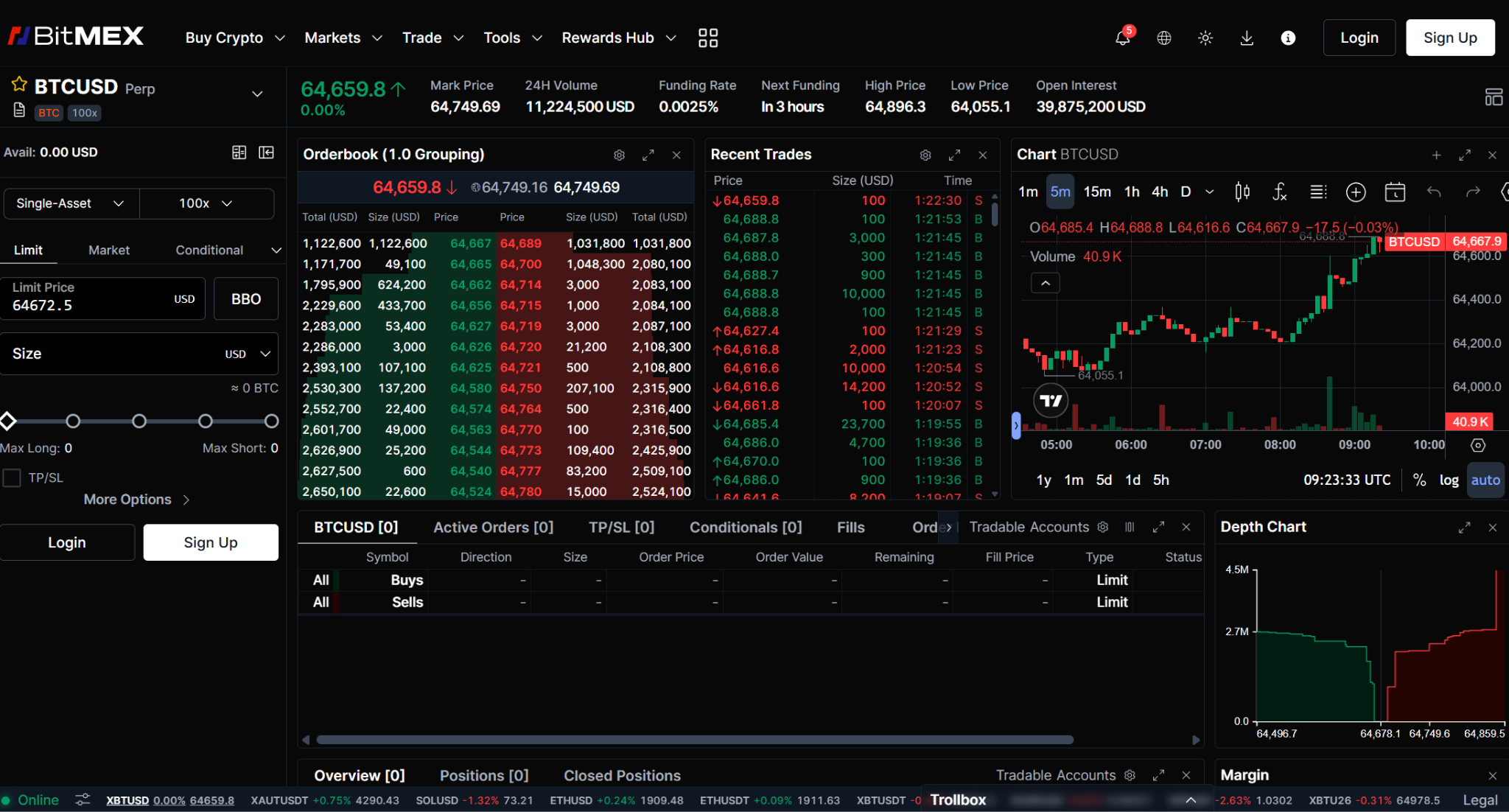
BitMEX announced on July 23 that it would close for good on September 23, ending an eleven-year run during which the exchange says it never lost a customer's funds to a hack. That claim matters because BitMEX isn't shutting down over a security failure or a liquidity gap. HDR Global Trading, the company behind it, cited a "strategic review" and offered nothing more specific. Behind the scenes, this is a derivatives platform that came up with the concept of the 100x leverage perpetual swap and saw everyone else copy it, without coming up with anything else after its copies became better and more regulated. A monthly maintenance charge is incurred for users who do not withdraw before the expiration date, an indication of what the exchange plans on exploiting from the users’ inertia.
AscendEX
AscendEX, however, had a slightly more complicated exit strategy. The exchange suspended deposits, trading, and account creations from July 1 due to the prevailing market environment and its inability to get the required license according to the new Markets in Crypto Assets framework of the European Union. Five days later, all withdrawal requests were put under manual approval without any promise of a definite timeline. The on-chain investigator ZachXBT had already seen this coming since he saw a reduction in AscendEX's reserves dropped by more than $240 million on June 20, six days before their first public warning, after a similar liquidity injection two months earlier. This is a perfect bank run story.
BitMart
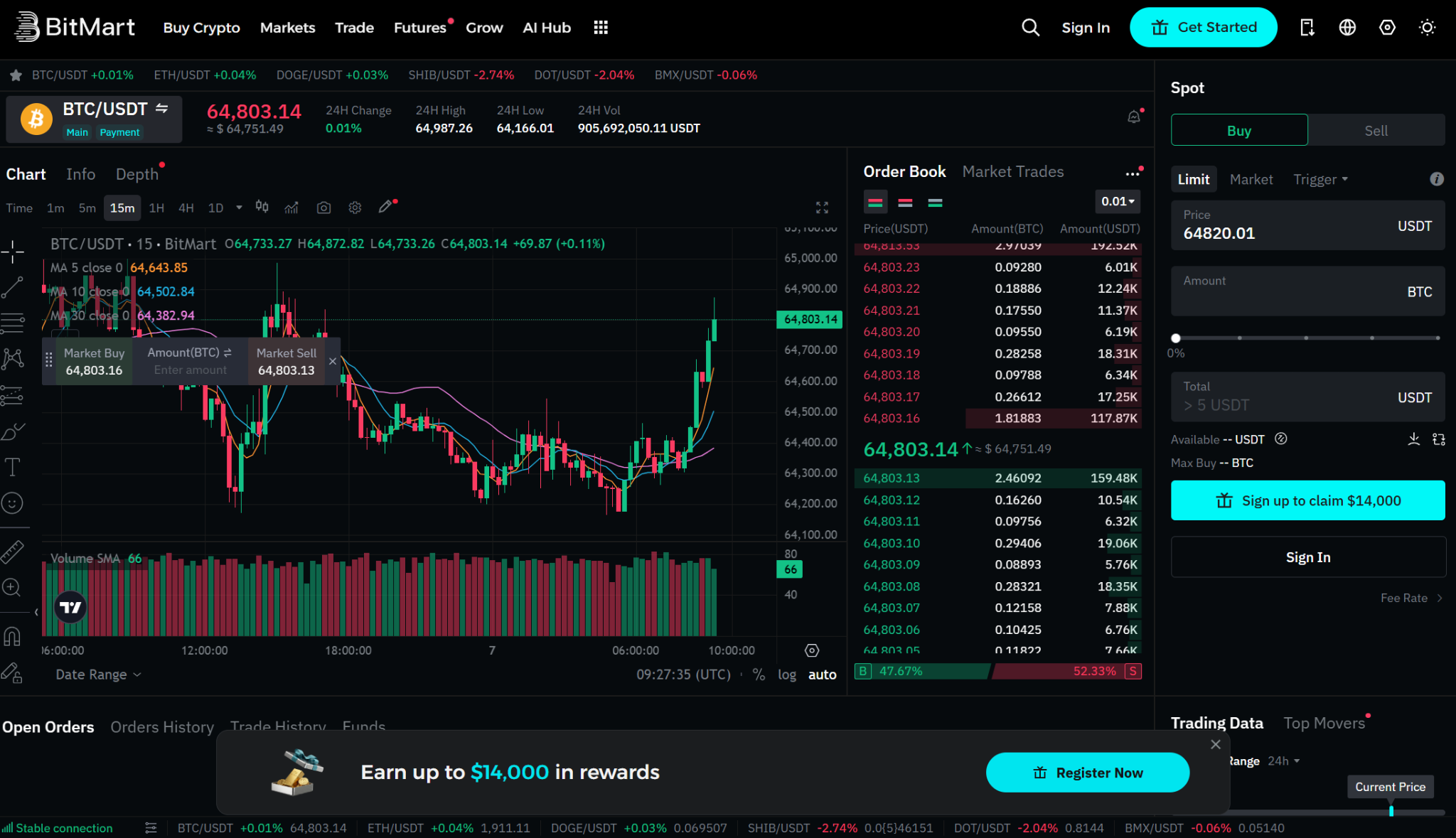
BitMart took a different approach, and it still couldn't stop the panic. The exchange announced a phased shutdown on July 26, ending trading by August 26 and giving users until January 31, 2027, to pull remaining funds. Despite that, BitMart’s BMX token saw its value reduced by 58% within 24 hours after the news. It is quite a different story from the abrupt freezing of user funds on AscendEX, which had its own utility token, but only inasmuch as it was able to operate; once it ceased being viable, there was nothing more for the token to retain its value. And this is the tokenomics trap in a nutshell: The exchange token can serve as a means of loyalty only as long as the exchange itself remains afloat.
Bit.com
Bit.com took the tidiest exit of the group. It announced on December 27, 2025, that it would wind down in three phases: not accepting any new registrations at all, ending spot trading on January 31, 2026, and closing its books on March 31; but instead of locking the accounts, it suggested to its users to move their balances to another partnering platform called Matrixport.
Not all of the 2026 exits were unsuccessful in the collapse context.
Gemini
Gemini shut down its UK, EU and Australian operations by April, moving accounts to withdrawal-only mode in March and cutting a quarter of its staff. It stayed solvent throughout, simply choosing to focus on the US instead of running three separate compliance regimes.
Binance
Its application for a MiCA license through Greece's regulator collapsed in June, reportedly following the guilty plea in 2023 of the firm’s founder, Changpeng Zhao, along with the $4.3 billion fine that accompanied it. Its response was to stop accepting new users in France, Italy, Poland, and Spain in order to avoid operating without the necessary license. No bankruptcy occurred in either case, just a decision that some markets were not worth the compliance cost.
Why DeFi failures look nothing like exchange failures
Centralized exchanges die slowly, through balance sheets and regulators. DeFi protocols tend to die in a single transaction.
Summer.fi
Summer.fi's Lazy Summer Protocol lost about $6 million on July 6 when an attacker used a flash loan through Morpho to manipulate the vault accounting and redeem more than they'd deposited. The protocol had held $22 million before the exploit, and had none of the recourse a centralized exchange has: no customer service line, no legal entity a court can force into paying users back. Summer.fi paused the vaults and wound the product down days later.
Movement Labs
Movement Labs filed for Chapter 11 in July after a market maker linked to an intermediary called Rentech sold 66 million MOVE tokens the day after listing, pocketing roughly $38 million and crushing the token 99% off its all-time high. Movement is a company with a token, not a fully decentralized protocol, which is why it could file for bankruptcy at all. A DAO can't do that; it just stops functioning and leaves depositors reading a governance forum post for answers.
The regulatory squeeze behind the timing
Regulatory pressure in this case was real. MiCA's transitional phase came to an end on July 1, and at that point, there were only 183 companies with complete authorization as Crypto Asset Service Providers in the EEA, but only 14 out of them had a license to operate a trading platform. The cost of obtaining authorization is from 250,000 to 500,000 euros: the SEC and CFTC issued a joint interpretive framework in March, sorting crypto assets into five categories: digital commodities, digital collectibles, digital tools, stablecoins, and digital securities, ending the enforcement-first approach that made compliance unpredictable for years. However, South Korea had taken a different route by developing the Digital Asset Basic Act, which required issuers of stablecoins to have reserve funds in place of 100% or even more in banks or any other authorized institutions. None of these frameworks was responsible for creating the problem but rather made the situation clear.
What happens to users once withdrawals freeze
For users, the mechanics of a shutdown matter more than the cause. AscendEX depositors are stuck in manual review with no timeline, the same position Mt. Gox users were in a decade ago, when partial recovery took nearly ten years of court proceedings.
BlockFills, a liquidity provider and not a retail exchange, is one of the quieter cryptocurrency bankruptcies in 2026. BlockFills stopped withdrawals in February and filed for Chapter 11 in March with assets between $50 million and $100 million but liabilities as high as $500 million. Then BlockFills received a restraining order when a customer sued BlockFills for commingling funds. As soon as an exchange freezes withdrawals, users who can withdraw all try to do so, using up any available liquidity and turning a problem into a permanent one. It is the same principle that caused bank failures before there was insurance on deposits.
What separates the exchanges still standing
The exchanges still standing didn't get there by luck. Proof of reserves is released monthly in the form of a Merkle tree by Kraken, in which users can check their balance without compromising other people’s data. Coinbase does not implement any form of crypto proof of reserves and uses its publicly traded nature as well as quarterly financial reports instead. Both ways outperform the approach taken by AscendEX and BitMart, which remained silent until their reserves ran out. The common feature shared by MiCA-licensed platforms – Coinbase, Kraken, OKX, Crypto.com, Bitstamp, Bitpanda and Bitvavo – is that they regard licensing as a cost of doing business, not of avoiding costs.
The crypto exchange risks worth watching were visible before most of these shutdowns went official, if anyone was actually looking. AscendEX's reserve outflow showed up on-chain almost a week before the company said anything. BitMart's token had already lost most of its value over the preceding year before the 58% crash made the exit obvious. Withdrawal delays blamed on "high volume" or "technical maintenance" for more than a few days rarely are either. None of that takes a forensic accountant to catch, just a willingness to check an exchange's reserve reporting and withdrawal history before assuming a platform that's been around for years will stick around.
 Tanya Petrusenko
Disclaimer: All materials on this site are for informational purposes only. None of the material should be interpreted as investment advice. Please note that, despite the nature of much of the material created and hosted on this website, HODL FM operates as a media and informational platform, not a provider of financial advisory services. The opinions of authors and other contributors are their own and should not be taken as financial advice. If you require advice, HODL FM strongly recommends contacting a qualified industry professional.