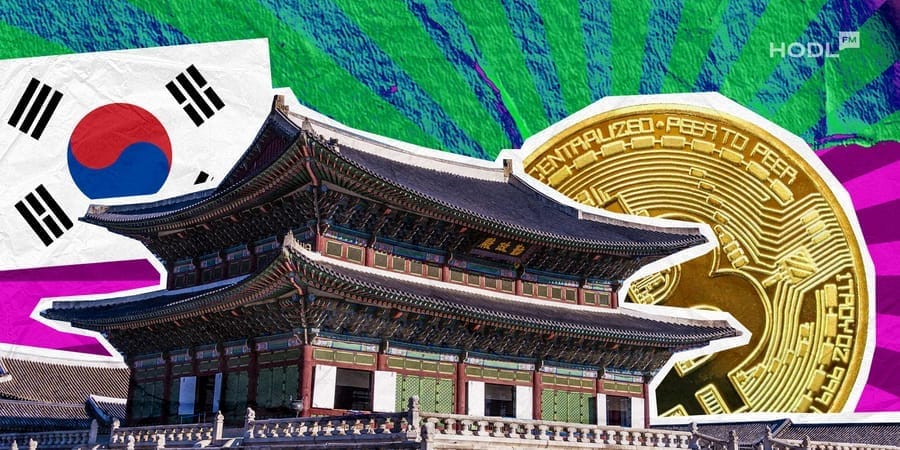



Shin Hyun-song took office as governor of the Bank of Korea on April 21, outlining a four-year agenda shaped by economic uncertainty, structural risks, and rapid financial digitization. Speaking at the central bank’s headquarters in Seoul, Shin framed his mandate around price stability, financial resilience, and institutional reform while placing notable emphasis on blockchain-based finance and central bank digital currency.
As reported by local media outlet Coshun Biz, in his first speech, Shin said,
"As uncertainty over the paths of inflation and growth has increased due to a supply shock from the Middle East war, we must seek price stability and financial stability through careful and flexible currency policy management."
His remarks pointed to rising oil prices and geopolitical tensions as immediate pressures on both inflation and growth.
Four priorities set the tone for policy direction
Shin introduced four core priorities that will guide the central bank’s work. The first centers on monetary policy flexibility. He stressed the need to refine policy tools and improve coordination with the government to manage trade-offs between inflation control and economic growth. He also committed to stronger communication with markets, a move that reflects growing volatility in financial conditions.
The second priority focuses on financial stability. Shin described a system where traditional boundaries between banks and nonbanks have weakened, increasing systemic risks. He said the central bank will expand its monitoring framework beyond conventional indicators and rely more on market-based signals to detect early warning signs. This includes improving visibility into nonbank institutions and off-balance-sheet exposures.
His third priority addresses the future of money. Shin placed strong emphasis on payment systems and currency trust in a digital economy. He said the Bank of Korea will work to internationalize the Korean won by promoting 24-hour foreign exchange markets and building offshore settlement infrastructure. These steps aim to align the currency with global standards and increase its use in cross-border transactions.
The fourth priority shifts toward structural reform. Shin linked demographic changes, polarization, and household debt to weakening economic momentum. He said the central bank will deepen its research and policy recommendations to help guide long-term economic adjustments.
Digital currency strategy moves forward
A central theme in Shin’s speech involved digital finance. He confirmed that the Bank of Korea will expand central bank digital currency and deposit tokens through the second phase of Project Hangang. The initiative serves as a testing ground for digital money and payment tools.
Shin also pointed to international cooperation, including participation in Project Agora, as a way to strengthen the Korean won’s role in global payments. These efforts reflect a broader strategy to position the central bank within an increasingly digital financial ecosystem.
He said the bank will "protect the stability of settlement and payment systems and promote the global use of the national currency in a digitalized financial ecosystem." The statement highlights a dual approach: support innovation while maintaining system integrity.
Stablecoins left out amid ongoing policy debate
Despite the focus on digital assets, Shin did not mention won-based stablecoins in his speech. The omission comes at a time when lawmakers, under President Lee Jae-myung, continue work on the Digital Asset Basic Act. The proposed legislation aims to establish a legal framework for digital assets, including stablecoins.
Discussions around the bill have slowed, with further debate expected after the June 3 regional elections. Meanwhile, major financial firms in South Korea have expanded efforts in stablecoin-related services, anticipating regulatory clarity.
Shin’s past views provide context. During his tenure at the Bank for International Settlements, he argued that stablecoins could not replace traditional currencies due to fragmentation risks. More recent remarks suggest a more flexible position, with support for coexistence between stablecoins and CBDCs. His decision not to address stablecoins directly signals a near-term focus on state-backed digital money.
Institutional reform and global engagement
Beyond policy substance, Shin called for internal changes within the central bank. He urged staff to break down silos across departments and improve collaboration between research and policy functions. He also highlighted the need to adopt digital tools to improve productivity, noting that organizational change is essential for meaningful efficiency gains.
Shin emphasized the importance of global engagement. He said the Bank of Korea should play a more active role in international discussions, including at institutions such as the BIS and the International Monetary Fund. He framed this as both a responsibility and an opportunity to bring global insights back to Korea’s domestic challenges.
A central bank at a turning point
Shin’s opening address reflects a central bank navigating multiple transitions at once. Inflation risks tied to geopolitical tensions sit alongside deeper structural issues at home. At the same time, digital finance continues to reshape how money moves and how policy operates.
His approach combines continuity with recalibration. Price stability remains the anchor, but the tools and context have shifted. Digital currency, financial interconnectedness, and structural reform now sit closer to the core of central banking.
The absence of stablecoins from his speech leaves part of the digital asset debate unresolved. For now, the Bank of Korea appears set to prioritize official digital currency frameworks, while legislative and market developments shape the role of private alternatives.
 Gunel Ismayilova
Disclaimer: All materials on this site are for informational purposes only. None of the material should be interpreted as investment advice. Please note that, despite the nature of much of the material created and hosted on this website, HODL FM operates as a media and informational platform, not a provider of financial advisory services. The opinions of authors and other contributors are their own and should not be taken as financial advice. If you require advice, HODL FM strongly recommends contacting a qualified industry professional.