





Polygon has introduced a new liquid staking token, sPOL, in a move aimed at addressing one of the most persistent inefficiencies in decentralized finance: idle capital. The launch, confirmed by the Polygon Foundation on April 14 via X, allows users to unlock more than 3.6 billion staked POL while continuing to earn rewards.
The release marks a structural shift in how staking works on the network. Until now, most staked POL remained locked and unusable across DeFi applications. Polygon estimates that only 4% to 5% of staked POL has been liquid, leaving the majority of capital inactive beyond basic staking rewards.
sPOL changes that dynamic by turning staked positions into a transferable asset that can be deployed across lending, trading, or collateral strategies without requiring users to unstake.
Native liquid staking model targets fragmented ecosystem
Polygon describes sPOL as its first native liquid staking token, developed directly by Polygon Labs rather than third-party providers. The token has undergone audits by ChainSecurity and Certora, according to the announcement.
The project launches with immediate liquidity support. Polygon seeded $10 million in initial liquidity, with plans to scale that to $100 million over time. Trading pools on Uniswap V4 went live at launch, which removes the need for early users to rely on thin markets or delayed adoption cycles.
The design also removes reliance on external smart contract providers. Polygon positions this as a key distinction from existing liquid staking options on the network, where third-party protocols often charge fees between 5% and 16%.
Fee sharing model aims to realign incentives
A central feature of sPOL lies in how it redistributes network value. Validators who participate in the program agree to return a portion of priority transaction fees to delegators.
"Validators in the sPOL program agree to return a portion of priority fees to delegators. That means the economic value produced by the network flows back to the people who secure it. This is what staking alignment looks like."
This approach solves a long-standing issue in proof-of-stake systems, where priority fees generated by network activity often do not reach token holders who provide security.
Polygon recently proposed broader changes to fee distribution. The sPOL launch aligns with that effort, as the network seeks to direct more economic output toward stakers.
How sPOL works in practice
Users who stake POL through the official portal receive sPOL at a 1:1 ratio at launch. Over time, the exchange rate increases as staking rewards accumulate. The number of tokens held remains constant, but their underlying value grows.
Existing stakers can migrate their positions without a waiting period or interruption in rewards. New staking deposits automatically generate sPOL.
Once issued, sPOL can be used across DeFi protocols. It can serve as collateral, provide liquidity, or support yield strategies, while continuing to accrue staking rewards in the background. Users retain the option to redeem sPOL for the underlying POL plus rewards at any time.
Institutional use case drives design
Polygon frames the launch as a response to changing expectations from institutional participants. In traditional finance, capital is evaluated based on its ability to remain productive across multiple strategies.
Idle capital, even when secure, becomes less competitive in that context. Polygon argues that separating staking from broader market activity limits the network’s appeal to larger players.
The gap between ecosystems highlights the issue. On Ethereum, more than 40% of staked ETH is used in liquid staking structures. On Polygon, the figure remains near 4% to 5%. The difference shows infrastructure limitations rather than lack of demand, according to the company.
sPOL aims to close that gap by introducing a standardized and composable staking asset that can integrate across financial use cases, including payments and treasury management.
Launch follows recent network upgrades
The timing of the sPOL release follows a series of infrastructure updates on Polygon. As HodlFM reported earlier this month, the Giugliano hardfork introduced faster transaction finality and improved fee transparency at the protocol level.
In a statement shared on X, the team said:
"This upgrade enables faster finality by letting producers announce blocks earlier, adds fee parameters directly in block headers, and introduces new RPC support for fee data."
Testing on the Amoy testnet showed a roughly two-second improvement in finality time. The upgrade also introduced new requirements for node operators to update software ahead of activation.
These changes form part of Polygon’s broader Gigagas roadmap, which targets up to 100,000 transactions per second and positions the network for large-scale payment and real-world asset use cases.
Market context and risks
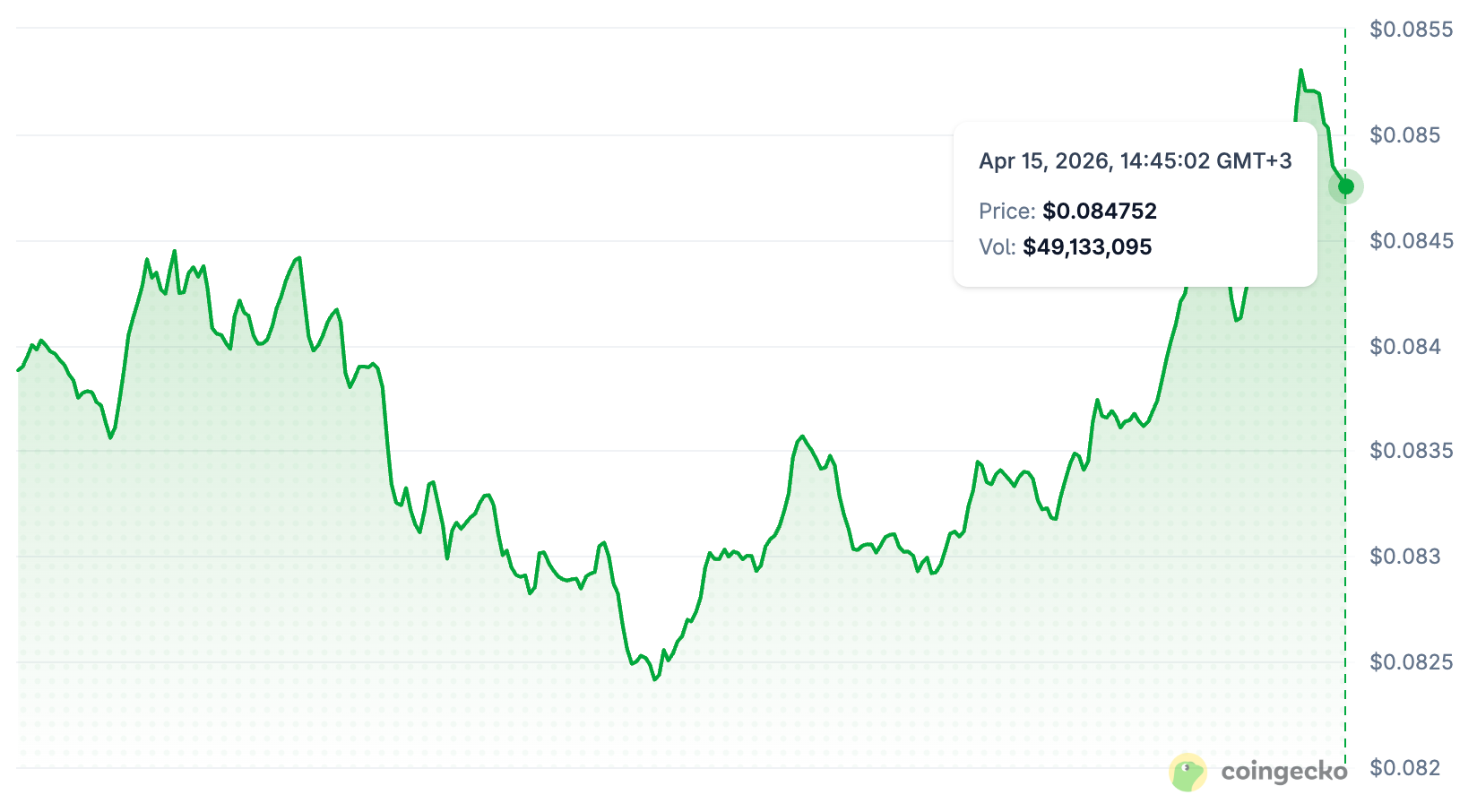
The market's reaction has been quiet despite the technical rollout. POL traded at $0.08477 at the time of reporting, up 1% over the previous 24 hours, according to CoinGecko data.
The sPOL model carries risks typical of staking systems, including smart contract vulnerabilities, validator slashing, and exchange rate fluctuations. Polygon notes that audits reduce but do not eliminate these risks.
Still, the scale of locked capital presents a significant opportunity. Even partial adoption of sPOL could expand active liquidity across the ecosystem and deepen market activity.
A shift toward productive onchain capital
The introduction of sPOL indicates a broader transition within crypto markets. Networks now compete not only on security and speed but also on capital efficiency.
Polygon positions sPOL as a foundational step in that direction. The goal is to move staking from a passive mechanism to an active financial primitive that integrates with the rest of the onchain economy.
"The goal is straightforward: make sPOL the most composable staking primitive on the Polygon Chain. Staking yield becomes the floor, not the ceiling."
Risk disclosure
sPOL is a staking product and carries inherent risks, including smart contract vulnerabilities, validator slashing, and market-driven exchange rate fluctuations. While audits have been conducted, no system is risk-free. Users should assess these factors carefully before participating.
 Tanya Petrusenko
Disclaimer: All materials on this site are for informational purposes only. None of the material should be interpreted as investment advice. Please note that, despite the nature of much of the material created and hosted on this website, HODL FM operates as a media and informational platform, not a provider of financial advisory services. The opinions of authors and other contributors are their own and should not be taken as financial advice. If you require advice, HODL FM strongly recommends contacting a qualified industry professional.