




Bitmine Immersion Technologies posted a net loss of $6.3 billion for the fiscal year ended Aug. 31, according to its Form 10-K filed Tuesday. The company recorded a $6.2 billion unrealized loss on its digital assets, mostly from lower Ether prices. A year earlier it reported a net profit of $348.6 million.
What the balance sheet shows
Bitmine ended the year with $15.4 billion in total assets and $33.7 million in liabilities. It held 5.9 million ETH worth $14.6 billion. It also reported $545 million in cash and cash equivalents, 211 bitcoin valued at $16.6 million, $186 million in Beast Industries shares and $77 million in Eightco Holdings shares.
The filing gives the cost of that ETH as $19.95 billion, against a fair value of $14.56 billion. The company reports crypto at fair value under accounting rule ASC 350-60, so price drops hit net income immediately, even when nothing is sold. Bitmine says the loss is mostly non-cash. It put its accumulated deficit at about $6.0 billion. During the year, ETH ranged from a low of $1,506 to a high of $4,763 on Coinbase, its pricing source. ETH changed hands near $2,055 at the time of writing.
Staking carries the income statement
Revenue totaled $124.8 million, above the $119.8 million average analyst estimate. Staking and validation brought in $121.4 million, or 97% of the total.
Bitmine began staking its own ETH in November 2025 and says gross rewards run at roughly 2.5% to 4.0% a year. Rewards arrive as ETH, not dollars, so the cash flow statement shows the staking income as non-cash. The company's operating activities used $305.1 million in cash. MAVAN, the staking platform built around the March acquisition of Pier Two, contributed $10.8 million of revenue. The filing also lists a $143.7 million loss on ETH option contracts, which was offset by a $257.9 million gain on the fair value of warrants.
In a Monday update, Bitmine said its holdings had grown to 6.07 million ETH, or 4.97% of supply. It estimated $309 million in annualized rewards on the 5.23 million ETH it had staked. That is lower than the $358 million annualized figure the company gave in its Nov. 2 update.
How the ETH was funded
Bitmine paid for its purchases mainly by selling stock. It sold 395.1 million shares through its at-the-market program for $13.2 billion in gross proceeds, and used $12.6 billion to buy digital assets. Shares outstanding rose to 613.3 million from 232.4 million a year earlier, so existing holders were heavily diluted.
The company also bought back 20.8 million shares at an average of $17 for $353.8 million, with $3.6 billion left on a $4.0 billion authorization. In June it sold 3.5 million shares of 9.50% redeemable preferred stock, ticker BMNP, for $271.5 million net. Those shares require about $33.3 million a year in dividends, paid weekly if the board declares them. The filing says staking income helps fund them, but a drop in ETH or in staking yields could squeeze coverage.
Controls, the stock and the 5% line
Bitmine shares closed 2.8% lower at $18.08 on Tuesday, which puts their decline this year at 33%. The filing came after the market closed.
The 10-K says management found that internal controls over financial reporting were not effective as of Aug. 31. The company cited material weaknesses that it had first reported a year earlier and says remediation is under way. KPMG replaced Bush & Associates as auditor in April, and signed an unqualified opinion on the financial statements. Bitmine is also changing its fiscal year-end to Dec. 31 and expects to file a transition report for September through December.
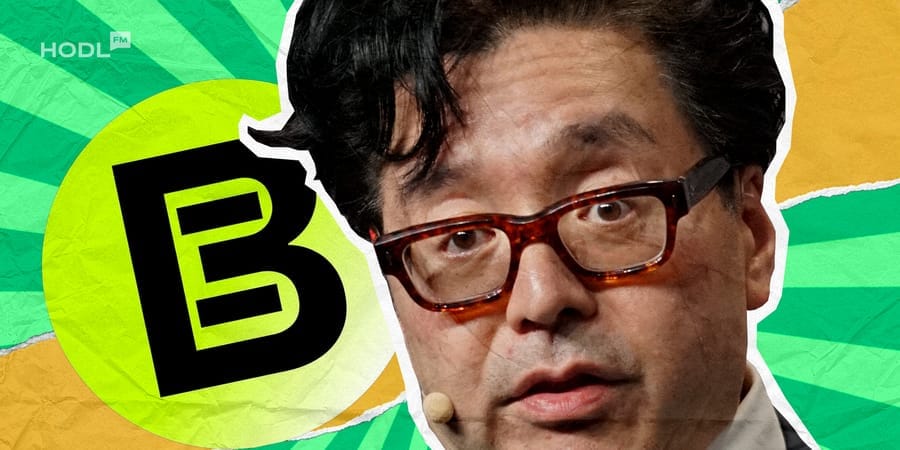
Chairman Tom Lee has said where the accumulation will stop. During a keynote at Token2049 in Singapore on Oct. 7, he called 5% of Ether's supply a "hard cap" for the company's holdings. At 4.97%, Bitmine is already close to that line.
 Roman Zaika
Disclaimer: All materials on this site are for informational purposes only. None of the material should be interpreted as investment advice. Cryptocurrency investments involve significant risk of loss. Please note that, despite the nature of much of the material created and hosted on this website, HODL FM operates as a media and informational platform, not a provider of financial advisory services. The opinions of authors and other contributors are their own and should not be taken as financial advice. If you require advice, HODL FM strongly recommends contacting a qualified industry professional.