





This week in crypto was shaped by regulatory pressure, security concerns, and headline-driven market narratives. MARA denied reports of a large Bitcoin purchase, while Aztec faced another exploit targeting deprecated contracts. In parallel, US lawmakers and industry groups clashed over prediction market rules under the CLARITY Act, and Binance pushed back on uncertainty around its MiCA licensing in Europe. Meanwhile, Algorand highlighted long-term plans for quantum-resistant blockchain infrastructure, underscoring the industry’s focus on future security challenges.
Top gainers and losers of the week
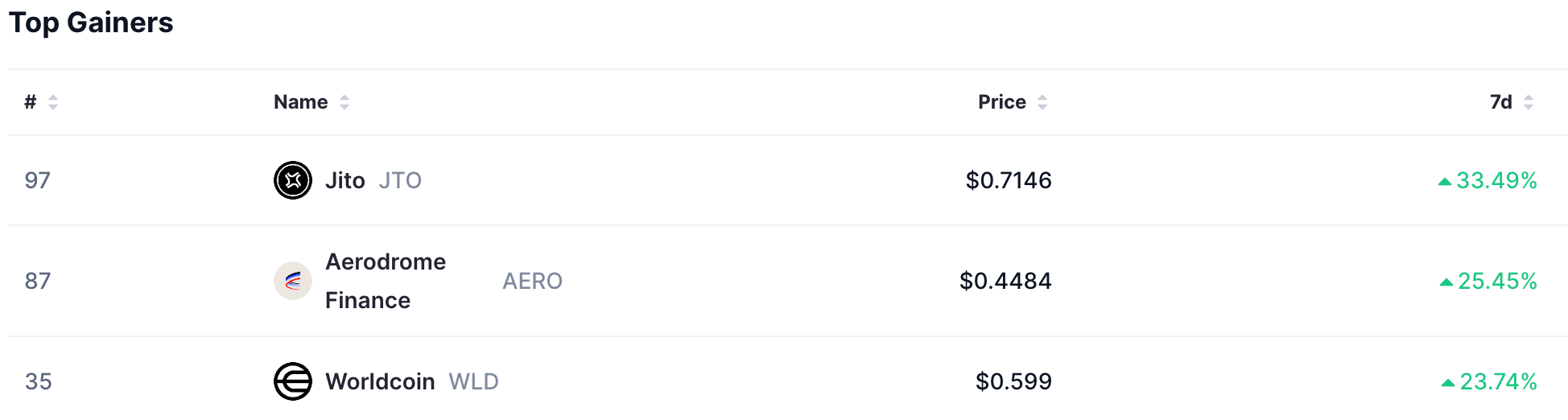
- Jito (JTO) – climbed 33.49% over the past seven days to sit at $0.7146
- Aerodrome Finance (AERO) – jumped by 25.45% throughout the week, landing at a price of $0.4484;
- Worldcoin (WLD) – The token posted a 23.74% gain, bringing its value to $0.599.
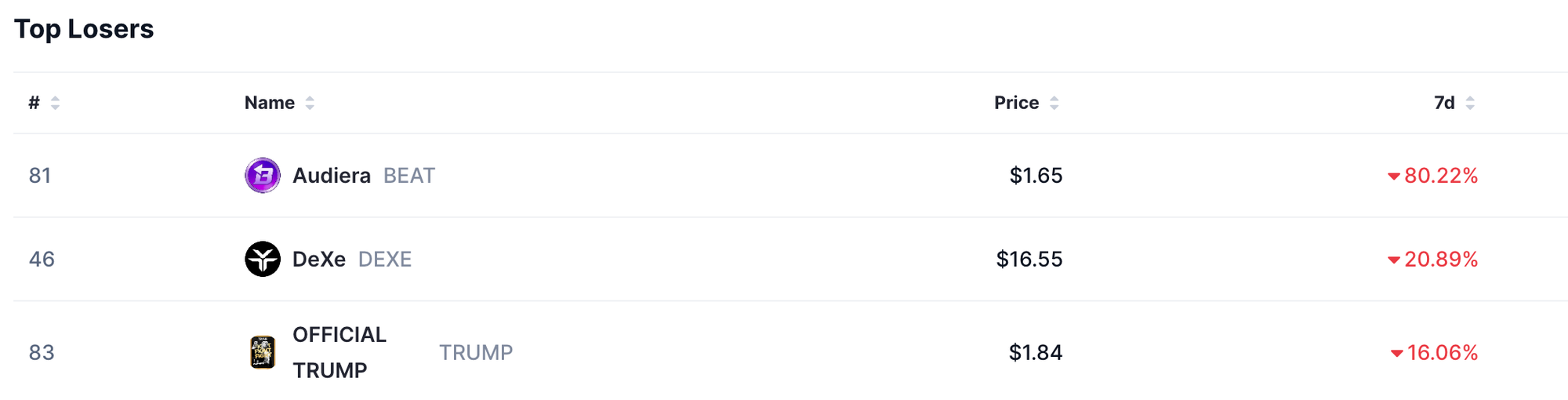
- Audiera (BEAT) – closed the week at $1.65 after shedding 80.22% of its value.
- DeXe (DEXE) – dropped 20.89% to finish the seven-day period at $16.55.
- OFFICIAL TRUMP (TRUMP) – wrapped up the week with a 16.06% decline, settling at $1.84;
MARA denies 1,000 BTC purchase
MARA Holdings has denied reports that it purchased 1,000 BTC, pushing back on earlier on-chain analytics that suggested a roughly $66.7 million acquisition. In a statement on X, Vice President of Investor Relations Robert Samuels said the company “did NOT purchase 1000 BTC,” adding that Bitcoin movements into its wallets can reflect internal asset management activity rather than new buying.
@MARA did NOT purchase 1000 BTC as some are reporting today. BTC entering our wallets can be asset management activities and does not mean that we are buying BTC.
— Robert Samuels (@RobSamuelsIR) June 16, 2026
The clarification follows widespread attention to blockchain data that appeared to show the miner increasing its holdings after a quarter marked by heavy selling. However, industry observers had already questioned the interpretation. The transaction may have represented returned loan collateral rather than a fresh purchase, highlighting how on-chain flows can be misread without full context.
The update shifts the narrative around MARA’s treasury strategy, which has been under scrutiny since its first-quarter disclosures. The company previously sold about 20,880 BTC for roughly $1.5 billion to fund operations, repurchase debt, and improve liquidity.
Samuels’ statement confirms that wallet activity alone does not confirm accumulation. Instead, MARA continues to operate a flexible treasury approach, where Bitcoin may be moved, lent, or reallocated depending on market conditions and capital strategy, rather than strictly bought or sold at every transaction.
Second Aztec exploit targets deprecated contracts
Deprecated infrastructure tied to Aztec has suffered a second exploit within days, deepening concerns about risks linked to abandoned smart contracts. The latest incident targeted Aztec’s private rollup bridge, where attackers drained 1,158 Ether, 150,000 Dai, and 0.46 renBTC, with total losses estimated at about $2.15 million, according to SlowMist co-founder Cos.
Preliminary findings showed the attacker used a false rollup proof to trigger asset releases from the protocol’s reserves into a controlled address. Aztec Labs confirmed the exploit and said the funds came from an immutable smart contract tied to a payment product deprecated in 2022. The company stated it held no admin keys and had no ability to pause transactions.
We are investigating a potential exploit affecting a deprecated Aztec payments product from 2021. ~$2m was transferred from the immutable smart contract in transaction:https://t.co/FS4JoNnfiJ
— Aztec Labs (@AztecLabs_) June 18, 2026
The deprecated product is an immutable stage 2 rollup that was sunset in 2022.…
The breach follows a separate incident days earlier, where more than $2.1 million was extracted from Aztec Connect, a privacy-focused rollup deprecated in March 2023. That product had stopped accepting deposits, though legacy assets remained locked in the contract.
Security researchers have pointed to a broader issue across decentralized finance. Blockful said, “Old contracts continue to be bug bounties available to any hackers.” SlowMist advised that projects move remaining assets out of deprecated systems to reduce exposure.
Gaming and tribal groups urge Senate to restrict prediction markets in CLARITY Act
Several national gaming organizations, tribal groups, and labor representatives have urged the US Senate to amend the Digital Asset Market Clarity Act with language that would block sports-related event contracts on prediction market platforms. The request reflects growing tension between traditional gambling regulators and federal oversight of digital asset-linked markets.
According to a Semafor report, groups including the Indian Gaming Association and the American Gaming Association argued that prediction markets have expanded gambling activity without formal approval.
“While our organizations may differ on other issues, including gambling policy, we are united in our concern that prediction markets have fueled the largest expansion of gambling in US history over the past 18 months — without voter approval or legislative authorization,” the letter stated.
The groups also challenged the Commodity Futures Trading Commission’s position that it holds authority over such markets. They said “sports betting falls outside the CFTC’s remit and cannot be offered through prediction market platforms,” adding that the regulator lacks the expertise to oversee nationwide wagering systems.
The dispute comes as the CLARITY Act moves through Congress, with lawmakers weighing a shift in crypto oversight from the Securities and Exchange Commission to the CFTC. Industry conflict could escalate further, with some expecting a legal battle that may reach the US Supreme Court.
Binance faces MiCA licensing uncertainty as EU deadline nears
Binance has pushed back against reports that its European licensing process under the Markets in Crypto Assets (MiCA) framework may face rejection, as regulatory pressure builds ahead of a critical compliance deadline in the European Union.
In a Tuesday blog post, Binance said Greece’s Hellenic Capital Market Commission (HCMC), one of the regulators overseeing its application, had completed its review and “considered it compliant with MiCA requirements,” subject to further review by the European Securities and Markets Authority (ESMA). The statement followed a Reuters report that EU regulators were preparing to reject the exchange’s licensing bid, which could restrict its ability to operate across the bloc.
Binance remains committed to its European users and will continue to operate in compliance with applicable law.
— Binance (@binance) June 16, 2026
“Binance serves more users in Europe than any other crypto exchange, and any delay or distortion in our MiCA path has consequences beyond Binance,” the company said. “It risks weakening liquidity, reducing competition and user choice, and pushing activity, jobs, investment, and tax revenue outside the EU.”
Under MiCA rules, crypto firms must obtain authorization by the end of June to continue serving EU customers. If the application is rejected, Binance could lose access to the region starting July 1.
A Binance spokesperson said the company expects ESMA to progress the review toward approval at an upcoming board meeting and plans to update users before the June 30 deadline. The firm filed its application in Greece in January.
Binance also remains under regulatory scrutiny in the United States following its 2023 settlement with federal authorities, adding pressure as it navigates multiple jurisdictions.
 Jordan V.
Disclaimer: All materials on this site are for informational purposes only. None of the material should be interpreted as investment advice. Please note that, despite the nature of much of the material created and hosted on this website, HODL FM operates as a media and informational platform, not a provider of financial advisory services. The opinions of authors and other contributors are their own and should not be taken as financial advice. If you require advice, HODL FM strongly recommends contacting a qualified industry professional.