


Block, Inc. has expanded its payments ecosystem by enabling stablecoin transfers on Cash App, allowing eligible users to send and receive USDC across multiple blockchain networks. The rollout adds stablecoin functionality to a platform that already serves tens of millions of monthly users and deepens its integration with digital asset infrastructure.
The company confirmed that stablecoin transfers now operate across Solana, Ethereum, Polygon, and Arbitrum. The feature converts USDC into U.S. dollars automatically inside the app, which removes the need for users to manage separate wallets or stablecoin balances.
Cash App currently reports around 59 million monthly active users. The introduction of stablecoin functionality places digital dollar transfers alongside its existing payment tools in a unified balance system.
Stablecoins are here on Cash App.
— Cash App (@CashApp) May 27, 2026
Send and receive USDC that auto-converts to USD, fee-free to start.
No wallet setup. No extra app. Just Cash App. pic.twitter.com/KyOFb1ZM9h
Stablecoin transfers convert automatically into USD
The new system treats USDC as a transactional layer rather than a stored asset. Eligible users can send stablecoins by entering a recipient wallet address through the Payment Tab and paying with their Cash App balance in U.S. dollars.
To receive funds, users select “Deposit USDC” in the Money Tab, choose a supported network, and receive a wallet address. Once funds arrive, the system converts USDC directly into dollars.
The company stated that stablecoin transactions will begin with zero fees. The structure reflects a design choice that keeps user exposure to blockchain mechanics behind the interface, while settlement occurs through internal conversion systems.
Miles Suter, Bitcoin Product Lead at Block, described the approach in a public statement:
“As stablecoins continue to gain global adoption, we see an opportunity to get millions more Cash App customers comfortable using open financial rails. Once they’re on those rails, they’re one step closer to bitcoin.”
Expansion comes amid rising stablecoin activity
The rollout arrives during a period of strong growth in stablecoin usage. Adjusted transaction volume over the past 12 months has reached $13.28 trillion, a figure that places stablecoins among the most active settlement instruments in digital payments.
Market value data also shows sustained expansion. Stablecoin capitalization has climbed above $300 billion in recent months, supported by steady inflows into major assets such as USDC and USDT.
The integration positions Cash App inside a payment environment where stablecoins increasingly function as settlement tools rather than speculative instruments.
Gradual rollout and access limits
The feature is currently available to eligible users, with rollout continuing across the platform. Earlier implementation reports indicated partial availability during testing phases, followed by broader deployment plans.
The system applies transaction limits tied to identity verification. Users face a $2,000 daily sending cap and a $10,000 weekly receiving cap. The service is not available in New York and remains restricted for sponsored accounts.
Block manages all sourcing, conversion, and settlement internally. Users interact only with dollar balances, while stablecoin activity operates behind the system architecture.
Multi-chain support shapes infrastructure approach
Cash App’s support for Solana, Ethereum, Polygon, and Arbitrum reflects a multi-chain strategy that aligns with current stablecoin distribution patterns. Each network provides different transaction costs and settlement speeds, which allows the platform to route transfers across multiple environments.
USDC, issued by Circle, serves as the primary asset for transfers. Its use in this system places a regulated U.S.-based stablecoin at the center of Cash App’s new cross-chain payment rail.
The integration also reflects a broader shift in fintech infrastructure, where payment applications connect traditional fiat systems with blockchain-based settlement layers.
Internal shift in Block’s crypto strategy
The expansion signals a broader adjustment in Block’s approach to digital assets. The company has historically centered its crypto strategy on Bitcoin, supporting initiatives such as Bitcoin hardware wallets and mining infrastructure.
Stablecoin support introduces a second layer of crypto functionality inside the ecosystem. The company still describes Bitcoin as its primary long-term focus, but stablecoins now function as an operational bridge between fiat balances and blockchain settlement.
A source familiar with the rollout described internal positioning changes around blockchain adoption, noting that stablecoin integration reflects growing user demand for faster settlement options outside Bitcoin-native rails.
Market context and competitive pressure
The timing of the rollout coincides with increased activity among global payment companies exploring stablecoin settlement systems. Visa and Mastercard have both expanded work in this area, while fintech platforms continue to test blockchain-based transfer rails.
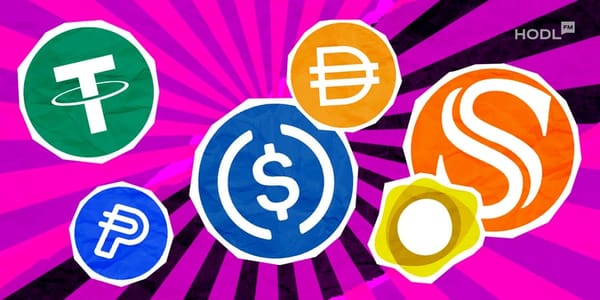
Stablecoin supply trends show continued competition among issuers. USDT supply has increased over the past month, while combined supply of USDC, PYUSD, and other assets has shown mixed movement during the same period.
The integration of stablecoins into mainstream fintech applications reflects a shift in how payment infrastructure evolves around blockchain networks. Cash App’s model focuses on abstraction, where users do not interact directly with blockchain complexity.
Cash App positions stablecoins as a bridge asset
Block continues to frame its crypto strategy around Bitcoin as a long-term monetary system. Within that framework, stablecoins serve as an intermediate layer that connects traditional fiat balances with blockchain-based financial rails.
Miles Suter summarized the structure in a separate statement:
"Making Bitcoin Everyday Money remains my top goal at Cash App, Square, Bitkey and Block. We remain singularly focused on bitcoin becoming the native currency of the internet."
The introduction of USDC transfers adds a functional pathway between fiat payments and digital asset networks, while keeping Bitcoin at the center of Block’s broader strategy.
 Tanya Petrusenko
Disclaimer: All materials on this site are for informational purposes only. None of the material should be interpreted as investment advice. Please note that, despite the nature of much of the material created and hosted on this website, HODL FM operates as a media and informational platform, not a provider of financial advisory services. The opinions of authors and other contributors are their own and should not be taken as financial advice. If you require advice, HODL FM strongly recommends contacting a qualified industry professional.