



Bitcoin climbed sharply on April 13, approaching the $75,000 level after several days of volatile trading, as easing geopolitical tension and a wave of liquidations pushed prices higher across the crypto market.
The asset gained more than 5% during late trading, marking its strongest intraday move in weeks. It briefly touched a four-week high near $74,788 before settling slightly lower around $74,200–$74,300, according to TradingView data.
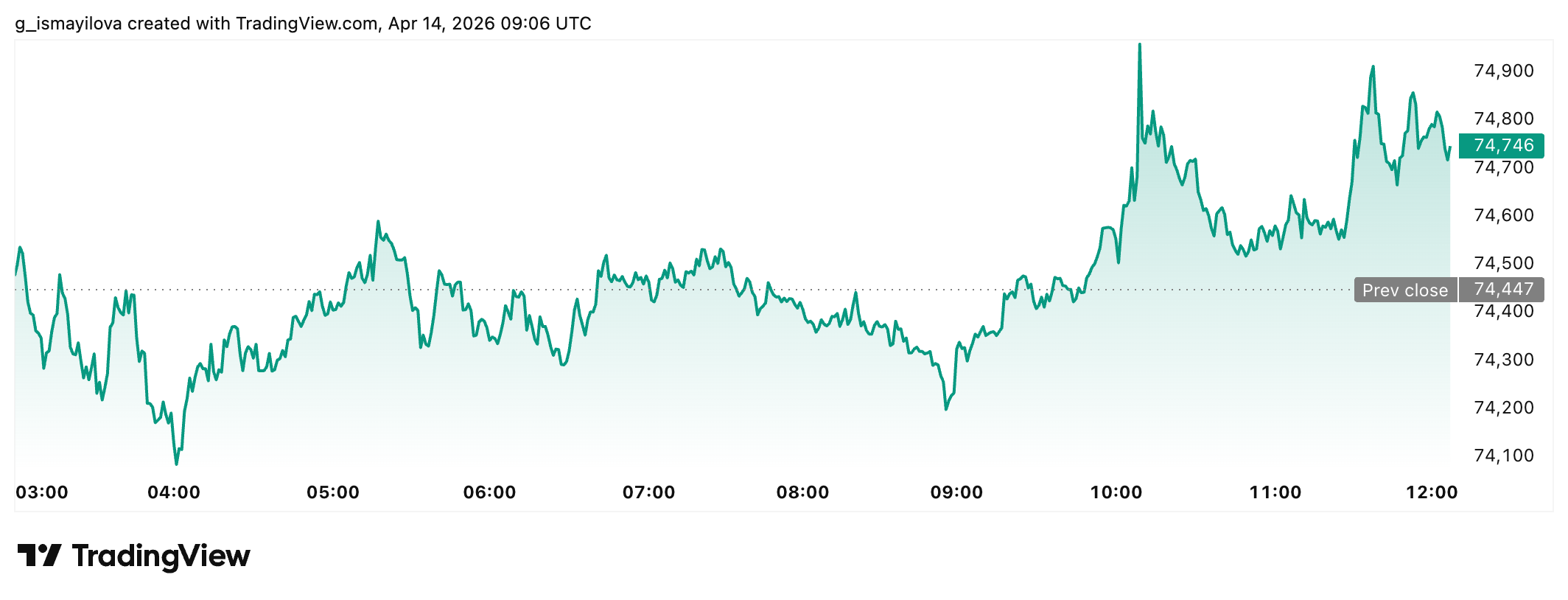
The move followed a period of uncertainty linked to the ongoing U.S.–Iran conflict. Earlier in the week, Bitcoin slipped toward $70,000 after diplomatic talks collapsed and the United States imposed a naval blockade on the Strait of Hormuz. Oil prices surged above $100 per barrel during that phase, adding pressure to risk assets.
Market reaction shifts as Iran signals openness to talks
Sentiment began to shift after signals emerged that Iran may be open to negotiations. U.S. President Donald Trump said Iranian officials had reached out and “want to work a deal.” At the same time, U.S. Vice President JD Vance stated that Washington had made “substantial progress” in discussions.
These developments helped calm fears around global supply chains. The blockade excluded non-Iranian vessels, which reduced concerns about a broader disruption in oil flows. Crude prices dropped from above $119 to around $88 following reserve releases from G7 countries and the International Energy Agency.
Crypto markets responded quickly. The total market capitalization climbed to about $2.6 trillion, its highest level in a month. Bitcoin held above $70,000 for most of the week despite earlier shocks, which traders viewed as a sign of resilience under macro pressure.
Short squeeze accelerates upside momentum
The rally gained strength from derivatives activity. A large cluster of leveraged short positions sat between $72,000 and $73,500. Once Bitcoin broke through that range, forced liquidations triggered a rapid upward move.
Data from CoinGlass showed that more than $540 million in positions were liquidated within 24 hours, with about 80% tied to short trades in Bitcoin and Ether. Around 170,000 traders faced liquidations during that period.
Despite the debate over sustainability, the liquidation-driven rally added significant momentum. The squeeze added more than $100 billion to total crypto market value within hours.
Broader crypto market follows Bitcoin higher
The rally extended across major cryptocurrencies. Ether rose about 7% to 8%, reaching levels near $2,360–$2,380, its highest point in weeks. Other assets such as BNB, XRP, Solana, and Dogecoin posted gains between 2% and 5%.
The Crypto Fear and Greed Index moved to 21, placing sentiment still in extreme fear territory. The shift reflected easing geopolitical pressure and improving macro signals.
Institutional demand adds to price support
Corporate accumulation also contributed to the upward move. Strategy’s STRC at-the-market program recorded more than $1 billion in single-day trading volume on April 13, with all activity above the $100 threshold required for share issuance.
The company disclosed $1.001 billion in net proceeds for the week of April 6–12 in a recent SEC filing. During that period, it acquired 13,927 BTC at an average price of $71,902. Its capture rate rose to 81%, up from 45% in early March.
Strategy now holds approximately 780,897 BTC, with a total acquisition cost of around $59 billion. The program has generated more than $3.5 billion in proceeds to date.
Macro data and rate expectations support risk assets
Recent U.S. economic data also played a role in the market rebound. The PCE Price Index came in below expectations, while JOLTS job openings showed a softer labor market. GDP growth remained stable.
These indicators suggested easing inflation pressure, which increased expectations that the Federal Reserve may consider rate cuts later this year. Risk assets, including cryptocurrencies, tend to benefit under such conditions.
Still, the rally remains sensitive to headlines.
Uncertainty remains despite recovery
Bitcoin continues to face resistance near the $75,000 level. Traders monitor the $70,000 support zone and the $72,000–$75,000 range for confirmation of the next move.
The geopolitical backdrop has not fully stabilized. U.S. and Iranian officials remain in contact after a failed round of talks in Pakistan, and further negotiations may take place. The Strait of Hormuz remains a focal point for global markets due to its role in oil transport.
Traders are watching multiple signals, including ETF inflows, oil prices, and Federal Reserve policy direction.
For now, Bitcoin’s rebound reflects a combination of macro relief, technical positioning, and sustained institutional demand. Whether that momentum can hold will depend on the next developments in both geopolitics and monetary policy.
 Gunel Ismayilova
Disclaimer: All materials on this site are for informational purposes only. None of the material should be interpreted as investment advice. Please note that, despite the nature of much of the material created and hosted on this website, HODL FM operates as a media and informational platform, not a provider of financial advisory services. The opinions of authors and other contributors are their own and should not be taken as financial advice. If you require advice, HODL FM strongly recommends contacting a qualified industry professional.