


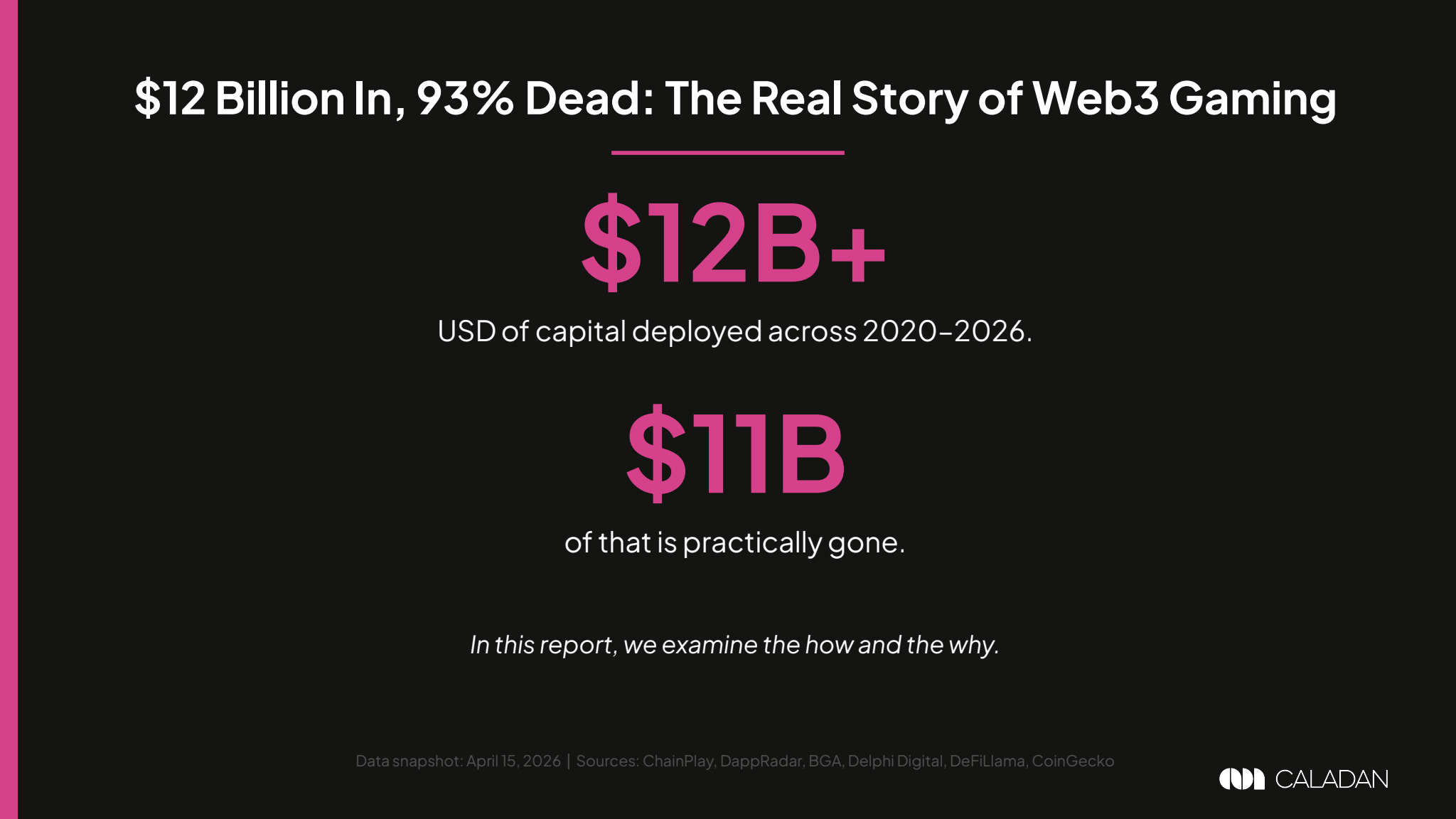
The Web3 gaming sector has unraveled after a massive wave of speculative investment, with roughly $15 billion erased and around 93% of projects now effectively defunct, according to a report by market-making firm Caladan. Token values across the sector have dropped about 95% from their 2022 highs, while funding to studios continues to dry up at a rapid pace.
The downturn has hit every layer of the ecosystem at once. Venture capital firms, retail NFT buyers, gaming guilds, and even Telegram-based tap-to-earn ecosystems have all taken losses. “Capital was destroyed at every layer simultaneously,” the Caladan report states, describing a synchronized collapse across once-hyped segments.
More than 300 blockchain-based games have already shut down, based on data from DappRadar. The few projects that remain face shrinking user bases and fading investor interest.
Flagship projects show scale of the collapse
Several high-profile projects illustrate the severity of the downturn. Hamster Kombat, which once drew global attention, lost 96% of its users within six months of launch. CoinGecko data shows Yield Guild Games’ token trades 99.6% below its November 2021 peak.
Axie Infinity, once considered the flagship of the sector, saw daily active users fall from about 2.7 million at its peak to roughly 5,500, according to DappRadar data.
Other projects failed to deliver on expectations despite raising large sums. Pixelmon secured $70 million through an NFT sale in 2022 but has yet to release a completed game. Ember Sword spent seven years in development and $18 million before shutting down last May without issuing refunds.
Legal issues have also surfaced. Gala Games faces a lawsuit that alleges its co-founder diverted $130 million in tokens. Meanwhile, Square Enix wound down its blockchain-based Symbiogenesis project quietly last July.
Structural mismatch between finance and gameplay
The report identifies a core structural issue behind the collapse. Developers and investors focused on financial incentives instead of building engaging games. This created a mismatch between what the market offered and what players wanted.
At the center of the boom stood the play-to-earn model. Players bought tokens or NFTs, earned rewards in the same assets, and exited with profits as long as new participants entered the system. Once inflows slowed, the model broke down.
Token prices dropped, rewards declined, and users left. Entire in-game economies collapsed as a result.
Demand never matched the supply of capital. A Coda Labs survey cited in the report shows that fewer than 12% of gamers had ever tried a crypto-based game, even at the peak of market enthusiasm.
Funding collapse reshapes the sector
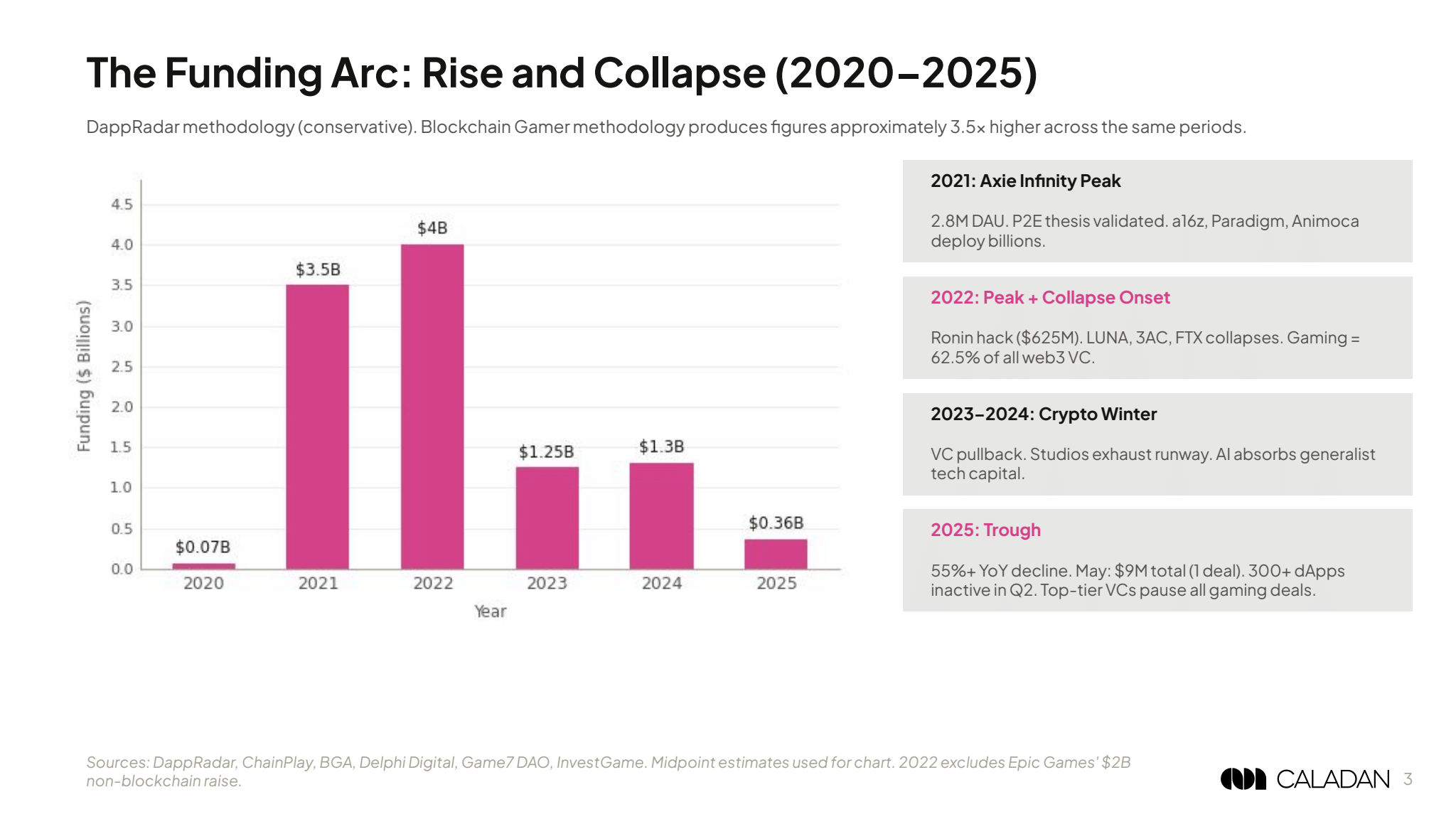
The shift in capital allocation highlights how quickly sentiment changed. In 2022, Web3 gaming accounted for 62.5% of all venture investment in the sector. By 2025, that share had fallen to single digits.
Funding moved toward areas with clearer use cases, including artificial intelligence, real-world asset tokenization, and blockchain infrastructure. Even major backers adjusted their strategies. Animoca Brands reduced gaming exposure to about 25% of its portfolio, with a stronger focus on stablecoins and tokenization services.
Development timelines added further pressure. Many games required three to five years to build, while tokens traded immediately after launch. Projects needed constant momentum to sustain token value. By the time some games approached release, their tokens had already lost most of their value.
A cautionary outcome for the industry
The collapse of Web3 gaming now serves as a clear example of what happens when financial engineering outpaces product development. The sector expanded rapidly on speculative demand, then contracted just as quickly when that demand disappeared.
Data from multiple studies, including those cited by Caladan, ChainPlay, and Storible, show that the average GameFi project survives only a few months before token values drop sharply and user activity falls to near zero.
While some isolated projects show signs of recovery in early 2026, the broader trend remains weak. Investment continues to shift away from game development toward infrastructure.
The industry’s early promise rested on the idea that ownership and financial incentives would redefine gaming. The outcome suggests a different conclusion. Sustainable ecosystems depend on users who want to play, not just trade.
 Anastasiia G
Disclaimer: All materials on this site are for informational purposes only. None of the material should be interpreted as investment advice. Please note that, despite the nature of much of the material created and hosted on this website, HODL FM operates as a media and informational platform, not a provider of financial advisory services. The opinions of authors and other contributors are their own and should not be taken as financial advice. If you require advice, HODL FM strongly recommends contacting a qualified industry professional.