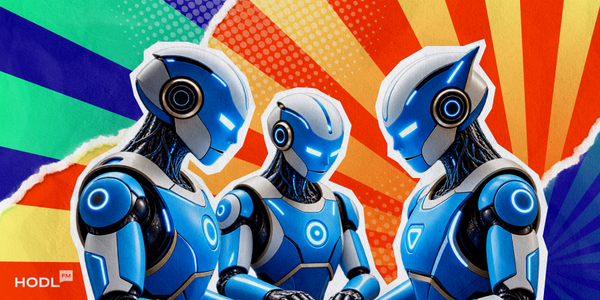



NEURA Robotics has raised up to $1.4 billion in a Series C financing round, marking one of the largest private investments in physical AI and humanoid robotics to date. The round brings together major global players across artificial intelligence, semiconductors, manufacturing, and cloud infrastructure, including Tether, Qualcomm Technologies, Amazon, NVIDIA, Bosch, Schaeffler, and the European Investment Bank.
The German company, founded in 2019, positions itself at the center of a shift that moves artificial intelligence beyond software systems into machines that act in the physical world. The funding reflects growing investor focus on robotics as the next frontier for AI deployment.
“The future of AI will not only live on screens,” said David Reger, founder and CEO of NEURA Robotics. “It will move, interact, learn and work beside us in the real world.”
Capital tied to performance milestones
The full $1.4 billion investment remains contingent on NEURA meeting undisclosed performance milestones.
Investor interest in robotics has surged in 2026. Data from Dealroom shows robotics companies have raised $57.2 billion so far this year, nearly double the previous annual record. Most of that capital has flowed into firms based in the United States and China, though European companies now attract larger rounds.
NEURA enters that competitive landscape with a reported order backlog exceeding €1 billion and plans to scale production to millions of units by 2030.
Building a unified physical AI platform
Unlike traditional robotics firms that focus on specific industrial tasks, NEURA integrates hardware, artificial intelligence, sensors, and data infrastructure into a single platform. Its ecosystem, called the Neuraverse, allows machines to share learned skills and adapt across different environments.
The company’s robots rely on a proprietary AI layer and training systems that aim to reduce the need for manual programming. Machines can identify objects, adjust to new conditions, and improve performance over time.
This approach extends to large-scale training facilities known as NEURA Gyms. One such site, developed with the Technical University of Munich, operates near Munich Airport and collects real-world data to train robotic systems.
Strategic partnerships shape deployment
The investor list reflects a deliberate strategy to combine infrastructure, compute, and industrial deployment.
Amazon contributes cloud and AI infrastructure, including tools such as Bedrock and SageMaker, along with custom chips like Trainium. NVIDIA’s involvement signals potential integration of edge computing and inference capabilities. Qualcomm focuses on on-device processing for safety-critical applications.
Industrial partners Bosch and Schaeffler bring manufacturing expertise and potential deployment pathways. Both companies identified humanoid robotics as a key growth area.
“We see significant growth opportunities in the field of humanoid robotics,” said Stefan Hartung, CEO of Bosch. “Through our partnership with NEURA we want to make greater use of the possibilities it presents.”
Klaus Rosenfeld, CEO of Schaeffler, added:
“Together with a strong ecosystem of partners, we will fundamentally revolutionize the development and deployment of humanoid robots in the industry of tomorrow.”
Tether pushes machine autonomy vision
Tether, the lead investor, frames the deal as a step toward autonomous machine economies. The company plans to integrate its wallet development kit into NEURA’s systems, allowing robots to execute financial transactions tied to completed tasks.
“As robotics moves beyond scripted automation and into true autonomy, the infrastructure behind it must evolve as well,” said Paolo Ardoino, CEO of Tether.
The integration also includes Tether’s edge AI runtime, which enables local data processing without reliance on centralized cloud systems. This approach aims to reduce latency and improve reliability in industrial environments.
Europe seeks a foothold in robotics race
NEURA’s rise comes as Europe attempts to establish a stronger position in advanced robotics. Until recently, the sector lacked a clear regional leader compared with U.S. and Chinese firms.
“Many believed globally relevant AI infrastructure companies could only emerge from Silicon Valley,” Reger said. “We believe the next generation of AI leaders can emerge anywhere in the world where there is enough vision, engineering talent and execution speed.”
The European Investment Bank highlighted the broader economic implications. Vice President Nicola Beer stated that the investment supports technological autonomy and could lead to safer factories, smarter logistics, and new services.
Scaling remains the key test
NEURA plans to use the funding to expand global deployment, increase manufacturing capacity, and develop next-generation systems. Large-scale shipments of its humanoid robot model are expected to begin later in 2026.
The company faces competition from U.S.-based firms such as Figure AI and Physical Intelligence, which focus on industrial automation and software models for physical tasks. NEURA differentiates itself by building a full-stack system that includes hardware, AI, and data infrastructure.
The next phase depends on execution. The robots must perform reliably at scale, and the Neuraverse must attract widespread adoption.
Reger framed the stakes in practical terms:
“In the future, people will not only ask what AI can say. They will ask what AI can physically do.”
 Roman Zaika
Disclaimer: All materials on this site are for informational purposes only. None of the material should be interpreted as investment advice. Please note that, despite the nature of much of the material created and hosted on this website, HODL FM operates as a media and informational platform, not a provider of financial advisory services. The opinions of authors and other contributors are their own and should not be taken as financial advice. If you require advice, HODL FM strongly recommends contacting a qualified industry professional.