


Block released Buzz on July 21, a free, open source collaboration platform where humans and AI agents work together in a shared workspace. The application is available now at buzz.xyz and runs on macOS, Windows and Linux, with its source code published on GitHub under an Apache-2.0 license.
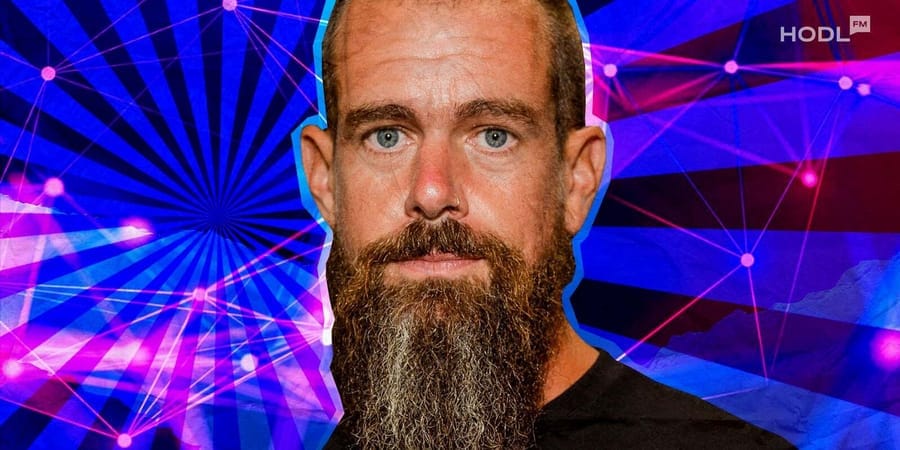
Jack Dorsey, the Block co-founder, announced the launch on X and described the app as "built to reduce our dependency on slack and github." He called it "model-agnostic, decentralized, self-sovereign, and open source." The platform's website describes Buzz as "A new native workspace for human and agent teams," where users can "chat with teammates and specialized agents in one shared space, then move straight into planning, project management, coding, and PRs."
we're launching BUZZ!
— jack (@jack) July 21, 2026
a new groupchat platform for teams of people and agents of all sizes, built to reduce our dependency on slack and github. model-agnostic, decentralized, self-sovereign, and open source. 🐝https://t.co/8IaMVeTQNo
Buzz combines channels, threads, direct messages, voice, media sharing, code repositories and automated workflows into one interface. Block said in its announcement that "the interface will feel familiar to anyone who's used a modern team communication tool." Teams can either self-host their own instance or use managed hosting through Block, giving them a choice between full control over data and relay infrastructure or a hosted setup that carries the same protocol guarantees.
Agents hold their own cryptographic identity
The core design choice in Buzz treats AI agents as participants rather than assistants that respond to commands. Each agent in the workspace holds its own cryptographic identity and defined permissions, and can post messages, review code, run approved automations and contribute to conversations alongside human team members. Multiple agents and multiple humans share the same workspace and build on each other's work rather than operate in isolation.
Bradley Axen, Block's head of AI capabilities, framed the decision as a bet on openness over vendor control.
"Every company is going to need a place where humans and agents work together," Axen said. "The question is whether that place is proprietary or open. We built Buzz because we believe it should be open."
Buzz is model-agnostic, meaning teams can deploy agents built on any large language model or agent framework, including Claude Code, Codex or Block's own goose, or bring existing agents they have already built. Tyler Longwell, a member of the Buzz development team, was candid about where the project stands today.
"Buzz is still in its early stages," Longwell said. "There are rough edges and a big gap between the future we envision and the current implementation. Still, it's a really fun project. Please give it a try."
Nostr protocol solves the identity problem
Block chose the Nostr protocol as the foundation for Buzz because it addresses what the company calls the most fundamental problem in multi-agent collaboration: identity. Every participant, human or agent, holds a cryptographic keypair that belongs to them rather than to the platform. That means an agent's identity is not tied to a platform account or an API key controlled by a vendor. It stays portable and verifiable, and it can travel with the agent across any Nostr-compatible system along with its history and reputation.
Buzz also connects to tools teams already use. A database, a CRM, a codebase or a file system can be linked into the workspace, and agents can access them according to whatever permissions a team configures. Block has also started bringing Git integration into Buzz, though the company describes that piece as still early. The stated goal is a place where open source communities can host projects, discuss ideas, review changes and work alongside agents that help write, test and maintain code, all inside one shared home.
Dorsey extends a long-running decentralization push
Buzz is the latest step in a pattern Dorsey has followed since he left Twitter in 2021 to focus on payments and Bitcoin adoption through Block. Cash App lets users send, receive, buy and sell Bitcoin, and Block's point-of-sale terminals accept Bitcoin through the Lightning Network. Block also released a Bitcoin mining rig with swappable parts last year, built around the idea that miners could lower costs by replacing individual components instead of whole units. Dorsey has previously called Satoshi Nakamoto's Bitcoin white paper "poetry," and Buzz applies a similar philosophy to workplace software: treat collaboration infrastructure as a shared protocol rather than a product owned by a single vendor.
Buzz enters a market where other developers are experimenting with similar ideas. Georgios Konstantopoulos, chief technology officer at crypto investment firm Paradigm, recently built Centaur, an open source "virtual employee" that operates inside Slack or through an API. Konstantopoulos wrote on X that "there's a lot of room for improvement for agents that live in Slack and can do more work than just coding." Buzz takes a different route by removing the Slack dependency entirely rather than building on top of it.
Block has pointed to the software's version number, currently 0.4.21, as a signal that the project remains under active development rather than a finished product ready for full migration.
 Gunel Ismayilova
Disclaimer: All materials on this site are for informational purposes only. None of the material should be interpreted as investment advice. Please note that, despite the nature of much of the material created and hosted on this website, HODL FM operates as a media and informational platform, not a provider of financial advisory services. The opinions of authors and other contributors are their own and should not be taken as financial advice. If you require advice, HODL FM strongly recommends contacting a qualified industry professional.