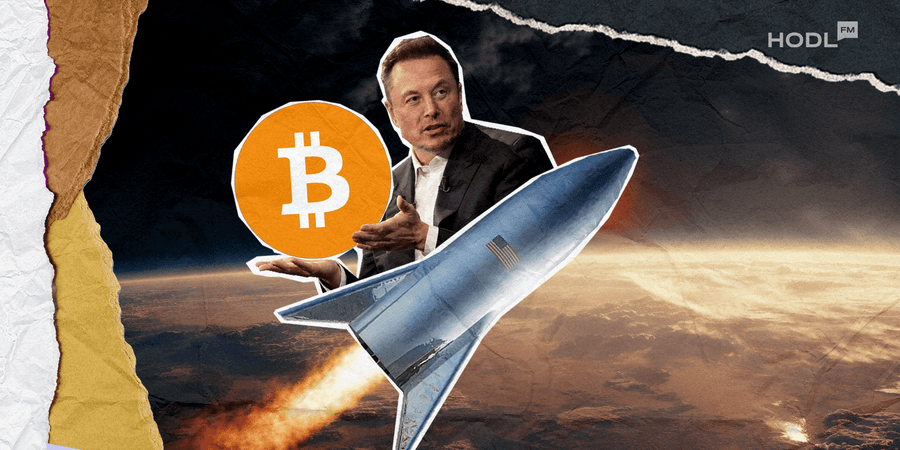



Elon Musk has openly questioned whether Mukesh Ambani runs India, as his satellite internet company Starlink continues to wait for final approval to launch in the country. The billionaire first accused unnamed "oligarchs" of maintaining a "monopolistic chokehold" on Indian consumers, then named Ambani directly a day later, asking on X:
"Starlink is licensed in over 165 countries and has spent five years complying with every single law and requirement of the government of India, so why still no license? Is Ambani the real boss of India?"
Musk also posted a mock letter addressed to "Prime Minister Ambani," apologizing for not realizing he was "the real boss of India" and asking whether Starlink could be allowed to compete. He added that Starlink has "proven to be essential for saving lives during natural disasters throughout the world, when all other communications systems have failed."
Dear Prime Minister Ambani,
— Elon Musk (@elonmusk) October 9, 2026
Please accept my humble apologies for not realizing that you are the real boss of India.
Naturally, you would prefer to maintain your monopolistic exploitation of the great people of India, but would you nonetheless consider allowing Starlink to…
India's Ministry of Communications pushed back without naming Musk, stating that Starlink, Eutelsat OneWeb and Jio Satellite Communications sit at broadly the same stage in the approval process, with all three still waiting on security clearances and spectrum allocation.
"The suggestion that the framework or its application is unfair or discriminatory is baseless and misconceived," the ministry said.
The regulatory holdup explained
Starlink has tried to enter India since 2021 and already holds key licenses, but commercial launch still depends on security clearance and spectrum access. The spectrum question has been contentious well before Musk's remarks. India's Telecom Regulatory Authority recommended in 2025 that satellite spectrum be allocated administratively rather than through auction, a method SpaceX and Eutelsat OneWeb favored because it matches practice in most other countries. Reliance Jio had pushed for an auction instead, arguing it would better reflect the commercial value of the spectrum, a position the government ultimately did not adopt.
Security has added another layer of delay. In 2024, Indian authorities said they recovered Starlink equipment during a drug-smuggling investigation in the Andaman and Nicobar Islands and during an army operation in Manipur. Musk said at the time that Starlink's service had never been active in India, so the recovered equipment could not have been using its network.
A rivalry tangled with partnership
The dispute is complicated because Starlink is not simply up against Jio and Bharti Airtel, it has also partnered with them. In March 2025, both Indian companies signed agreements with SpaceX to distribute Starlink equipment and services domestically, pending government approval, and raised the possibility of sharing network infrastructure.
At the India Mobile Congress in Delhi, where executives from all three companies appeared, Akash Ambani, chairman of Reliance Jio Infocomm, declined to respond directly to Musk's allegations.
"We want to be heads down and deliver value to our Indian consumers," he said.
Bharti Airtel chairman Sunil Bharti Mittal said his company's satellite venture also awaits government clearance. SpaceX executive Lauren Dreyer said the company has spent years working with Indian regulators and built security controls into its network to meet local requirements.
Bharti Enterprises is also the largest shareholder in Eutelsat, the satellite operator competing for the same spectrum and approvals, which places Mittal on more than one side of this contest.
What is actually at stake for Indian users
India remains one of the largest internet markets in the world, with over 1.1 billion mobile subscribers, yet access stays uneven in remote regions where laying cables or building towers is costly. Musk argues Starlink could close that gap, writing that it "would enable high-speed, affordable internet connectivity for those who can't afford current prices or who don't have a connection at all."
Pricing remains unannounced for India. In the US, Starlink's residential plans start at $55 a month, though equipment and plan costs vary by location, which raises doubts about affordability for rural Indian households already used to some of the cheapest mobile data rates in the world.
Opposition leader Rahul Gandhi joined the exchange with a jab of his own:
"Welcome to India, Elon. Wait till you discover the other guy," to which Musk replied that the situation was troubling.
 Roman Zaika
Disclaimer: All materials on this site are for informational purposes only. None of the material should be interpreted as investment advice. Cryptocurrency investments involve significant risk of loss. Please note that, despite the nature of much of the material created and hosted on this website, HODL FM operates as a media and informational platform, not a provider of financial advisory services. The opinions of authors and other contributors are their own and should not be taken as financial advice. If you require advice, HODL FM strongly recommends contacting a qualified industry professional.