





The White House moved to accelerate the United States’ position in quantum technology this week, after President Donald Trump signed two executive orders that target both innovation and security risks tied to next-generation computing.
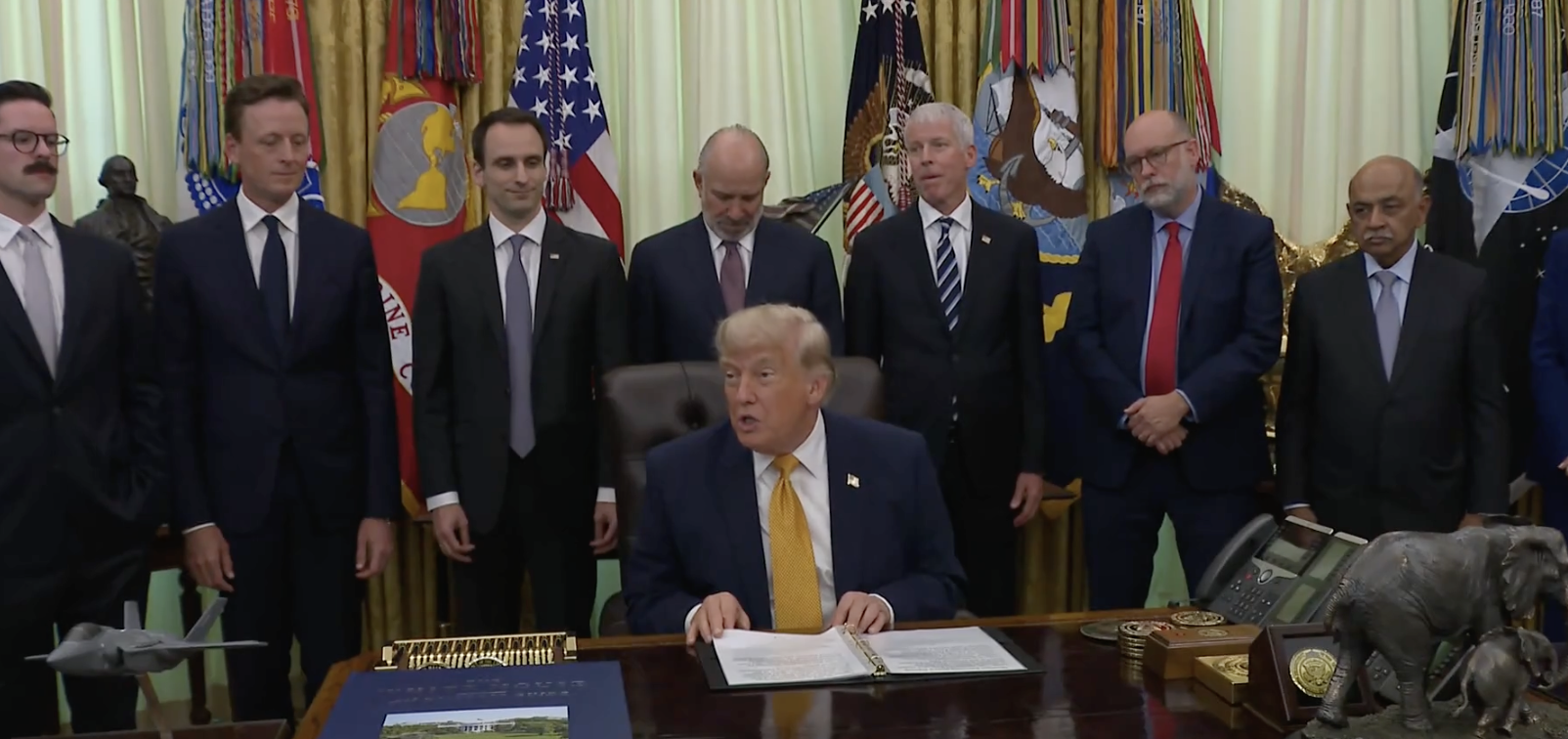
The measures, issued Monday, outline a federal strategy to scale quantum computing capabilities while preparing government systems for a future where current encryption standards may fail. The White House said the approach reflects a “cohesive, whole-of-government” effort to commercialize quantum technologies and prevent adversaries from exploiting them.
Quantum innovation order sets deployment goals
One order, titled Ushering In the Next Frontier of Quantum Innovation, sets a clear direction for deployment and research. It calls for updated national strategy guidelines within 180 days, with a focus on commercialization, private-sector partnerships, and supply chain resilience. Federal agencies must also assess how advances in quantum performance will affect existing systems, including encryption standards that protect sensitive data.
At the center of that effort sits a new initiative, Quantum Computer for Application Development and Discovery Science, or QC-ADDS. The program aims to develop a quantum system capable of enabling large-scale scientific breakthroughs. The order also sets an ambition to place a scientifically relevant quantum computer at a national laboratory or Department of Energy facility by 2028.
The directive extends beyond computing hardware. It instructs agencies such as the Departments of Commerce, Energy, and Defense, alongside NASA, to prepare plans for quantum sensors and networking technologies within five years. It also highlights workforce development and domestic supply chains as critical components of long-term competitiveness.
Security order accelerates post-quantum transition
The second order shifts attention to security risks tied to quantum breakthroughs. Titled Securing the Nation Against Advanced Cryptographic Attacks, it focuses on transitioning federal systems to post-quantum cryptography, or PQC, standards.
“The advent of large-scale quantum computers, particularly in the hands of adversaries, will pose a significant threat to widely used cryptographic security systems,” the order states.
The directive accelerates an existing federal timeline. It sets a deadline of December 2030 for adopting PQC in key establishment systems and December 2031 for digital signatures. These targets move earlier expectations forward by several years. The National Institute of Standards and Technology must also begin a pilot migration project within 180 days, with completion scheduled by the end of 2027.
The Office of Management and Budget and the National Cyber Director will oversee a nationwide transition effort. The Cybersecurity and Infrastructure Security Agency has also received instructions to support critical infrastructure operators during the shift.
Trump framed the initiative as a strategic priority.
“We’re going to be investing in American quantum leadership like never before to stay ahead of the pack,” he said.
Global competition shapes timing
The timing of the orders reflects growing international competition. China expanded its quantum ambitions earlier this year through a new Five-Year Plan that targets scalable quantum systems and an integrated space-earth communication network. The White House documents stress coordination with allies to limit the risk of adversaries gaining an advantage through quantum information science and technology.
Crypto sector faces quantum risk
The implications extend into the cryptocurrency sector, where encryption forms the backbone of asset security. A sufficiently advanced quantum computer could, in theory, derive private keys from public addresses. That scenario, often referred to as Q-Day, has become a focal point for both policymakers and developers.
Recent discussions within the industry highlight the scale of potential exposure. Coinbase’s advisory board on quantum computing and blockchain noted that around 7 million bitcoin sit in addresses that could face future risk. These include early-era holdings and some exchange-controlled wallets.
Responses across blockchain ecosystems remain uneven. Ethereum and Solana have begun outlining post-quantum strategies, while other networks explore migration paths or protocol upgrades. Bitcoin developers continue to debate how to address legacy vulnerabilities without altering the network’s core design.
Private-sector timelines also point to a narrowing window. Cybersecurity firm Project Eleven has suggested that a breakthrough moment could arrive as early as 2030. Separate efforts, including experimental testnets and proposed protocol changes such as BIP-360 and BIP-361, aim to introduce quantum-resistant features, though none has achieved universal adoption.
Policy signal raises urgency
The White House orders do not impose direct rules on cryptocurrencies. They do, however, signal urgency. By compressing federal timelines and mandating early migration steps, the administration places pressure on both public and private systems to prepare for a shift that no longer sits in the distant future.
Michael Kratsios, the White House science advisor, linked the move to earlier policy groundwork.
“President Trump has long recognized the importance of quantum as an economic and national security imperative,” he said before the signing.
 Roman Zaika
Disclaimer: All materials on this site are for informational purposes only. None of the material should be interpreted as investment advice. Please note that, despite the nature of much of the material created and hosted on this website, HODL FM operates as a media and informational platform, not a provider of financial advisory services. The opinions of authors and other contributors are their own and should not be taken as financial advice. If you require advice, HODL FM strongly recommends contacting a qualified industry professional.