

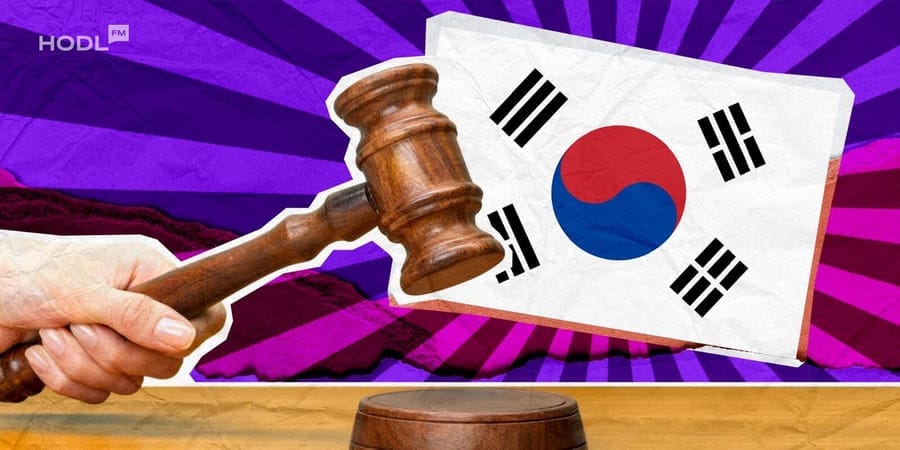



South Korea's Ministry of Finance and Economy (MOFE) has proposed a set of rules that would bring cross-border crypto transfers under foreign exchange oversight. The draft amends the Enforcement Decree of the Foreign Exchange Transactions Act, and public comment runs from Oct. 7 to Oct. 26. It is meant to take effect on Dec. 3, the same day as the amended law, which was passed on June 2.
What transfer firms would have to do
The draft creates a virtual asset transfer business. It covers transfers between domestic and overseas virtual asset service providers, and transfers between domestic providers and personal wallets. Firms must register, meet facility and professional staffing requirements, and report transfer data to the Bank of Korea's FX information system. The Bank of Korea shares that data with the National Tax Service, the Korea Customs Service, the Financial Supervisory Service and the Financial Intelligence Unit.
The draft asks for at least two qualified professionals and adequate computer systems. The National Assembly passed the underlying law on May 7. Operating without registration carries up to three years in prison. Law firm Bae, Kim & Lee said in an Oct. 19 analysis that unhosted wallets are covered because authorities consider them capable of producing similar cross-border effects.
Money changers, remittance firms and customs
The draft also reaches beyond crypto. It merges the fintech small-sum overseas remittance business and other specialized FX businesses into an overseas payment and settlement business with six categories. Two are new: overseas escrow services and overseas electronic bill presentment and payment. Inspection duties move to the Financial Supervisory Service, and supervision to the Financial Services Commission.
Money-changing businesses currently face no entry requirements, which MOFE says has produced many firms with little or no activity. The draft adds personnel and capital requirements. A single violation involving voice phishing, illegal trade payments or unauthorized crypto-related remittances would trigger cancellation of registration. The maximum penalty surcharge in lieu of a four-month suspension rises to 100% of the gains from the violation.
The Korea Customs Service could also continue an inspection when it finds service or capital transaction violations while checking import and export deals. The period for objecting to the macroprudential stability levy would grow from 15 to 30 days. After the comment period, the draft goes to the Office for Government Policy Coordination, the Ministry of Government Legislation, the Vice Ministers' Meeting and the Cabinet.
Balance reporting draws a challenge
Details of the reporting system surfaced on Oct. 23 through a Bank of Korea manual obtained by People Power Party Rep. Park Soo-young. Exchanges must report each day's inflows and outflows by 11 a.m. the next business day, starting Dec. 3.
Monthly balance reports start Dec. 2 and cover anyone who has sent crypto abroad at least once since July 19, 2024. Dormant accounts, delisted tokens and staked assets are included. The Bank of Korea has not decided whether historical transfer records must be filed.
Park's office counted 1,272,878 customers at the five largest exchanges with a cross-border transfer between July 19, 2024 and Sept. 30, 2026, as per BusinessKorea. Opposition lawmakers have called the plan excessive collection of personal information. MOFE's release does not mention balance reporting.
Stablecoins are on a different track
MOFE's release does say a later amendment to the Foreign Exchange Transactions Regulations would let foreign-currency prepaid payment instruments be transferred to third parties up to a set amount. That would formalize products tested in the financial regulatory sandbox, such as Travel Wallet.
The stablecoin question sits in a separate bill. The Bank of Korea plans to prepare with the government a bill this year that amends the forex law to treat stablecoins as a means of payment. Rep. Park Sung-hoon of the People Power Party first proposed that classification in October 2025.
The wider Digital Asset Basic Act has not been filed. Financial Services Commission Chairman Lee Eog-weon told a parliamentary hearing on Oct. 22 that consultations were nearing completion. There is no formal filing date.
 Gunel Ismayilova

Disclaimer: All materials on this site are for informational purposes only. None of the material should be interpreted as investment advice. Cryptocurrency investments involve significant risk of loss. Please note that, despite the nature of much of the material created and hosted on this website, HODL FM operates as a media and informational platform, not a provider of financial advisory services. The opinions of authors and other contributors are their own and should not be taken as financial advice. If you require advice, HODL FM strongly recommends contacting a qualified industry professional.