


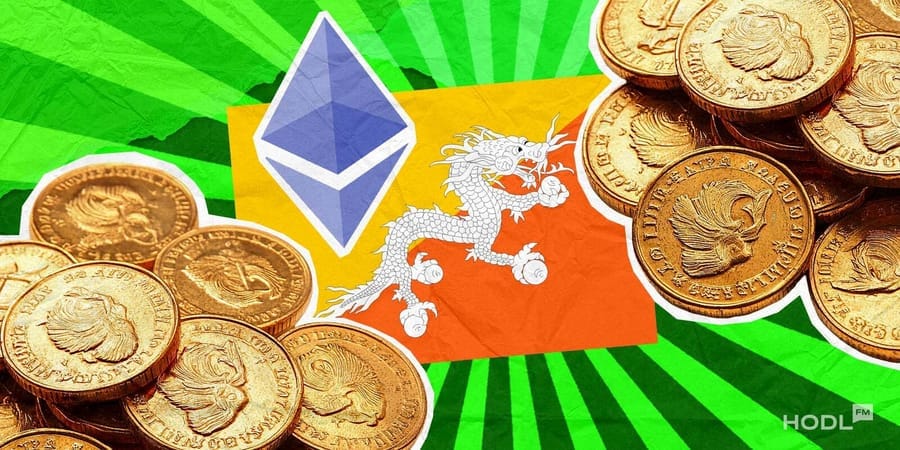



Gelephu Mindfulness City (GMC), Bhutan’s Special Administrative Region created under a Royal Charter, has introduced an accelerated licensing framework for digital asset and fintech firms, combining regulatory approval and banking access into a single coordinated process.
The model allows qualified companies to incorporate, secure approval, open a corporate bank account, and begin operations without the delays that often separate licensing and banking in other jurisdictions. The framework connects directly with DK Bank, the city’s official banking partner.
Licensing and banking merged into one pathway
According to GMC’s announcement, firms that complete the licensing process receive a corporate account with DK Bank as part of the same workflow. The system aims to remove a long-standing bottleneck where companies secure licenses but face uncertainty or delays when applying for banking services.
Yu Dong Zheng, CEO of DK Bank, said:
"In most financial centres, getting licensed is only half the battle - getting a bank account is where companies get stuck. We’ve removed that bottleneck."
The bank supports multi-currency accounts across nine currencies, including USD, EUR, GBP, and JPY. It also provides crypto-related services such as BTC-backed lending, asset swaps, and fiat on- and off-ramps. GMC confirmed that licensed firms receive waived banking fees for at least six months, followed by discounted pricing.
Jigdrel Singay, board member and digital assets lead at GMC, said in the statement that companies entering through the framework can expect coordinated access to banking, although DK Bank continues standard Know Your Customer and Anti-Money Laundering checks. He said existing licenses from jurisdictions such as Singapore, Hong Kong, and Abu Dhabi Global Market help streamline due diligence but do not replace local regulatory oversight.
"If a company has already demonstrated credibility in leading jurisdictions, we recognize that and enable them to move faster," Singay said. "Companies don’t just get approved. They get operational."
No passporting despite global alignment
GMC clarified that the framework does not function as a passporting regime similar to the European Union’s Markets in Crypto-Assets Regulation. Firms must comply with local supervision even if they hold licenses elsewhere.
The region draws on legal structures aligned with Singapore’s common law system and regulatory principles modeled on Abu Dhabi Global Market. It also offers Variable Capital Company structures and operates an International Dispute Resolution Centre to handle cross-border investment disputes.
A double taxation agreement with Singapore is already in place, with further agreements under development.
Industry participants that completed the process described a structured but collaborative experience. Ian Loh, CEO of Ceffu, said:
"What stands out in Bhutan is the clarity of vision: a commitment to building a trusted, transparent, and globally competitive financial ecosystem. The process has been rigorous, but equally collaborative, demonstrating that regulators and industry can work hand in hand to set a high bar for security, compliance, and long-term sustainability."
John Ge, co-founder and CEO of BIT, added:
"What differentiates GMC is the intentional design of the ecosystem and the alignment of regulation, banking, and operational readiness from day one. The accelerated review process is both fast and pragmatic, with the GFSO demonstrating a clear openness to engage constructively while upholding high standards."
Tax incentives target long-term operators
Tax policy forms a central part of GMC’s strategy. The framework includes targeted 0% corporate tax rates for qualifying sectors based on investment commitments. The region does not impose capital gains, dividend, or inheritance taxes.
Officials confirmed that foreign employees may receive income tax benefits through 2030. Singay said the incentives aim to attract firms that build teams and operations locally rather than entities that relocate profits without establishing a presence.
The system follows a territorial taxation approach, similar to Singapore and Hong Kong, where taxes apply only to domestic income.
Bitcoin reserve activity draws attention
The licensing initiative arrives as blockchain data firms continue to monitor Bitcoin transfers linked to Bhutan.
Arkham Intelligence reported that the Royal Government of Bhutan moved 100.44 BTC, valued at about $8.2 million, across three transactions to a wallet beginning with "bc1qn." The firm stated that the transfer pattern resembled earlier activity.
Arkham data shows more than $230 million in Bitcoin movements tied to Bhutan-linked wallets since the start of 2026, with an average of nearly $50 million per month. The country still holds about 3,119 BTC, valued at approximately $252.3 million.
Bhutan is selling Bitcoin.
— Arkham (@arkham) May 12, 2026
Bhutan just moved 100 BTC ($8.1M) out of its holding wallets.
At their current rate of selling, they will run out of BTC before the end of September. pic.twitter.com/z8P7yf0kzS
Some past transactions interacted with wallets linked to Galaxy Digital and QCP Capital.
Arkham noted that the latest transfer does not confirm an immediate sale. The funds moved from a legacy address format to a SegWit-style wallet.
Singay addressed speculation about the transfers in comments, stating that claims of reserve sales linked to GMC were "incorrect." He said Bitcoin committed under Bhutan’s Bitcoin Development Pledge remains part of the city’s strategic reserves.
Bhutan introduced the pledge in late 2025, committing up to 10,000 BTC to support long-term development of GMC. Officials stated at the time that the assets would serve as a reserve rather than a source of liquidation.
Positioning for global competition
GMC’s model targets firms that seek regulatory clarity alongside immediate operational capability. The integrated structure addresses two of the most cited challenges in cross-border expansion: licensing delays and banking access.
The region positions itself as a competitor to established financial centers by combining regulatory alignment, tax incentives, and infrastructure within a single framework.
 Anastasiia G
Disclaimer: All materials on this site are for informational purposes only. None of the material should be interpreted as investment advice. Please note that, despite the nature of much of the material created and hosted on this website, HODL FM operates as a media and informational platform, not a provider of financial advisory services. The opinions of authors and other contributors are their own and should not be taken as financial advice. If you require advice, HODL FM strongly recommends contacting a qualified industry professional.