


Singapore-based mobility platform Ryde Group Ltd has announced a new corporate treasury approach that includes potential investments in digital assets such as Bitcoin, Ethereum, and Solana. The company disclosed the move in a March 18, 2026 update, describing it as a Digital Asset Treasury (DAT) Strategy designed to support long-term balance sheet planning.
JUST IN: Singaporean Uber competitor Ryde Group officially adopts a #Bitcoin and Crypto treasury strategy 🔥 pic.twitter.com/iruU8UpPmo
— BitcoinTreasuries.NET (@BTCtreasuries) March 19, 2026
Ryde stated that the initiative reflects its response to an “evolving macroeconomic environment.” The company confirmed that it may allocate a portion of its corporate reserves into digital assets, with the size and timing of allocations subject to internal governance and market conditions.
Terence Zou, founder and CEO, addressed the rationale behind the decision.
“The adoption of our Digital Asset Treasury Strategy reflects Ryde's ongoing efforts to evaluate new approaches to treasury management in a changing economic and technology environment,” he said. “We believe it is important to assess how digital assets may complement our existing treasury approach, while ensuring appropriate governance, oversight, and risk management.”
Governance structure separates investment and risk oversight
Ryde introduced a formal governance architecture to manage digital asset exposure. The company established two separate oversight bodies to handle different aspects of treasury operations.
The Digital Asset Investment Committee (DAIC) will review allocation strategies, portfolio construction, and capital deployment decisions. A second body, the Digital Asset Compliance and Risk Committee (DACRC), will oversee regulatory compliance, operational controls, and ongoing risk monitoring.
This structure separates investment decisions from compliance responsibilities. The company stated that this model aims to support accountability and internal control across treasury activities.
Ryde also confirmed that any digital assets acquired will be held through qualified third-party custodians. These holdings will remain in segregated custody accounts under established security standards.
Crypto allocation remains flexible and conditional
The DAT framework does not fix a specific allocation percentage. Instead, it allows flexibility based on market conditions and internal approvals. Ryde named Bitcoin, Ethereum, and Solana as potential assets within the strategy.
The company described the initiative as a way to “diversify and modernize” treasury operations while maintaining a focus on prudent capital management. It did not confirm immediate purchases or a timeline for execution.
Ryde emphasized that implementation will proceed cautiously and in line with governance requirements. The company framed the strategy as complementary to its core business in mobility and logistics.
Market reaction reflects investor caution
Ryde’s announcement coincided with a sharp movement in its stock price. Shares of the company, listed on the NYSE American under the ticker RYDE, dropped by more than 13% during trading following the disclosure, according to Yahoo Finance data. The decline reduced part of its earlier year-to-date gains, which had exceeded 100% prior to the drop.
The reaction came at a time when corporate digital asset strategies have faced pressure. CoinGecko data shows that inflows into crypto treasury companies slowed in early 2026, with February marking one of the lowest monthly totals since late 2024.
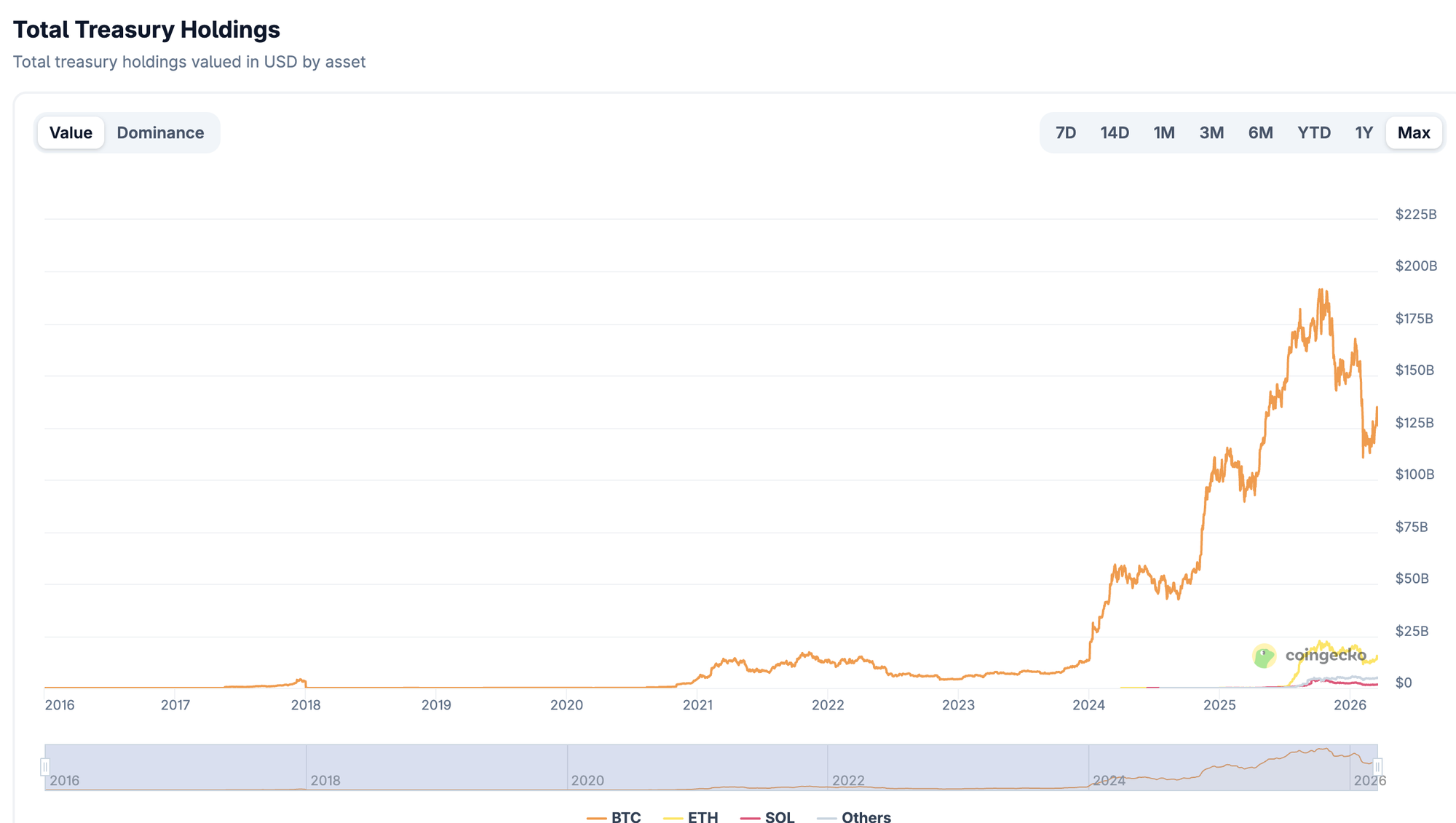
At the same time, several companies have adjusted their digital asset exposure. Public filings and reports have highlighted cases where firms reduced holdings or faced unrealized losses tied to crypto price declines. These developments form the backdrop to Ryde’s decision.
Previous crypto integration informs strategy
Ryde has prior experience with digital assets in its platform. The company introduced Bitcoin as an in-app payment option in 2020 and later expanded support to additional cryptocurrencies. Users could convert digital assets into platform-specific tokens through its RydePay wallet.
The current treasury strategy builds on that earlier integration but shifts the focus toward balance sheet management rather than payments.
Broader industry context includes payment-focused adoption
The move by Ryde adds to a broader pattern among global technology and mobility companies. In June 2025, Uber CEO Dara Khosrowshahi discussed the company’s interest in stablecoins during a public appearance at the Bloomberg Tech Summit.
“I think stablecoin is one of the more interesting instantiations of crypto that has a practical benefit other than crypto as a store of value,” he said.
He noted that stablecoins could reduce costs tied to cross-border transactions. Uber confirmed that it was studying the technology but did not include crypto assets in its treasury strategy.
This distinction highlights two different approaches within the same sector. Ryde focuses on treasury diversification, while Uber evaluates payment infrastructure.
Operational challenges remain part of treasury shift
The adoption of a digital asset treasury introduces operational complexity. Ryde must rely on custodians, internal governance, and risk controls to manage exposure. The company addressed these factors through committee oversight and custody arrangements.
Market volatility also remains a factor. The DAT framework does not eliminate price risk. Instead, it places emphasis on governance and gradual implementation.
The company acknowledged these constraints in its forward-looking statement, which noted that outcomes may differ due to uncertainties and changing market conditions.
Strategy marks new phase for corporate treasury management
Ryde’s decision signals a shift in how a Southeast Asian mobility platform approaches financial management. The DAT Strategy introduces digital assets into its reserve framework while maintaining structured oversight.
The company has not confirmed execution timelines or allocation levels. The framework provides flexibility for future decisions rather than immediate deployment.
This approach positions Ryde within a growing group of companies that explore digital assets beyond payments. The next phase will depend on how the company applies its governance model and responds to market conditions.
 Anastasiia G
Disclaimer: All materials on this site are for informational purposes only. None of the material should be interpreted as investment advice. Please note that, despite the nature of much of the material created and hosted on this website, HODL FM operates as a media and informational platform, not a provider of financial advisory services. The opinions of authors and other contributors are their own and should not be taken as financial advice. If you require advice, HODL FM strongly recommends contacting a qualified industry professional.