


Trezor announced Tuesday it will cut its number of authorized resellers, calling the move "a preventive step, taken out of an abundance of caution" after reports that competitor Ledger had sold hardware wallets containing malicious implants.
"Following recent supply-chain incidents, we decided to reduce the number of resellers so we can more effectively check those we work with," Trezor wrote on X. "Let us be very clear: there is not a single piece of evidence that Trezor devices have been compromised. This is a preventive step, taken out of an abundance of caution."
Chief commercial officer Danny Sanders sent a letter to affected resellers laying out the timeline.
"If you are receiving this letter, your authorization ends on 1 January 2027. On that date we will remove you from our list of authorized Trezor resellers," he wrote, adding that shipments of new stock to those partners stop immediately, though they can keep selling existing inventory through the holiday season.
"We will not ship new stock to you after today, but we want the transition to be as fair as we can make it, so until 1 January you can keep selling your remaining stock through the full Black Friday and holiday season, the strongest weeks of the year." Sanders also posted separately on X: "To the resellers who helped build Trezor: thank you, and I'm sorry."
To the resellers who helped build Trezor: thank you, and I’m sorry 💔 pic.twitter.com/RK7KBJOshp
— Danny (@Dantoshi) October 13, 2026
What triggered the decision
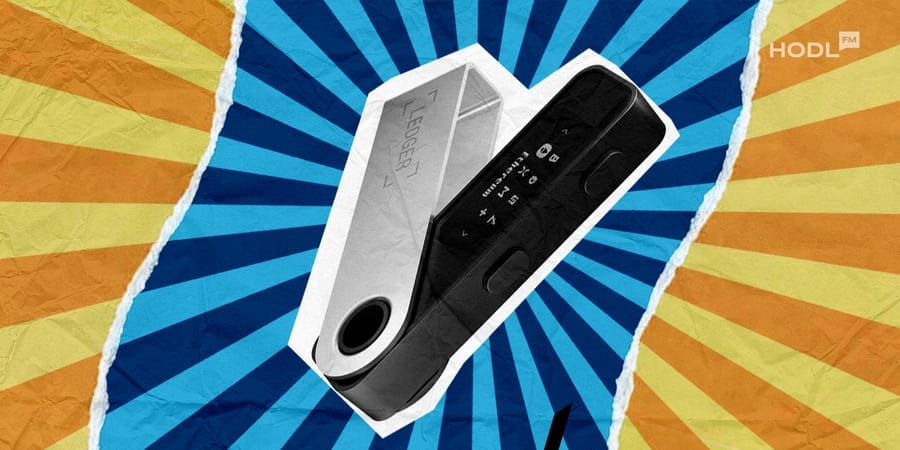
Trezor's move follows Ledger's confirmation that at least one hardware wallet sold through Southeast Asian reseller CryptoBilis contained an unauthorized hardware implant, a discovery that has led to millions of dollars in user losses. The implant captured recovery phrases displayed on screen and transmitted them over cellular networks, a method distinct from firmware tampering or counterfeit hardware, the two threats most wallet makers build their setup checks around.
CryptoBilis, which sold both Ledger and Trezor products as an authorized reseller for the latter, suspended all hardware wallet sales during the investigation. MediaMarkt's parent company pulled all Ledger products from its stores and online platform as a precaution, while continuing to carry Trezor devices.
A scramble to size up the damage
Researchers tracking the breach have estimated losses between $72 million and $86 million, though Ledger said Tuesday it had "not confirmed the total number of affected users or the total value lost." The uncertainty reflects how hard it is to trace funds once an attacker has a victim's recovery phrase, since that single piece of information grants full control over every asset tied to the compromised wallet, with no way to reverse a transfer once it clears.
This episode follows Ledger's 2020 data breach, when a database leak exposed the names, addresses and order details of roughly 270,000 customers, information that fueled years of targeted phishing campaigns against known hardware wallet owners. That history is part of why physical supply chain security has become a bigger focus for the industry than data breaches alone, since an attacker who can intercept a device before it reaches the buyer skips the need to trick anyone into revealing information voluntarily.
What Trezor is telling customers to do
The company's spokesperson recommended buying directly from Trezor rather than through third parties, and checking that a device's tamper seal is intact before setup. For larger holdings, the spokesperson suggested a multisignature wallet setup "with devices from different makers, so one compromised device can't move funds on its own," a structure that requires signatures from multiple separate devices before any transaction can go through, which limits the damage a single compromised unit can cause.
Multisignature wallets have gained traction with institutional crypto custodians for similar reasons, since spreading signing authority across separate hardware reduces the single point of failure that one implanted device represents, though the approach adds setup complexity that has kept it a minority practice among individual retail holders.
Sanders closed his letter to resellers by framing the decision as ongoing rather than final.
"Supply-chain security is never finished, so we are raising the bar for every partner who continues with Trezor, with an updated legal framework and closer checks on how devices are sourced, stored and handled," he wrote. "This is a precautionary measure to protect our supply chain and our customers. We did not take it lightly. If things change in the future, we will review it."
 Alex Shepel
Disclaimer: All materials on this site are for informational purposes only. None of the material should be interpreted as investment advice. Cryptocurrency investments involve significant risk of loss. Please note that, despite the nature of much of the material created and hosted on this website, HODL FM operates as a media and informational platform, not a provider of financial advisory services. The opinions of authors and other contributors are their own and should not be taken as financial advice. If you require advice, HODL FM strongly recommends contacting a qualified industry professional.