





Wouldn’t it be great if your crypto kept growing on its own, without you having to do anything? Today, there are many platforms that help with that. Some focus on staking, others offer lending products. YouHodler is one of the more interesting players in this space.
In this review, we’ll look at how YouHodler crypto services work in practice, what fees and risks look like, and how it compares to other options.
What is YouHodler?
YouHodler is a centralized crypto finance platform. It solves a practical problem: how do you put idle digital assets to work without giving up your long-term positions?
The platform lets users earn yield on crypto holdings, borrow against them as collateral, and access a suite of trading tools. It operates under Swiss and EU frameworks, which matters when you're trusting a custodial service with your funds.
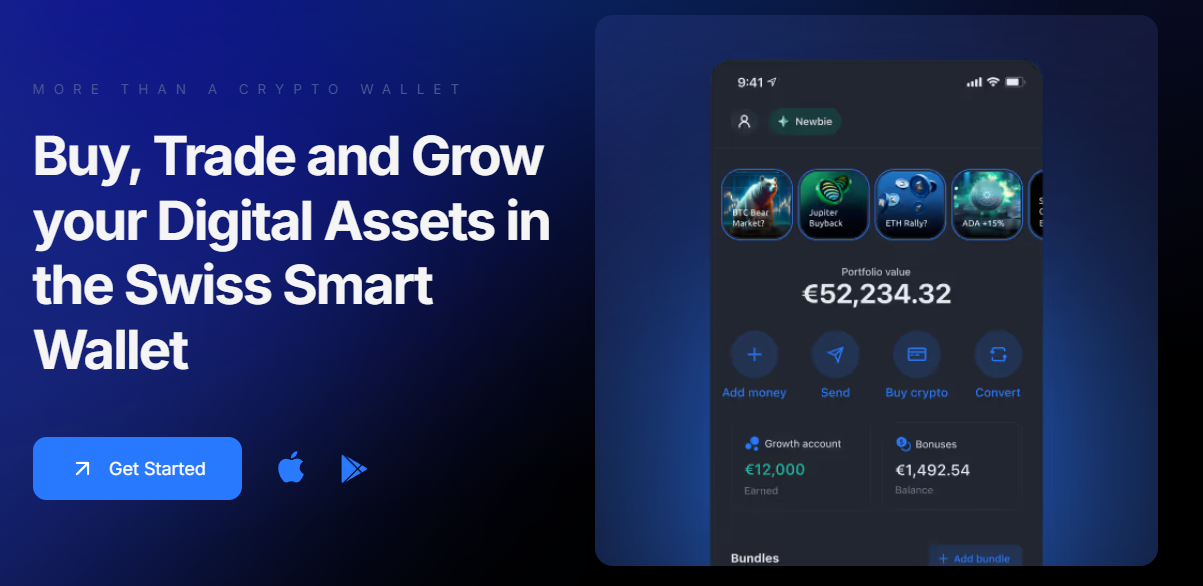
Unlike decentralized protocols such as Aave or Compound, where you retain control of your private keys, YouHodler holds assets on your behalf. That trade-off brings real convenience and a more structured user experience, but it also introduces counterparty risk.
YouHodler wraps DeFi-style financial mechanics in a regulated CeFi layer.
Features of YouHodler
YouHodler combines several tools in one platform. Each addresses a different way to use your crypto holdings.
- Crypto-backed loans let you borrow fiat or stablecoins against your assets without selling your position. The Loan-to-Value (LTV) ratio can go up to 90%.
Note: at 90% LTV, a roughly 10% drop in your collateral's price is enough to trigger automatic liquidation, so most users should treat this ceiling as a maximum, not a target.
- Yield Accounts offer weekly interest payouts on crypto and stablecoin deposits. It's a straightforward passive income, no active management required.
- Multi HODL is a leveraged trading tool, up to 70x. The upside potential is significant; so is the downside. It's built for experienced traders who know how to handle high volatility.
- Cloud Miner is a gamified feature that generates small daily crypto bonuses without any hardware.
- Crypto Card lets you spend your crypto like regular money, converting it instantly when you pay.
- YouHodler Affiliate Program lets users and creators earn commissions by referring new sign-ups.
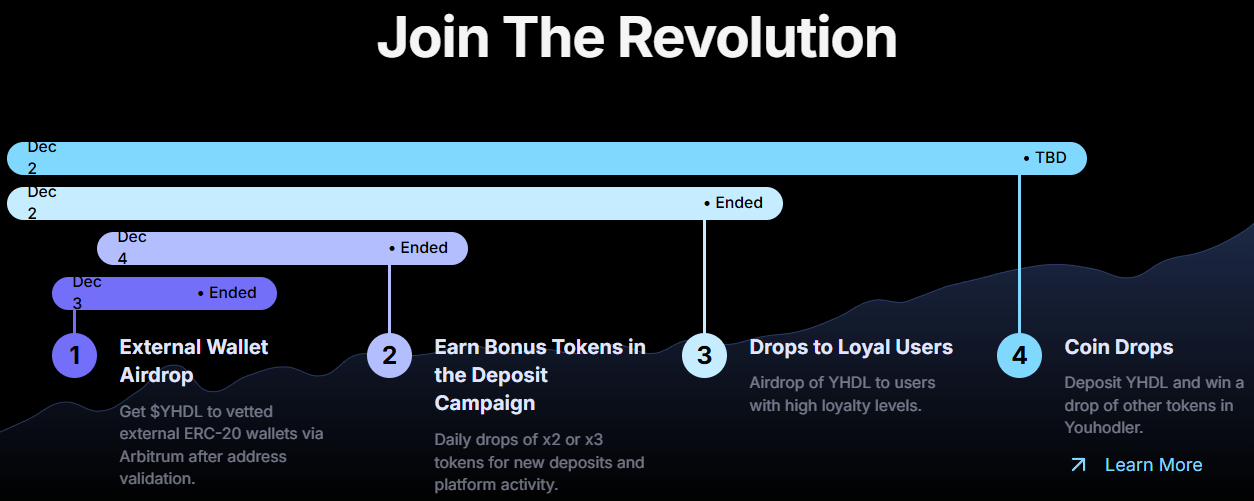
- YouHodler Coin is the platform’s native utility token. It is used for airdrops for loyal users, and bonus campaigns tied to platform engagement.
Is YouHodler safe?
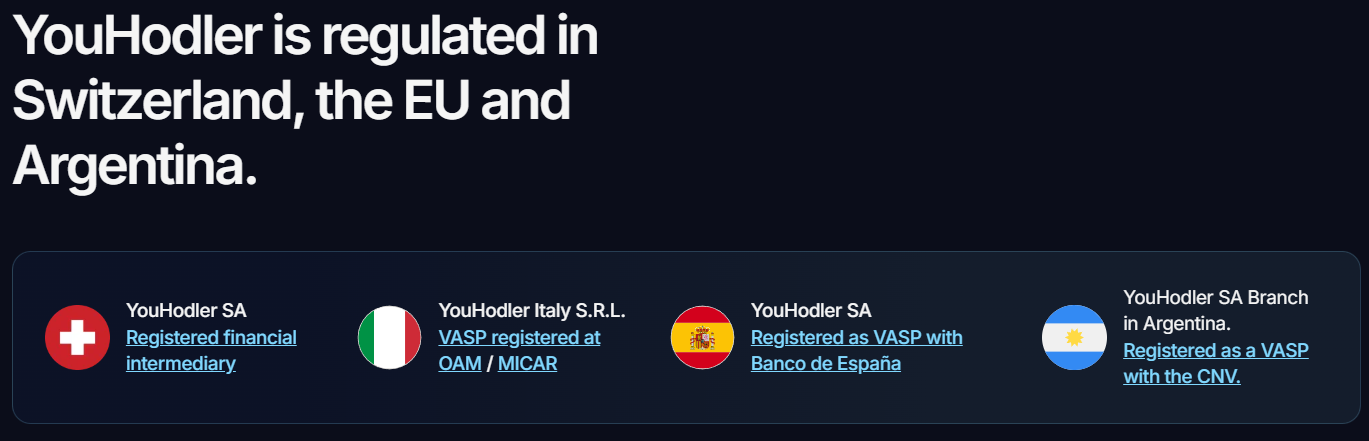
Yes, it’s safe. YouHodler is based in Switzerland (Lausanne) and is registered as a financial intermediary there. It also holds Virtual Asset Service Provider (VASP) registrations in Spain, Italy, and Argentina.
The service protects user funds through a combination of hot and cold storage solutions. It partners with Ledger Vault to provide secure multi-signature wallets and hardware-based protection. Assets held via Ledger Vault are insured for up to $150 million through a Lloyd’s of London policy, covering risks such as theft and certain physical security breaches. However, this doesn’t protect yield account balances if the company goes bankrupt and is not government-backed deposit insurance.
For additional protection, users can enable features like three-factor authentication (3FA).
Trading experience and user interface
The menu is very clear and simple. The layout is intuitive, with everything easy to find at a glance. Onboarding is straightforward, and KYC moves quickly. Deposits work cleanly across crypto and fiat.
My only real friction point was fiat withdrawals. It wasn’t a deal-breaker for me, but pay attention if timing matters to you.
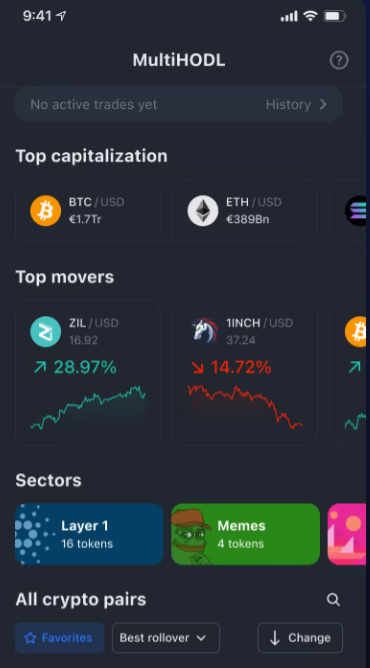
YouHodler also has an app, available for iOS and Android. They reflect the desktop version being a convenient, hands-on tool.
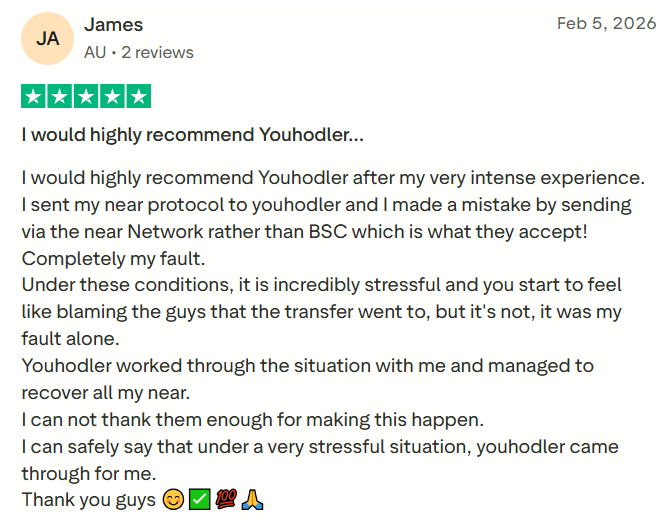
YouHodler has a 3.8 rating on Trustpilot, with many users praising its fast customer support and smooth, easy-to-use platform. However, some reviewers mention delayed withdrawals or additional verification checks before funds are released.
Supported assets and countries
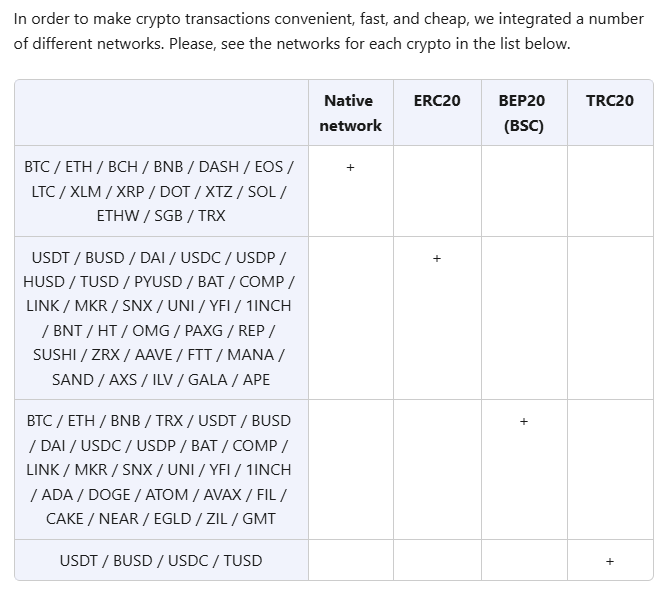
YouHodler covers over 50 assets, including the major ones you'd expect, like BTC, ETH, SOL, XRP, ADA, LTC, alongside solid stablecoin support with USDT, USDC, BUSDC, TUSDC, and EURT.
The platform operates across most European countries, with a few exceptions. Services are limited in the United Kingdom, Switzerland, and Singapore.
Regarding YouHodler USA availability, the platform does not provide services to U.S. residents. Restricted regions also include Canada, China, Russia, and others listed on the YouHodler official website.
Fees and costs
YouHodler fees depend on the type of transaction you’re making. For crypto and stablecoins, deposits are usually free, while withdrawals may include standard blockchain network fees.
For fiat currencies like EUR or USD, the cost varies by payment method. Bank card transactions typically include a small percentage fee, while bank transfers can be cheaper or sometimes even free, depending on the region.
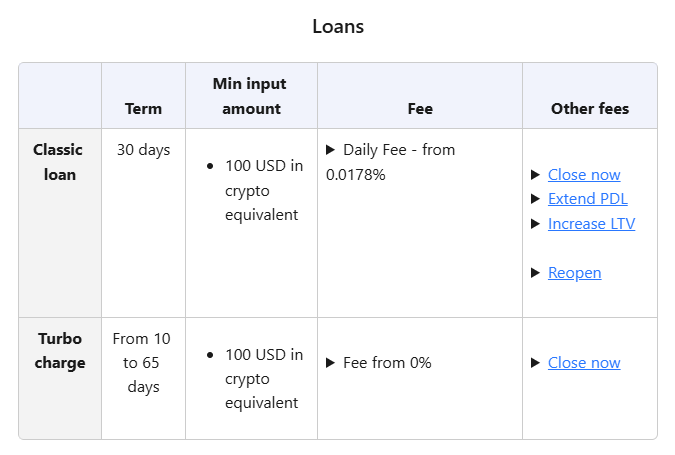
If you take out a loan using crypto as collateral, you’ll pay a daily interest rate calculated as a small percentage of the loan amount. Some additional service fees apply if you use advanced options. For example, closing a loan early (“Close Now”) usually costs around 1% of the amount. Extending a loan or increasing the LTV may add roughly 1.5% of the additional amount, and reopening a loan typically costs about 1% of the borrowed funds.
For MultiHODL trading, positions are subject to an hourly rollover fee while they remain open.
It’s also important to remember that fees and limits may change depending on market conditions and your region. However, YouHodler shows the exact cost of each transaction before you finalize it, so you can review everything in advance.
Pros and cons of YouHodler
Like any CeFi platform, YouHodler has both strengths and limitations to consider before committing your funds.
YouHodler vs competitors
Choosing the right platform depends on what you’re actually looking for. Here’s how YouHodler compares to some key alternatives.
YouHodler vs Nexo
These are close competitors in the CeFi space. Nexo stands out for its regulatory licensing and token-based rewards. Currently, there is no dedicated YouHodler coin or YouHodler token tied to platform rewards.
YouHodler offers higher LTV ratios and more advanced trading features, especially Multi HODL. If active trading matters more to you than token perks, YouHodler may be the better fit.
YouHodler vs Ledn
Ledn focuses mainly on Bitcoin and emphasizes proof-of-reserves transparency. It suits users who prioritize custody security over asset variety. YouHodler is better for those who want support for more assets and multiple tools in one platform.
YouHodler vs Aave
This is a CeFi vs DeFi comparison. Aave is non-custodial, which means you control your own crypto, and lending is handled automatically by smart contracts. That offers more decentralization but also comes with smart contract risk, no fiat options, and no customer support. In exchange, YouHodler offers easier access and a more user-friendly experience.
Is YouHodler worth using in 2026?
YouHodler remains a solid option in 2026, especially for European users. Its high LTV ratios stand out among other CeFi platforms.
However, it is a custodial service, which means the company controls your funds. There is no deposit insurance, and its leveraged tools can lead to losses if used carelessly. It’s better suited for users who understand the risks.
Unlike Nexo or Ledn, YouHodler has not published the results of an independent third-party security audit or proof of reserves as of this writing. That doesn't mean issues exist, but it does mean there's less independent verification available than with some competitors.
If you decide to use YouHodler exchange, set clear limits, don’t put all your funds in one place, and always review the latest terms before committing your money.
 Kataryna Dyl
Disclaimer: All materials on this site are for informational purposes only. None of the material should be interpreted as investment advice. Please note that, despite the nature of much of the material created and hosted on this website, HODL FM operates as a media and informational platform, not a provider of financial advisory services. The opinions of authors and other contributors are their own and should not be taken as financial advice. If you require advice, HODL FM strongly recommends contacting a qualified industry professional.


