






Canada’s federal government has outlined plans to ban crypto ATMs as part of a broader effort to combat financial crime, which has put the machines at the center of a growing national debate over fraud, regulation, and access to digital assets.
The proposal appeared in the Spring Economic Update 2026, where officials described crypto ATMs as a “primary method for scammers to defraud victims and for criminals to place their cash proceeds of crime.” According to reporting by CBC News, the measure would remove the machines entirely while allowing Canadians to continue purchasing digital assets through regulated, in-person money services businesses.
Crypto ATMs differ from traditional banking machines. Instead of withdrawing funds, users deposit cash and convert it into cryptocurrencies such as Bitcoin, then send those funds to digital wallets. This process often bypasses conventional banking safeguards, which creates vulnerabilities that fraudsters have exploited.
Investigations link machines to widespread scams
A months-long investigation by CBC News examined the role of these machines across Canada. Journalists spoke with law enforcement agencies, financial regulators, industry participants, former employees, and fraud victims. The findings pointed to a consistent pattern: crypto ATMs have become a central channel for scam operations.
Canada’s financial intelligence agency, FINTRAC, reached a similar conclusion in a February 2023 analysis of suspicious transaction reports. The agency identified crypto ATMs as a recurring route used by fraudsters to collect and move funds.
Victims often receive instructions from scammers to deposit cash into these machines. Transactions move quickly and require minimal verification. In many cases, deposits under $1,000 only require a phone number.
Regulatory gap and rapid growth
CoinATMRadar data shows Canada currently hosts nearly 4,000 crypto ATMs, the highest number per capita globally. Worldwide, there are more than 39,000 machines in operation. Despite this scale, Canada regulates them under the same framework as money services businesses, a category that includes foreign exchange dealers and money transfer services.
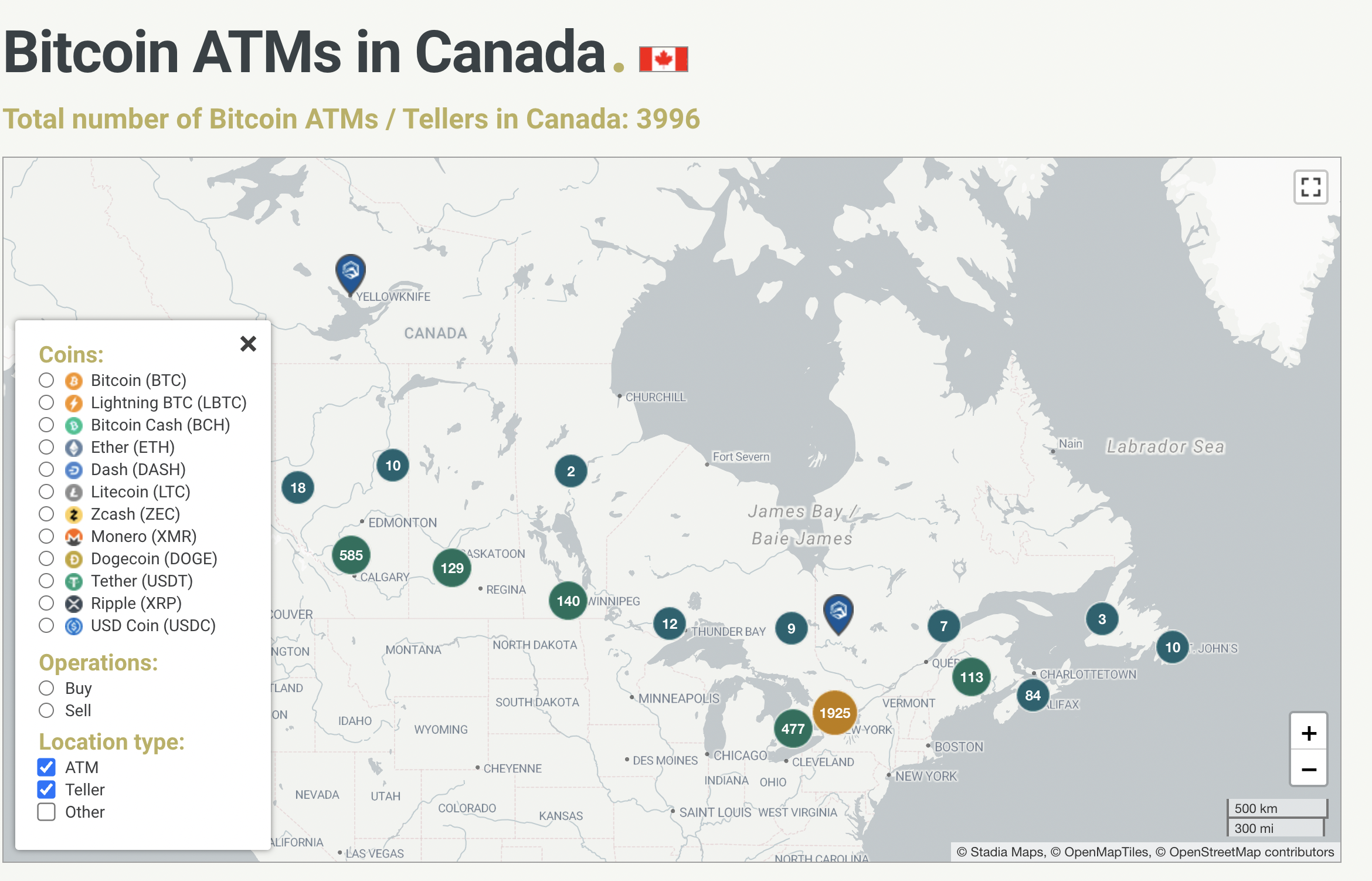
This approach has left a gap. There are no industry-specific rules tailored to crypto ATMs, even as their use in fraud schemes has increased. Officials referenced this regulatory shortfall while presenting the proposed ban.
Finance Minister François-Philippe Champagne previously said the government was reviewing options to address financial crime risks tied to digital assets.
The Spring Economic Update did not provide detailed implementation steps or a timeline for the ban.
International pressure and policy alignment
Canada’s proposal follows similar actions in other jurisdictions. The United Kingdom created a licensing system in 2021 that has not issued approvals to crypto ATM operators, effectively removing the machines from the market. New Zealand has introduced a proposal to ban them, while Australia imposed daily transaction limits after a joint investigation by financial intelligence authorities and police.
In the United States, roughly half of all states have introduced or implemented rules targeting crypto ATMs. These measures include caps on transaction amounts, fee limits, and refund requirements for scam victims.
These developments reflect a broader shift toward tighter oversight of physical crypto access points. Governments have increasingly focused on entry and exit ramps between cash and digital assets, where enforcement challenges tend to concentrate.
Parallel efforts to tighten crypto oversight
The proposed ATM ban forms part of a wider policy push. Canadian lawmakers have also advanced restrictions on political financing involving digital assets through Bill C-25, known as the Strong and Free Elections Act. The bill has passed second reading in the House of Commons and would prohibit political entities from accepting cryptocurrency donations.
The legislation would require any prohibited contributions to be returned or transferred to the Receiver General within 30 days. Officials have linked the proposal to concerns over verifying donor identities and tracing the origin of funds in crypto transactions.
Economic update focuses on broader stability
While the crypto ATM proposal has drawn attention, it sits within a larger economic plan focused on affordability, workforce development, and infrastructure.
The government announced initiatives such as Team Canada Strong, which aims to recruit between 80,000 and 100,000 skilled trades workers by 2030–31. It also confirmed plans to establish a Financial Crimes Agency with a “follow-the-money” approach to investigate complex financial offenses and recover illicit proceeds.
At the same time, the update introduced measures to ease cost pressures for households, including tax relief, fuel cost reductions, and expanded social programs.
A turning point for crypto access in Canada
Canada once led the world in crypto ATM adoption. The first Bitcoin ATM launched in Vancouver in 2013, marking an early milestone in public access to digital currencies. More than a decade later, that same infrastructure now faces removal.
The proposed ban signals a shift in how policymakers view convenience versus risk. Crypto ATMs offered a low-barrier entry point into digital assets. That same accessibility, investigators found, made them attractive to fraud networks.
The government has framed the decision as a protective measure. The coming months will determine how quickly the proposal moves forward and how the industry responds to a potential nationwide shutdown.
 Dayo Paul
Disclaimer: All materials on this site are for informational purposes only. None of the material should be interpreted as investment advice. Please note that, despite the nature of much of the material created and hosted on this website, HODL FM operates as a media and informational platform, not a provider of financial advisory services. The opinions of authors and other contributors are their own and should not be taken as financial advice. If you require advice, HODL FM strongly recommends contacting a qualified industry professional.