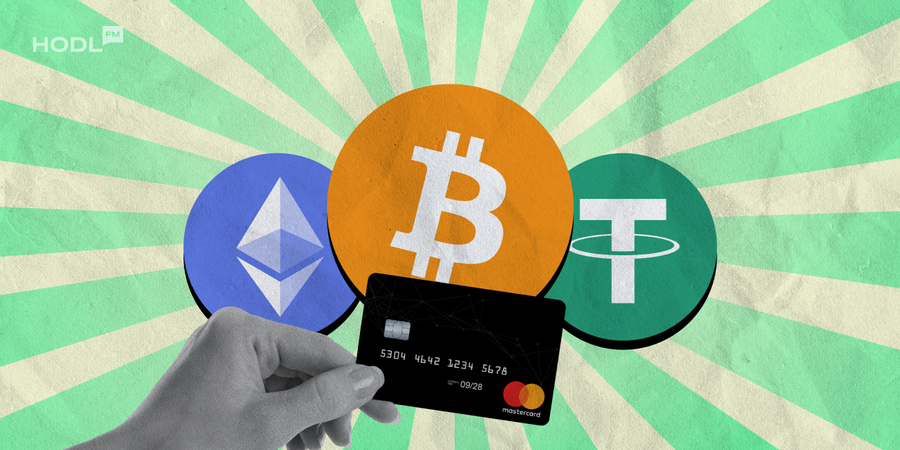



Mastercard completed its acquisition of BVNK on Monday, closing a deal valued at up to $1.8 billion and giving the card network direct ownership of infrastructure that connects fiat currencies and stablecoins for banks, fintechs, and enterprises.
The deal includes $300 million in contingent payments. Mastercard agreed to acquire BVNK in March 2026. The path to that agreement was not straightforward. Coinbase had been in talks to buy BVNK for approximately $2 billion but walked away in November 2025 during due diligence. Mastercard moved in months later.
BVNK operates in over 130 countries. Its technology lets businesses hold, move, convert, and manage both fiat and digital currencies through a single compliant platform. That means accepting a payment in traditional currency, settling in USDC or USDT, and delivering it on the other side in local currency. The use cases it has built for are cross-border business payments, payroll, merchant settlement, and treasury flows.
What Mastercard is buying and why it chose to own rather than partner
Mastercard's chief product officer Jorn Lambert described the commercial logic directly.
"Digital currencies, particularly stablecoins, are increasingly addressing real-world needs in areas like cross-border B2B payments, remittances, payouts, settlement and treasury flows," he said. "In a multi-money world where fiat, stablecoins and tokenized deposits and other forms of value coexist, the next payments paradigm will be defined by how effectively each rail, network or form of money connects and works together. By combining Mastercard's global network with BVNK's on-chain infrastructure and stablecoin-native technology, we can deliver a more efficient, trusted and seamless payment experience."
The decision to acquire rather than build or partner is the structural shift here. For most of the past two years, Mastercard and Visa engaged with stablecoins through pilots and programs. This deal is different in kind. An $1.8 billion acquisition of a settlement company is a permanent commitment, not a sandbox.
BVNK's existing customers will see no immediate change. In a separate announcement on Monday, BVNK said customers would continue to use the same teams, products, and integrations, with no action required.
The Crypto Partner Program that preceded the deal and what BVNK adds to it
The acquisition builds on infrastructure Mastercard had already been constructing around digital assets. In March 2026, the company announced its Crypto Partner Program, a formal collaboration involving more than 85 companies from digital asset and financial services sectors, as HODLFM News reported. Participants included Binance, Circle, Gemini, PayPal, Ripple, Polygon Labs, Fireblocks, Paxos, and BitGo, among others.
The program targeted cross-border remittances, business-to-business transfers, and settlement use cases, which are precisely the workflows BVNK was already processing at scale. Owning BVNK now gives Mastercard the ability to bundle stablecoin settlement into products it sells directly to card-issuing banks, rather than routing that functionality through a partner.
BVNK also has a documented relationship with Ripple. The company supported XRP within its multichain infrastructure, contributed to the development of RLUSD, Ripple's institutional stablecoin, and both BVNK and Ripple participate in Mastercard's Crypto Partner Program. That overlap means RLUSD-based settlement flows now have a direct path into Mastercard's network through the acquired infrastructure.
What the deal means for banks and cross-border business payments
BVNK said the integration with Mastercard's global reach would allow banks to offer stablecoin payment services and connect customer accounts to digital wallets. Payment providers could enable round-the-clock merchant settlement, a capability that standard banking rails currently cannot support outside business hours.
The stablecoin market exceeded $309 billion in value at the time of the deal's close. That scale reflects why a card network would pay $1.8 billion for the infrastructure that connects traditional rails to on-chain settlement rather than treating it as a niche capability.
Visa has moved in a parallel direction, previously launching pilots that allow banks to pre-fund cross-border payments through stablecoin infrastructure. Earlier this summer, Mastercard, Visa, and Stripe backed the Open USD initiative. The competitive dynamic between the two largest card networks on stablecoin settlement is now structured differently: Mastercard owns its settlement layer outright through BVNK, while Visa continues to operate through a partnership model.
 Tanya Petrusenko
Disclaimer: All materials on this site are for informational purposes only. None of the material should be interpreted as investment advice. Please note that, despite the nature of much of the material created and hosted on this website, HODL FM operates as a media and informational platform, not a provider of financial advisory services. The opinions of authors and other contributors are their own and should not be taken as financial advice. If you require advice, HODL FM strongly recommends contacting a qualified industry professional.