



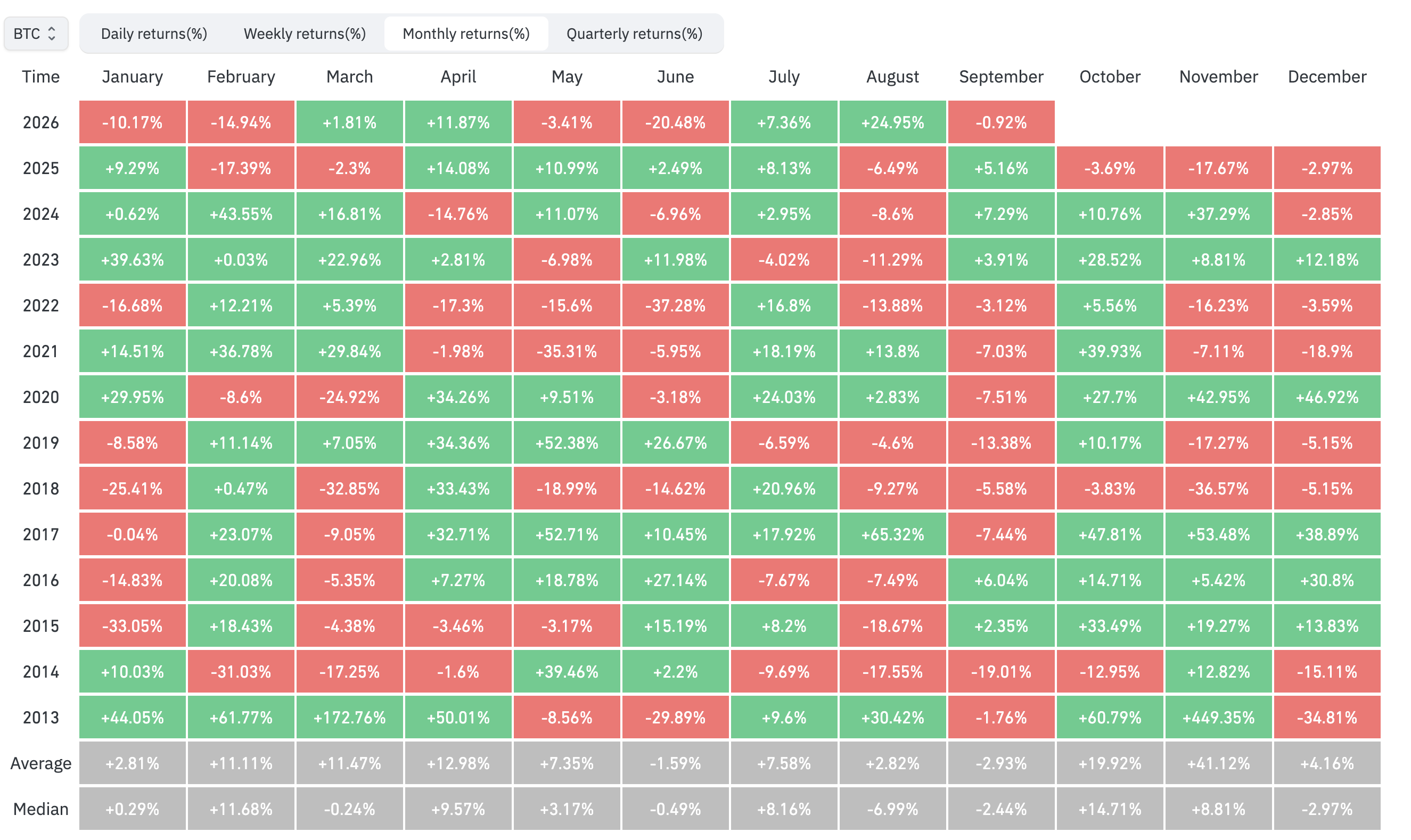
Bitcoin closed August with a 24.95% gain, its third-best August performance on record according to CoinGlass data, after climbing from approximately $63,000 at the month's open to a high of $81,500 on August 28. The final days of the month saw price pull back below $80,000, leaving Bitcoin near $78,000 as the calendar turned to September.
The month's raw return number is clear. What sits beneath it is more instructive.
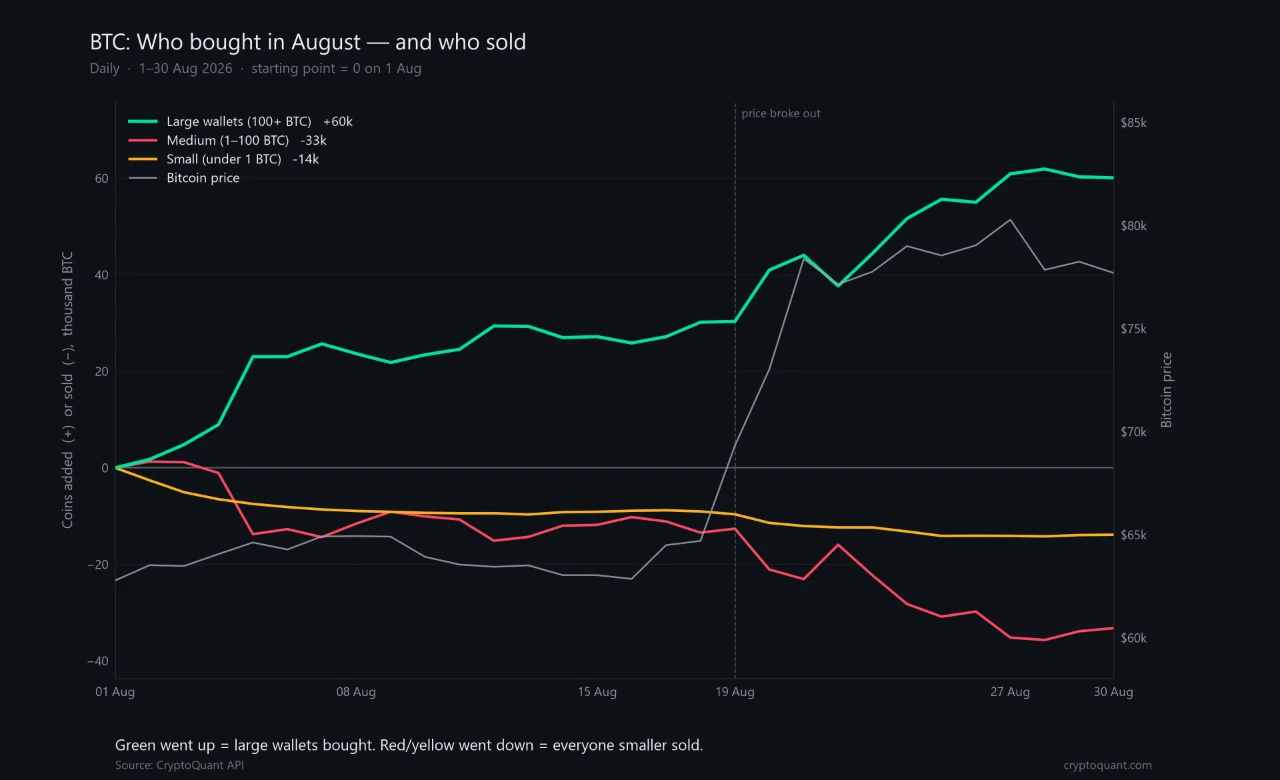
CryptoQuant analyst Woo Minkyu published a breakdown of wallet-level behavior across the August 1 to 30 window. The data showed wallets holding 100 or more BTC added approximately 60,000 BTC during that period. Wallets holding between 1 and 100 BTC sold roughly 33,000 BTC. Wallets under 1 BTC sold approximately 14,000 BTC.
"Large holders absorbed the breakout. Smaller holders used the rally as an exit," Woo wrote on CryptoQuant.
What the wallet split actually shows about who drove the move
Bitcoin's price sat in a $62,000 to $65,000 range through the first half of August. The breakout came on August 19, the same day US Treasury Secretary Scott Bessent announced the government would double its long-dated bond buyback operations, according to CNBC. Large-wallet accumulation did not precede the breakout by weeks, which would suggest anticipatory positioning. It accelerated with the move.
"Large-wallet buying accelerated with the move, rather than only on the dip before it," Woo wrote. "After the $80k tag, price faded — but this was not a month of leverage-driven chase so much as coins moving up the wallet stack."
Bitcoin's historical August performance and what made this one different
CoinGlass tracks Bitcoin's monthly returns back to 2013. August has historically been a mixed month. The two better August performances in Bitcoin's history came in 2017, when the asset gained 65% amid the ICO boom, and in 2026, which saw a 24.95% gain. August 2021 produced a gain close to 14%, well below this year's result. The 2026 performance is notable because it occurred against a backdrop of elevated inflation and a Federal Reserve that had three dissenters voting for rate hikes as recently as July, conditions that would historically have weighed on speculative assets.
The Treasury buyback announcement was the pivotal catalyst. Bessent said the government would raise each long-dated bond repurchase operation from $2 billion to at least $4 billion starting September 9. The move pushed 30-year Treasury yields lower from a 19-year high above 5.3% and triggered a repricing across hard assets. Bitcoin and gold moved together in the days that followed, consistent with the debasement trade thesis that a weaker dollar and suppressed long-term yields favor stores of value.
Ethereum's August performance alongside Bitcoin
Ethereum also posted a strong August. ETH gained approximately 30% over the month, recovering from lows below $1,600 reached in June. Ethereum's August 2026 performance came after months of sustained underperformance relative to Bitcoin. ETH had lost roughly 47% year-to-date by the time it bottomed, compared with Bitcoin's shallower drawdown. The recovery in August brought ETH back above $2,500 briefly before settling near $2,400. Spot Ethereum ETFs recorded six consecutive days of net inflows in the final stretch of the month, with BlackRock's ETHA accounting for $90.92 million in a single session on August 24, according to SoSoValue data.
The gap in August performance between the two assets reflects different accumulation dynamics. Bitcoin's wallet data shows a clean story of large holders absorbing supply from smaller ones. Ethereum's recovery had more institutional character, driven visibly through ETF flows and Tom Lee's Bitmine, which purchased approximately $79.17 million in ETH over a single week.
What the 60,000 BTC absorption figure means for September
Woo was careful about what his data does and does not establish.
"This is not a call that $80k holds, or that August is a finished monthly candle," he wrote. "If large wallets start giving back those 60,000 coins while price stays below $80k, the absorption read is wrong. As of 30 August, they have not."
The distinction between large-wallet accumulation and price sustainability matters because absorption can reverse. During Bitcoin's late 2021 correction from $69,000, on-chain data showed large wallet accumulation at multiple points during the drawdown that did not prevent further price decline. The wallet size cohort analysis is a signal about who holds coins at a given moment, not a guarantee about future behavior. Woo's framing treats the 60,000 BTC figure as a condition to monitor rather than a confirmed bullish thesis.
Bitcoin's September historical record adds another variable. Every year that Bitcoin closed both July and August in positive territory, September produced a red monthly candle. Both months closed green in 2026. The week ahead carries non-farm payrolls on September 4 and ISM Services PMI on September 3, data points that will shape Federal Reserve rate expectations and directly affect the macro conditions that drove August's rally.
 Gunel Ismayilova
Disclaimer: All materials on this site are for informational purposes only. None of the material should be interpreted as investment advice. Please note that, despite the nature of much of the material created and hosted on this website, HODL FM operates as a media and informational platform, not a provider of financial advisory services. The opinions of authors and other contributors are their own and should not be taken as financial advice. If you require advice, HODL FM strongly recommends contacting a qualified industry professional.