


Cryptocurrency was initially associated with anonymity, early users often described Bitcoin as digital cash that could move outside traditional financial oversight.
Every blockchain transfer is permanently recorded and publicly visible, making these networks inherently transparent. This transparency allows analytics firms, regulators, and law enforcement to trace transaction flows across the ledger.
Understanding the debate requires looking at how these systems work and how the leading privacy coins differ.
What are privacy coins?
Privacy coins are cryptocurrencies designed to obscure blockchain transaction data. While most digital assets operate on transparent ledgers where transfers are publicly visible, privacy-focused networks attempt to hide key elements of a transaction. Instead of exposing transaction details on a public ledger, they rely on specialized cryptographic techniques designed to conceal participants, transaction values, or both.
By 2026, privacy coins remain one of the most controversial segments of the digital asset market.
Supporters see them as essential tools for financial freedom and personal security, and Critics argue that the same technology can obscure illicit activity.
Depending on the protocol, these systems may conceal:
- Sender identities
- Receiver wallet addresses
- Transaction amounts
- Transaction histories
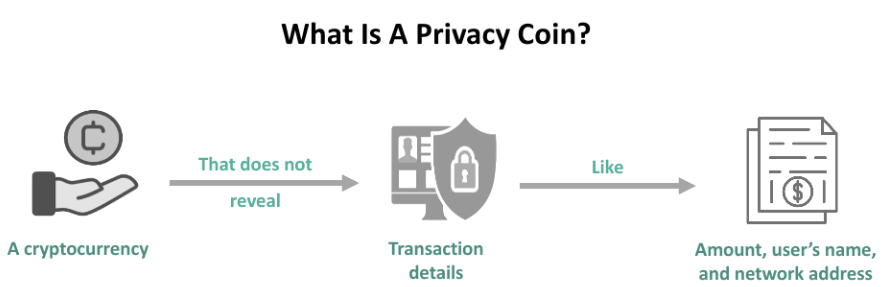
To achieve this, privacy coins rely on a set of cryptographic tools that alter how blockchain data is recorded and verified.
Common privacy technologies
Stealth addresses
Stealth addresses generate unique one-time wallet addresses for every transaction. Even if a recipient publishes a public address, the blockchain will record payments to different addresses each time, preventing observers from linking transactions to a single wallet.
Ring signatures
Ring signatures mix a real transaction signature with several decoy signatures from other users. Observers can verify that one of the participants signed the transaction, but they cannot determine which one.
Zero-knowledge proofs
Zero-knowledge proofs allow a network to verify that a transaction is valid without revealing the underlying information. A widely used variant, zk-SNARKs, enables verification of transactions while keeping sender, receiver, and amount hidden.
Ring Confidential Transactions (RingCT)
RingCT expands ring signatures by also hiding transaction values, preventing observers from determining how much cryptocurrency moved between wallets.
Coin Mixing
Mixing techniques combine multiple transactions together before broadcasting them to the blockchain, making it difficult to trace the original sender and receiver.
Different privacy coins implement these technologies in different ways, resulting in distinct trade-offs between anonymity, scalability, and regulatory acceptance.
Top privacy coins in 2026
Monero (XMR)
Monero is widely considered the most privacy-focused cryptocurrency in the market. Unlike many other privacy coins, anonymity features are mandatory rather than optional.
Every Monero transaction uses a combination of ring signatures, stealth addresses, and Ring Confidential Transactions (RingCT). These technologies collectively hide the sender, receiver, and transaction amount. Observers cannot determine which address initiated a payment or how much was transferred.
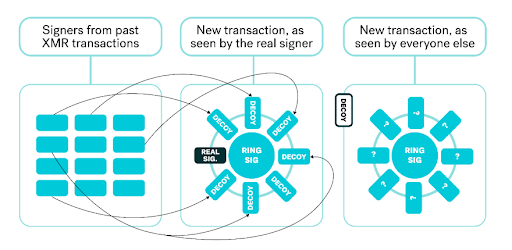
Because privacy is enforced by default, Monero transactions form large anonymity sets that strengthen the network’s privacy guarantees.
However, this design also introduces trade-offs. Monero transactions are typically larger than standard blockchain transfers, increasing storage requirements. The protocol’s strong privacy also attracts regulatory scrutiny, leading to exchange delistings in several jurisdictions.
Despite these pressures, Monero remains the benchmark for private digital payments.
Zcash (ZEC)
Zcash approaches privacy differently by making anonymity optional rather than mandatory. The project, launched in 2016, originated from academic research known as Zerocoin and later Zerocash, which explored ways to add stronger privacy to blockchain transactions. Built as a fork of Bitcoin’s codebase, Zcash introduced zero-knowledge proofs that allow users to verify transactions while keeping wallet addresses and amounts hidden. The goal was to combine the security of Bitcoin’s architecture with stronger protections for financial privacy.
The network supports two types of addresses:
- Transparent addresses, similar to Bitcoin
- Shielded addresses, which hide transaction details using zk-SNARK zero-knowledge proofs.
Shielded transactions conceal the sender, recipient, and amount while still allowing the network to verify that funds are valid.
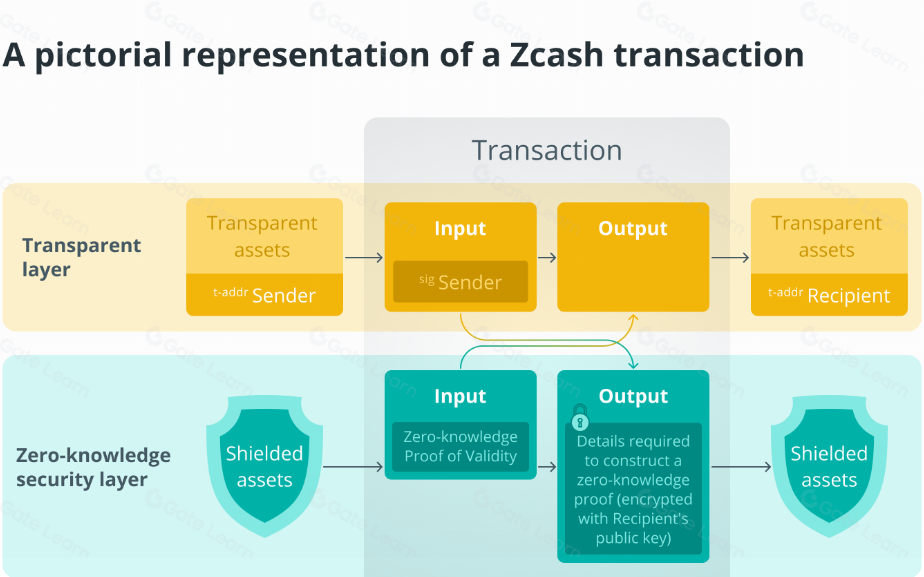
This dual-model architecture offers flexibility. Users can choose privacy when needed while still interacting with transparent blockchain infrastructure. However, optional privacy creates a smaller anonymity pool compared with fully private networks. Many Zcash transactions still occur in transparent mode, limiting the size of the privacy set.
Even so, Zcash remains one of the most technically advanced implementations of zero-knowledge cryptography in a live blockchain environment.
Dash (DASH)
Dash began as a fork of Bitcoin focused on faster payments and optional privacy features. It was launched in January 2014 (originally named Xcoin, later Darkcoin) with the goal of improving on Bitcoin’s speed, cost, and optional privacy features. Unlike Monero or Zcash, Dash does not enforce privacy by default; users can choose to use its PrivateSend feature, a CoinJoin‑style mixer that obscures transaction history by combining multiple inputs before recording them on the blockchain, making tracking more difficult.
Its privacy functionality relies on PrivateSend, a mixing service that combines multiple transactions before broadcasting them to the blockchain. By blending transfers together, PrivateSend obscures the relationship between senders and recipients.
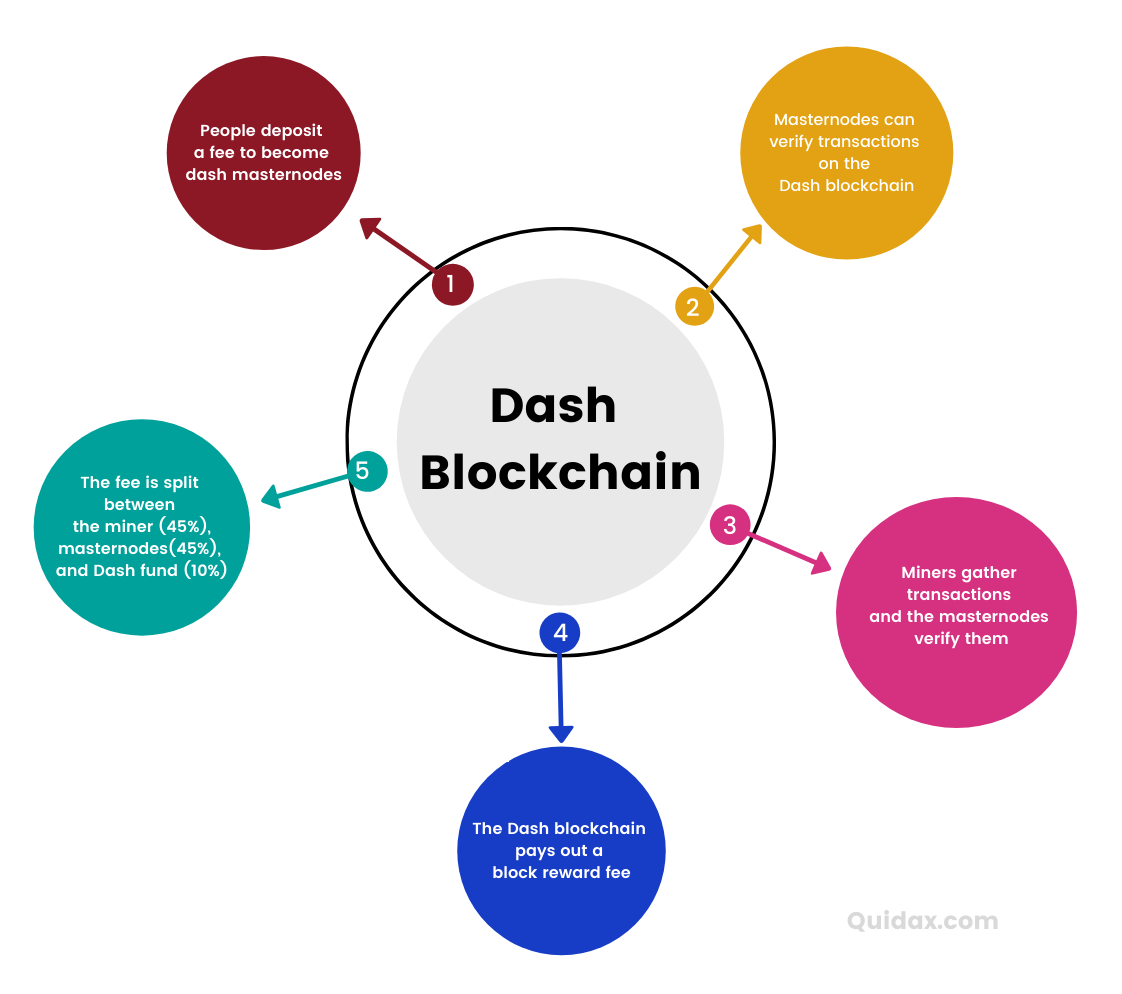
Dash also uses a masternode network that supports instant transaction confirmations and governance features.
Because PrivateSend is essentially a mixing mechanism rather than full cryptographic privacy, Dash offers weaker anonymity guarantees compared with Monero or Zcash, however, this approach also reduces regulatory pressure relative to fully private networks.
Secret (SCRT)
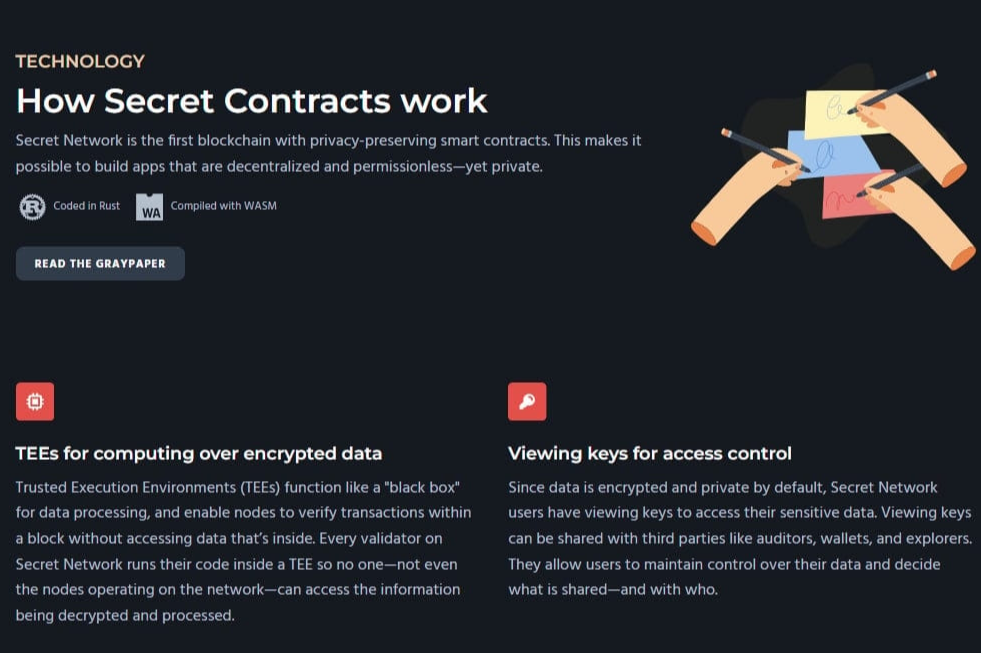
Secret (SCRT) is the native cryptocurrency of Secret Network. It is used for staking, governance, and paying transaction fees on the network. Validators stake SCRT to secure the blockchain and help process transactions and computations within the ecosystem.
Secret Network expands the concept of privacy beyond payments by enabling private smart contracts. Instead of publishing contract data publicly on the blockchain, Secret uses trusted execution environments (TEEs) to process encrypted data while keeping it hidden from validators and external observers.
This allows developers to build decentralized applications where sensitive information, such as financial records, personal data, or trading strategies, remains confidential. The network therefore functions as a privacy-preserving computation layer rather than simply an anonymous payment system.
Secret Network is part of a bigger trend toward privacy-enabled infrastructure in decentralized finance and Web3 apps.
Oasis (ROSE)
Oasis (ROSE) is the native token of the Oasis Network and plays a key role in powering the ecosystem. It is used to pay transaction fees, stake for network security, and participate in governance decisions within the protocol.
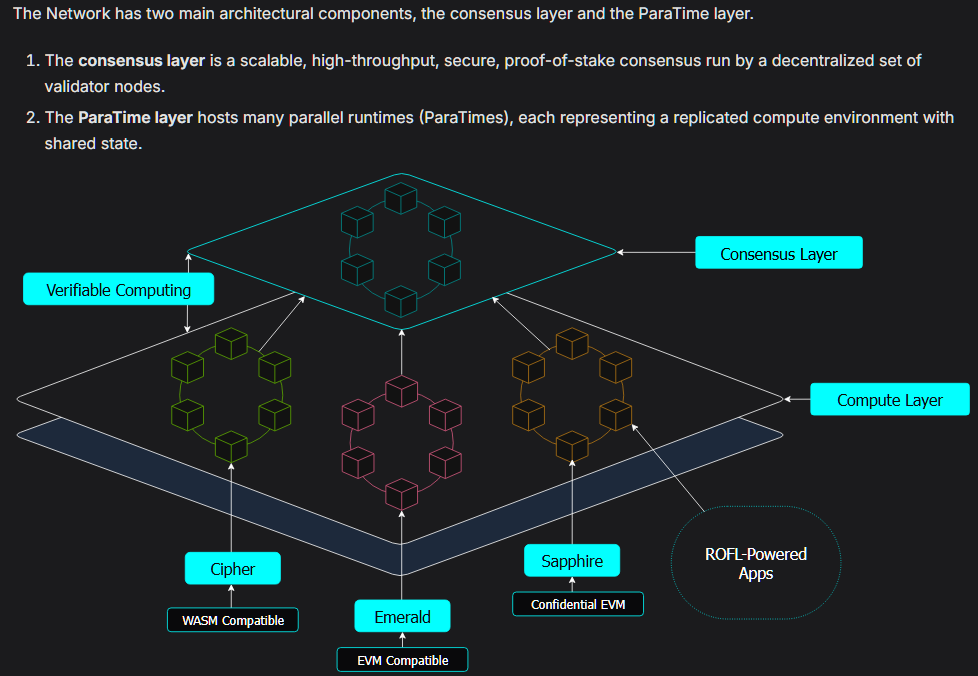
Oasis Network was designed to provide native privacy for decentralized applications. Its focus is on confidential computing, allowing developers to build dApps where user data and business logic remain private while still verifiable on‑chain. This architecture targets sensitive areas such as DeFi, AI, and data tokenization, positioning Oasis as a platform for privacy‑preserving Web3 applications.
The network is structured around a modular architecture known as the ParaTime layer, which allows specialized execution environments to run alongside the core blockchain.
Oasis targets enterprise use cases such as secure data sharing, privacy-preserving analytics, and confidential financial services.
Horizen (ZEN)
Horizen, launched in 2017 as ZenCash, is a blockchain platform emphasizing privacy and scalability. Originally a Zcash fork, it evolved into a modular ecosystem supporting dedicated sidechains and custom applications. Recently, Horizen migrated from an independent Layer 1 chain to a Layer 3 application chain on Base (Ethereum L2), and the ZEN token became an ERC-20 asset, improving compatibility with the Ethereum ecosystem.
The network supports privacy features derived from zk-SNARK cryptography, similar to Zcash. At the same time, it focuses heavily on scalability through its sidechain architecture.
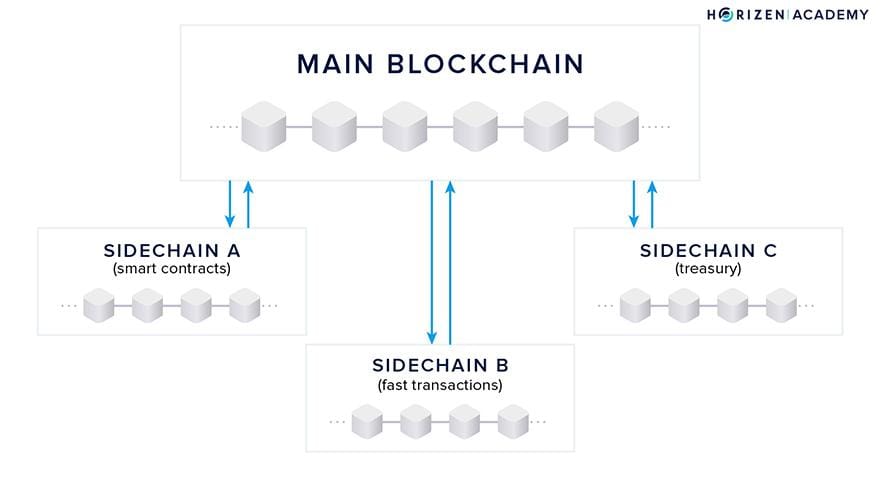
Horizen’s platform allows developers to build independent blockchains connected to the main network while still benefiting from its security model.
This approach positions Horizen as both a privacy platform and a modular blockchain ecosystem.
Privacy coin comparison
| Coin | Privacy Type | Technology | Smart Contracts | Regulatory Exposure |
|---|---|---|---|---|
| Monero | Mandatory privacy | Ring signatures, stealth addresses, RingCT | No | Very high |
| Zcash | Optional privacy | zk-SNARKs | Limited | High |
| Dash | Optional mixing | PrivateSend | No | Moderate |
| Secret Network | Private smart contracts | Trusted execution environments | Yes | Moderate |
| Oasis Network | Confidential computing | Trusted execution environments | Yes | Lower |
| Horizen | Optional privacy | zk-SNARKs + sidechains | Yes | Moderate |
Regulatory challenges
Privacy coins sit at the center of a growing conflict between financial privacy and regulatory oversight. Authorities argue that anonymous transactions make it harder to monitor illicit activity such as money laundering, ransomware payments, or sanctions evasion.
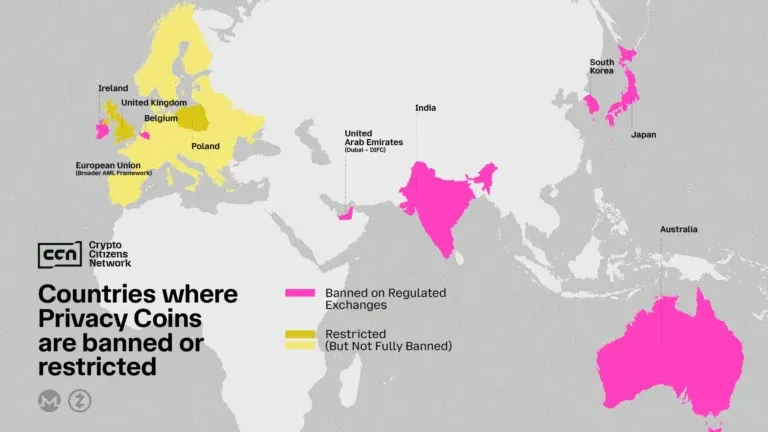
As a result, several jurisdictions have targeted privacy coins through exchange regulations rather than outright bans.
Japan and South Korea were among the first major markets to prohibit licensed exchanges from listing assets such as Monero and Zcash. Other countries, including India and the United Arab Emirates Dubai financial zone, introduced similar restrictions in recent years.
In Europe, upcoming anti-money-laundering regulations are expected to tighten requirements for crypto platforms. While privacy coins are not explicitly banned under current frameworks, exchanges face increasing pressure to ensure transaction traceability.
These rules often reduce liquidity and mainstream access without criminalizing ownership, however, users can still hold privacy coins in private wallets, but regulated trading venues may not support them.
Are privacy coins still relevant?
Research from market analysts and digital asset funds suggests that privacy-focused tokens performed strongly during periods of increased regulatory oversight. Concerns about blockchain surveillance have pushed some users toward networks designed to conceal transaction details.
Prior year tendency shows that Privacy coins significantly outperformed Bitcoin.
While Bitcoin declined roughly 15%, Zcash surged more than 220%, Dash gained nearly 70%, and Monero rose about 25%.
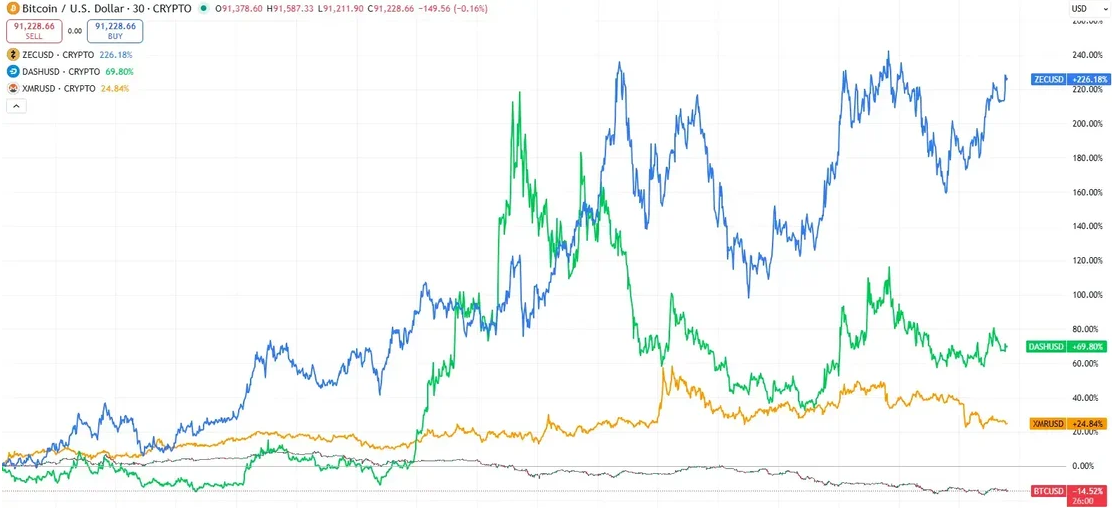
The trend suggests renewed momentum in privacy-focused assets, which attracted stronger interest than the broader crypto market during this period.
Public ledgers expose transaction histories, wallet balances, and financial relationships by default. While transparency supports auditability, it can also reveal sensitive financial data for individuals and businesses operating on-chain.
Privacy coins attempt to address this issue by embedding confidentiality directly into transaction design. Networks that enforce complete privacy often struggle to integrate with regulated financial systems, while projects offering optional privacy or selective disclosure usually have an easier path toward compliance. The long-term direction of the sector may lie in hybrid models that combine strong privacy protections with mechanisms that allow verification when legally required.
At the same time, another technological challenge is beginning to shape the conversation: quantum computing.
Privacy-focused networks such as Monero and Zcash rely on elliptic curve cryptography to secure transactions and protect user anonymity. In theory, sufficiently powerful quantum computers could weaken these cryptographic assumptions, though most researchers view this as a long-term risk rather than an immediate threat.
Developers are already preparing for that possibility. Zcash researchers are exploring quantum-resistant improvements to its shielded transaction pools, while Monero contributors are studying alternative cryptographic primitives that could replace current discrete-log-based commitments.
Across the broader cryptography field, the shift toward quantum resistance has accelerated after the U.S. National Institute of Standards and Technology finalized its first post-quantum cryptography standards in 2024.
Conclusion
Privacy coins remain one of the most contested segments of the cryptocurrency market. Networks such as Monero, Zcash, and Dash continue to attract users seeking financial confidentiality, particularly as blockchain analytics and transaction monitoring become more common across public networks.
At the same time, regulatory pressure is increasing. The European Union’s Directive on Administrative Cooperation (DAC8), effective January 1, 2026, requires crypto-asset service providers (CASPs) to report transaction data, user identities, and tax identification numbers for EU customers. Because privacy coins obscure transaction information, exchanges operating under these rules may limit or remove support for assets such as Monero and Zcash.
Despite these constraints, market demand for financial privacy persists.
The direction of privacy coins will depend on how these technologies evolve alongside regulatory frameworks that increasingly prioritize transparency in digital asset markets.
 Kataryna Dyl
Disclaimer: All materials on this site are for informational purposes only. None of the material should be interpreted as investment advice. Please note that, despite the nature of much of the material created and hosted on this website, HODL FM operates as a media and informational platform, not a provider of financial advisory services. The opinions of authors and other contributors are their own and should not be taken as financial advice. If you require advice, HODL FM strongly recommends contacting a qualified industry professional.