



Meta Platforms is preparing to cut roughly 10% of employees from its Reality Labs division, as the company shifts capital and focus away from virtual reality and toward artificial intelligence.
The layoffs could be announced as early as this week, with affected employees expected to exit shortly after notification, according to the New York Times. Meta declined to comment on the reports.
Reality Labs employs about 15,000 people, which means the cuts could impact around 1,500 workers. The division represents Meta’s core efforts in virtual and augmented reality, including Quest headsets, Horizon Worlds, Horizon Workrooms, and AI-powered smart glasses.
Internal meeting signals urgency
Andrew Bosworth, Meta’s chief technology officer and head of Reality Labs, has called a division-wide meeting for Wednesday. Business Insider reported that employees were urged to attend the meeting in person and that it was described internally as the most important meeting of the year.
The timing has heightened anxiety across teams working on VR hardware and Horizon Worlds, where several employees are likely to face disproportionate reductions.
This would mark another restructuring phase for Reality Labs, which has undergone repeated internal changes as Meta reassesses its long-term bets.
Mounting losses weigh on strategy
Reality Labs has recorded multi-billion-dollar operating losses every year since its launch. According to Statista data, the division has accumulated more than $70 billion in losses since 2019.
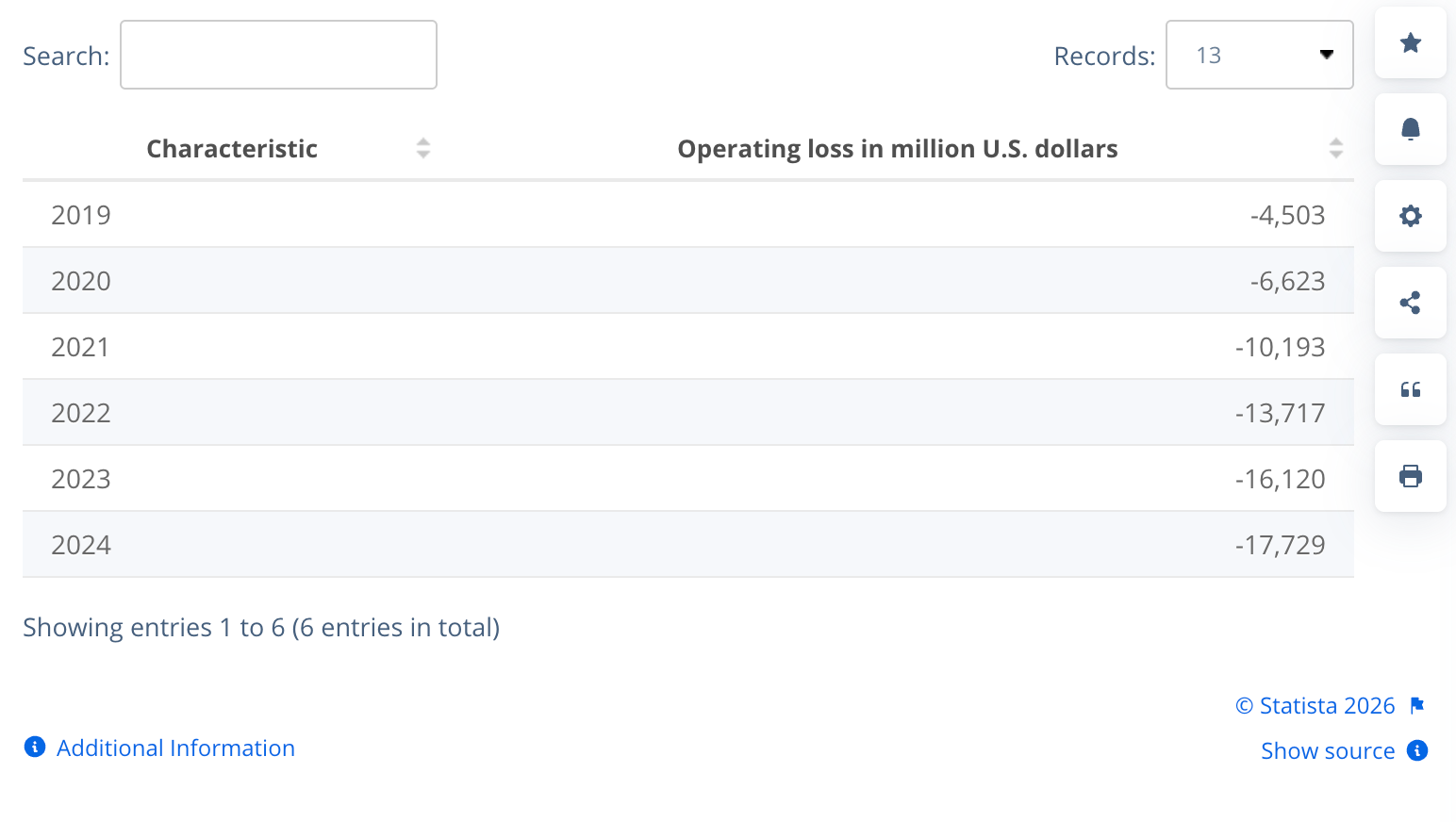
Heavy spending on infrastructure, combined with slower-than-expected consumer adoption, limited the division’s commercial progress. Meta warned investors in prior earnings reports that Reality Labs losses would continue as long-term development continued.
AI wearables show stronger demand
While Meta has pulled back from several metaverse initiatives, not all Reality Labs products have struggled. AI-powered wearables, particularly Ray-Ban smart glasses, have shown strong consumer demand.
Tom’s Guide described Meta Ray-Ban Display glasses as “the current gold standard for smart glasses with display,” citing features such as live captions, translations, navigation, messaging, and AI interactions visible in the user’s field of view.
Demand for the glasses has been strong enough to delay their release outside the United States. The NYT said Meta plans to reallocate part of Reality Labs’ budget toward its wearables unit, which also includes wrist-based devices such as the Meta Neural Band.
Budget cuts began months earlier
The reported layoffs follow earlier cost-cutting measures. In December, Mark Zuckerberg asked senior leaders to identify areas for budget reductions, including virtual reality and metaverse initiatives. Executives talked about cutting the Metaverse Group budget by up to 30% at the time.
Meta previously cut more than 100 Reality Labs jobs in April. The company also laid off hundreds of employees across other units in recent years as it labeled 2023 and 2024 as years of efficiency.
Metaverse adoption falls short
Meta’s retreat comes amid broader challenges across the metaverse sector. While platforms such as Roblox and Fortnite attract hundreds of millions of daily users, most virtual world projects have failed to reach mainstream adoption.
Blockchain-based metaverses such as The Sandbox recorded fewer than 1,000 unique active wallets over a 30-day period. YouTuber Jarvis Johnson claimed Horizon Worlds sees fewer than 900 daily active users, though Meta has not confirmed those figures.
Reality Labs’ struggle mirrors a wider industry pattern where early enthusiasm gave way to limited engagement.
A pivotal year ahead
In an internal memo obtained by Business Insider last year, Bosworth described 2025 as the most critical year of his tenure and warned that Reality Labs could be remembered either as visionary or as “a legendary misadventure.”
That framing now appears to guide Meta’s current actions. While Zuckerberg has said he remains bullish on the long-term potential of immersive technology, capital allocation increasingly favors AI infrastructure, recommendation systems, and large language models such as Llama.
With layoffs expected and strategic priorities narrowing, Reality Labs enters a decisive phase as Meta balances ambition against financial discipline.
 Anastasiia G
Disclaimer: All materials on this site are for informational purposes only. None of the material should be interpreted as investment advice. Please note that despite the nature of much of the material created and hosted on this website, HODL FM is not a financial reference resource, and the opinions of authors and other contributors are their own and should not be taken as financial advice. If you require advice. HODL FM strongly recommends contacting a qualified industry professional.