


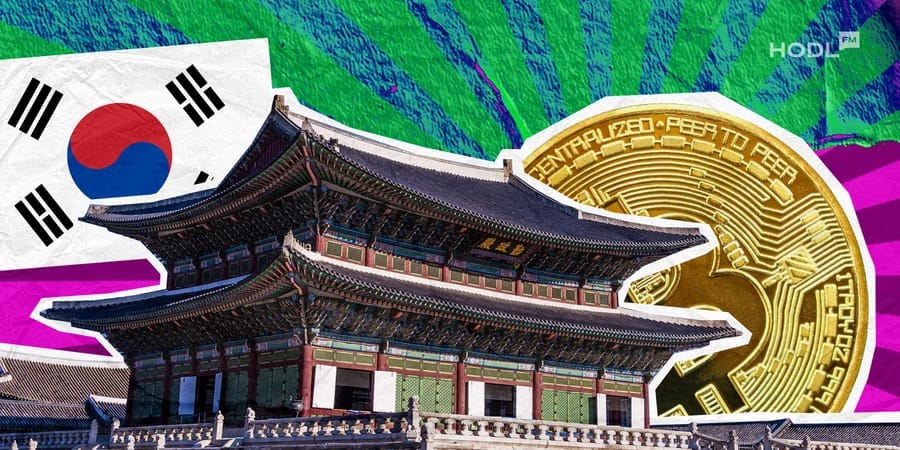



The foundation behind the Flow blockchain has filed a legal motion in South Korea to halt the planned delisting of its token from several major exchanges after a December security incident triggered trading restrictions across parts of the market.
According to a statement from Flow Foundation, the organization and its partner Dapper Labs submitted a request to the Seoul Central District Court to temporarily suspend the termination of FLOW trading support on three South Korean exchanges.
The request targets decisions by Upbit, Bithumb, and Coinone. The exchanges announced on February 12 that they would end support for the token on March 16 after a security incident on the network in late December.
The court reviewed the application on March 9 and will determine the next steps in the dispute.
December exploit triggered exchange restrictions
The legal challenge follows a protocol-level exploit on the Flow network on December 27. The incident allowed an attacker to create duplicated tokens instead of legitimate ones.
Investigations determined that about $3.9 million in duplicate tokens entered circulation through the exploit. According to the foundation, the event did not compromise user balances.
“No user funds were compromised, and all counterfeit tokens were permanently destroyed,” the organization stated in its announcement.
Validators temporarily halted the network and coordinated with exchanges to freeze and recover assets linked to the exploit. Early recovery discussions included a full chain rollback. That proposal raised concerns among ecosystem participants because users who bridged assets across networks during the rollback period could face duplicate balances or losses.
Developers rejected the rollback plan. The team chose an isolated recovery strategy that targeted and eliminated duplicated tokens while preserving legitimate transactions on the blockchain.
Exchanges restore services after reviews
Several trading platforms suspended FLOW services after the incident. Exchanges initiated internal reviews of the exploit and the remediation process.
In recent weeks, multiple global exchanges restored support for the asset.
On March 6, the exchange Binance published a joint resolution statement with Flow Foundation. The company confirmed that deposits and withdrawals of the token had returned to normal and that the monitoring tag previously applied to the asset had been removed.
The exchange HTX issued its own update on the same day. HTX confirmed that all user holdings remained intact and stated that trading, deposits, and withdrawals were fully operational again.
In South Korea, the exchange Korbit conducted an independent review of the incident. On February 27, Korbit removed a trading caution designation for the asset and confirmed that the technical remediation steps taken by the Flow team addressed the issue.
FLOW trading continues on several international exchanges, including Coinbase and Kraken, according to the foundation.
Ecosystem activity continues despite token decline
While the security incident affected market confidence, the broader Flow ecosystem continues to report activity across entertainment and collectibles projects.
Companies such as Disney, the National Basketball Association, the National Football League, and Ticketmaster have deployed digital collectible platforms on the network.
These applications have distributed more than 100 million NFTs and onboarded more than 13 million fans, according to data cited by the foundation. Marketplace transactions across these projects have generated billions of dollars in primary and secondary sales.
Specific collectible releases continue to attract activity. A Legendary Edition drop for Disney Pinnacle sold out quickly, with a one-of-one Apex Donald Duck pin later selling for $7,500 on the secondary market. On the NBA Top Shot marketplace, recent transactions included a $17,500 sale linked to Stephen Curry and a $65,000 sale tied to LeBron James.
The Flow network also hosts the digital collectibles platform NFL ALL DAY, which recently completed its strongest season since launch.
Consumer adoption expands in Japan
Beyond sports and entertainment partnerships, Flow projects have explored new distribution models in Asia.
In Japan, the company 24Karat operates more than 2,000 vending machines that distribute digital collectibles. The network introduces Flow-based collectibles to roughly 250,000 users each week.
Most of those users have no previous experience with cryptocurrency, according to the foundation. The company has begun exploring partnerships in Taiwan and South Korea as it expands the concept across the region.
Developer activity reaches new milestones
Developer participation on the network also increased over the past year. Flow ranked as the most built-on layer-1 network at events organized by ETHGlobal during 2025.
Nearly 60,000 new smart contracts have appeared on the network since the Crescendo upgrade, which introduced full Ethereum Virtual Machine compatibility.
The ecosystem also includes infrastructure support from several companies that run validator nodes, including Samsung, Deutsche Telekom, and Ubisoft.
The stablecoin PayPal USD (PYUSD) has also launched on the network.
A February report from the research firm Messari described Flow’s strategy as an effort to extend consumer adoption of decentralized finance.
“Flow is leveraging its proven consumer distribution and operational experience to drive consumer DeFi adoption,” the report stated.
Token price remains far below historic peak
Despite these developments, the FLOW token has struggled to recover market value.
Data from CoinGecko shows the asset has fallen roughly 99.9% from its all-time high of $42 in 2021. The token traded near $0.043 after the recent announcement.
Metrics from DefiLlama show that the platform’s total value locked has also declined. TVL dropped to about $21 million after reaching a peak in late 2025.
The broader NFT sector has also contracted sharply in recent years. CoinGecko estimates the total NFT market capitalization has fallen from roughly $17 billion in 2022 to about $1.4 billion.
Court decision may shape FLOW’s position in Korea
The outcome of the legal challenge could determine whether the token remains tradable on major Korean exchanges after March 16.
Flow Foundation stated that it continues to advocate for Korean users while pursuing additional exchange listings and expanded self-custody options in the region.
The organization also plans to hire a general manager for Asia-Pacific operations as part of its regional expansion strategy.
The court’s decision will determine whether trading support continues during a full review of the incident and the remediation measures implemented by the network.
 Matvii Diadkov
Disclaimer: All materials on this site are for informational purposes only. None of the material should be interpreted as investment advice. Please note that, despite the nature of much of the material created and hosted on this website, HODL FM operates as a media and informational platform, not a provider of financial advisory services. The opinions of authors and other contributors are their own and should not be taken as financial advice. If you require advice, HODL FM strongly recommends contacting a qualified industry professional.