


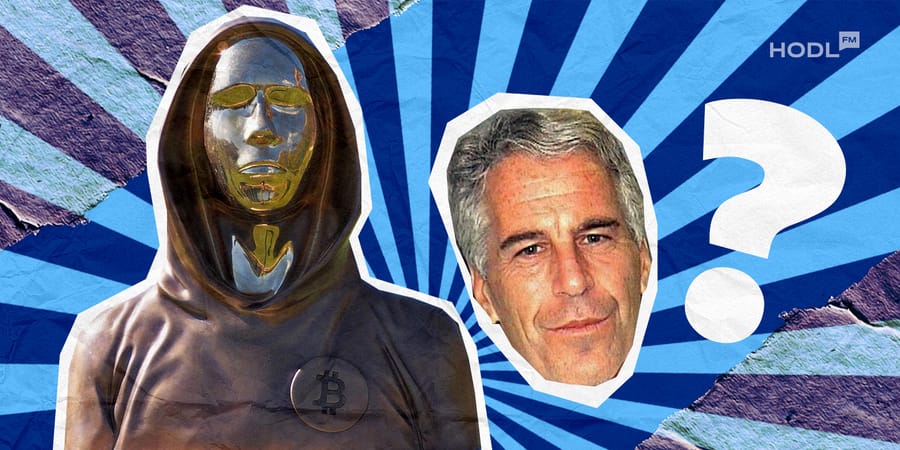



Newly released documents, totaling roughly 3.5 million pages and made public by the U.S. Department of Justice on January 30, 2026, have sparked speculation about Jeffrey Epstein’s connection to Bitcoin. Headlines and social media posts suggested wild theories: Epstein created Bitcoin, Satoshi Nakamoto appears in the files, or intelligence agencies orchestrated the cryptocurrency’s launch. Careful examination shows these claims lack evidential support.
The files confirm one fact: Epstein operated close to the earliest crypto funding channels and networks. He invested in infrastructure firms, donated to academic programs supporting Bitcoin development, and corresponded with notable figures in the cryptocurrency ecosystem. However, there is no evidence linking him to Bitcoin’s creation, coding, or early wallets.
Epstein’s proximity to early Bitcoin development
Between 2013 and 2017, Epstein donated hundreds of thousands of dollars to the MIT Media Lab. A portion of this funding, around $525,000, went to the Digital Currency Initiative (DCI), which employed key Bitcoin Core developers. Emails indicate Epstein had access to Media Lab staff and was aware that these developers were critical to maintaining Bitcoin’s code during a turbulent period.
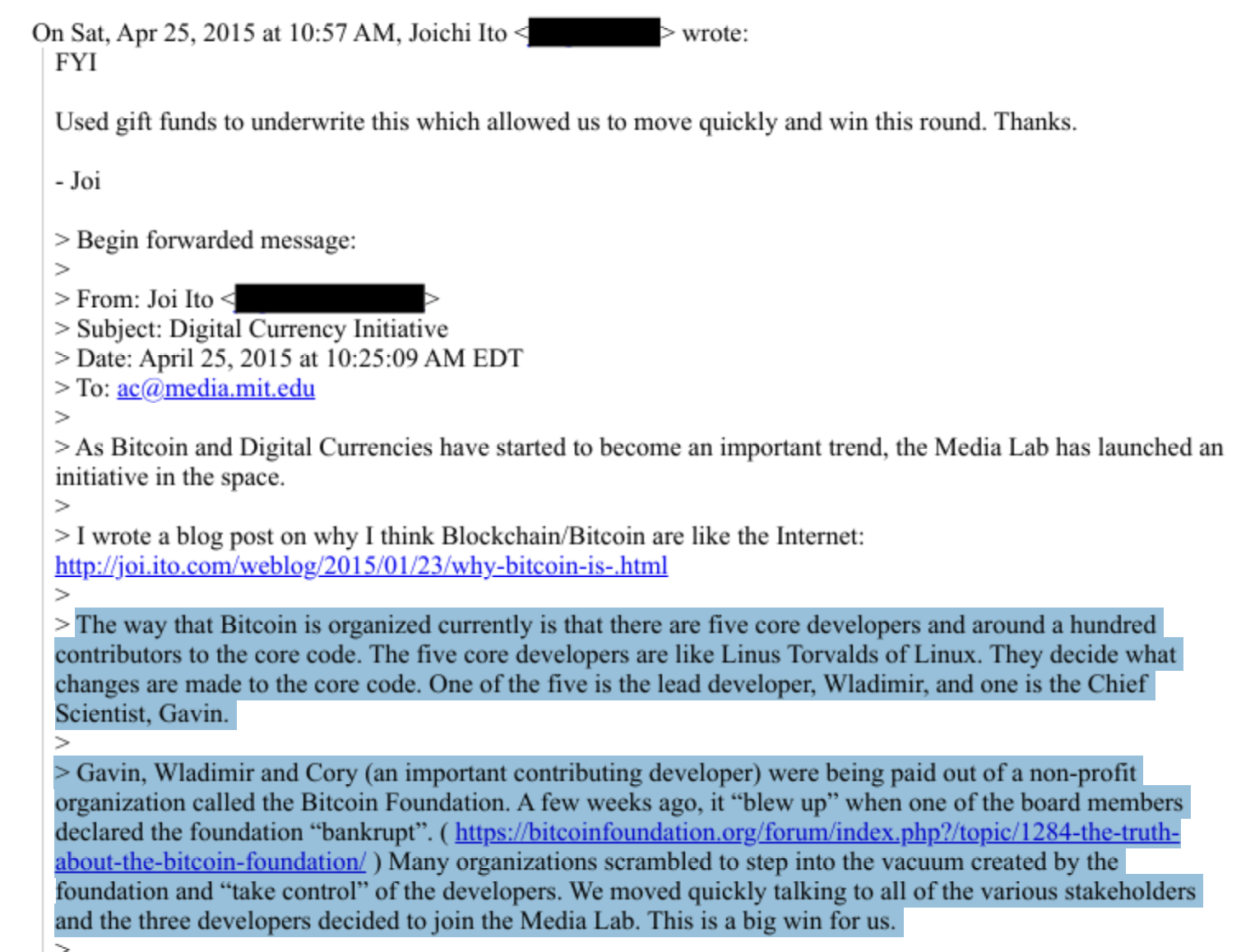
In 2014, Epstein invested approximately $500,000 in Blockstream, a Montreal-based company closely tied to Bitcoin infrastructure. The investment was co-managed with former MIT Media Lab director Joi Ito through a company called Kyara Investments III. Epstein’s stake was later sold months afterward. Blockstream co-founder Adam Back confirmed that Epstein and his estate hold no ongoing financial connection to the company.
In 2014, during Blockstream’s seed-round investor roadshow, the company was introduced to then MIT Media Lab director Joi Ito. Subsequently Blockstream met with Jeffrey Epstein, who was described at the time as a limited partner in Ito’s fund. That fund later invested a minority…
— Adam Back (@adam3us) February 1, 2026
These interactions show Epstein’s proximity and financial influence but do not demonstrate control over Bitcoin’s protocol or governance. Bitcoin remained open-source and decentralized, unaffected by individual investors or donors.
Epstein’s correspondence with crypto figures
The files reveal Epstein communicated with multiple figures in cryptocurrency. In 2016, he emailed Raafat Abdulla Saad Al Sabbagh about a Sharia-compliant digital currency modeled on Bitcoin. Epstein noted,
“I have spoken to some of the founders of Bitcoin who are very excited.”
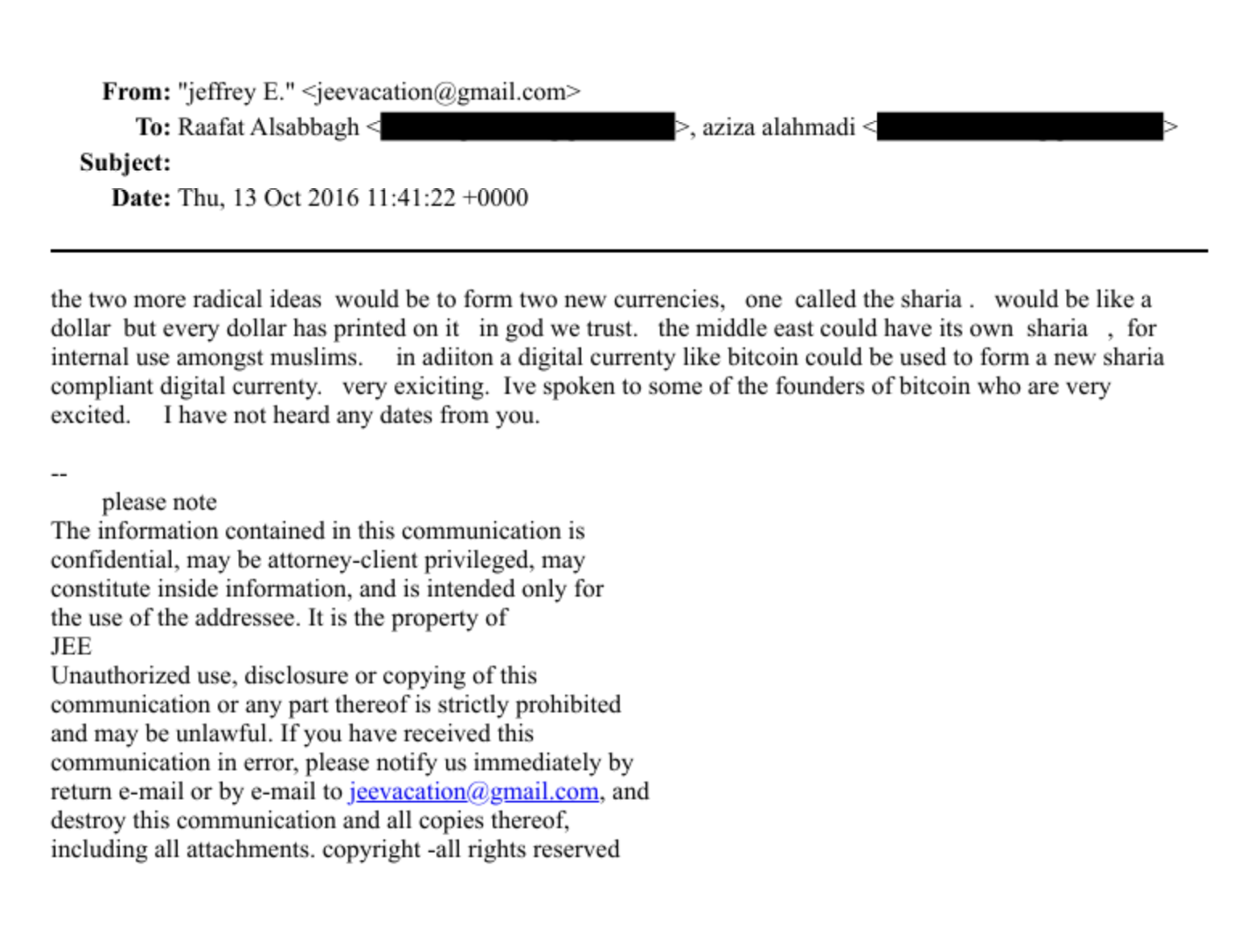
The email confirms awareness and discussion but does not identify the founders or prove Epstein participated in technical development.
🚨 BREAKING: A newly released 2016 email from Jeffrey Epstein claims he had “spoken to some of the founders of Bitcoin”. pic.twitter.com/YE6Lucf4fT
— HodlFM (@Hodl_fm) February 2, 2026
Epstein also exchanged emails with Peter Thiel regarding regulatory pressure on Bitcoin. In July 2014, Thiel asked,
“Do you think this is the first step in upping the anti-BTC pressure?”
Epstein’s responses appear limited to private advisory exchanges. Public records confirm that Thiel later funded blockchain ventures, including Ethereum-related initiatives, but there is no indication of coordinated efforts involving Epstein.
Correspondence with Zcash figures, including Madars Virza, involved tax documentation and gifts. One April 2019 email referenced books on Bitcoin and probability delivered to Epstein. These documents confirm social and financial interaction rather than technical contribution.
Debunking viral claims
A widely circulated image purportedly showing an October 31, 2008 email from Epstein to Ghislaine Maxwell stating,
“Our little digital gold mine is ready for the world,” is entirely fabricated.
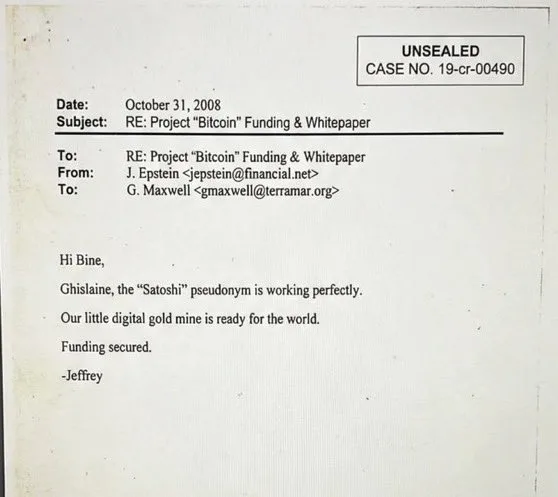
Examination reveals multiple formatting errors, and the content does not exist in official DOJ archives. While the files mention “Satoshi” and show Epstein communicated with early Bitcoin figures, no technical evidence links him to Bitcoin’s creation, code commits, or wallet control.
The impact on cryptocurrency
The Epstein Files highlight structural vulnerabilities in cryptocurrency funding and governance but do not indicate systemic danger. Early reliance on institutions like MIT and funding by investors such as Epstein illustrates the risk of concentrated financial influence, yet Bitcoin’s open-source design protects the network from individual control.
Key risks remain regulatory uncertainty, potential governance disputes, and reputational concerns arising from associations with high-profile figures. Nevertheless, Bitcoin’s decentralized architecture and Ethereum’s open-source model continue to operate independently, demonstrating resilience amid controversy.
Conclusion: Epstein was not Satoshi
Jeffrey Epstein’s name appears across early cryptocurrency correspondence, investment records, and academic funding initiatives. He maintained proximity to prominent developers, donated to programs employing Bitcoin Core staff, and invested in key infrastructure companies. Still, there is no evidence he authored Bitcoin, mined early blocks, or controlled Satoshi’s cryptographic keys.
Speculation fueled by viral images and selective document leaks exaggerates his role. The files show awareness, investment, and influence, but not authorship or technical control. Crypto’s survival and growth continue to depend on decentralized consensus, community engagement, and secure open-source networks.
 Matvii Diadkov
Disclaimer: All materials on this site are for informational purposes only. None of the material should be interpreted as investment advice. Please note that despite the nature of much of the material created and hosted on this website, HODL FM is not a financial reference resource, and the opinions of authors and other contributors are their own and should not be taken as financial advice. If you require advice. HODL FM strongly recommends contacting a qualified industry professional.