





Starting as simple platforms for buying and selling a few cryptocurrencies, crypto exchanges have expanded significantly over the years, with comprehensive ecosystems offering a full range of financial instruments and services.
Despite the growth of DeFi and self-custody solutions, DEX trading volume currently represents only around 10-20% of total CEX trading volume over the past year. Many leading global crypto exchanges today combine complete legality and institutional-grade security with user-friendly interfaces, advanced trading features, and access to new innovative services unique to the digital asset market. Thus, modern crypto trading platforms can be considered as a trading platform, as well as a secure storage facility.
This guide is designed to help you identify the best cryptocurrency exchange, whether you're making your first investment or looking to take your crypto trading to the next level with advanced features.
Centralized exchanges vs decentralized alternatives
Centralized exchanges are fully functional platforms managed by companies. Users create an account, often undergoing KYC, deposit funds, and the exchanges store the assets, execute trades, and provide customer support.
Decentralized exchanges are protocols with no accounts and no KYC. User connects the wallet and trades directly from it. DEXs run on smart contracts deployed on the blockchain. The user always retains full control over their assets, and no central party can block their actions.
Below are the main differences between CEX vs DEX:
Best centralized crypto exchanges (CEXs) for 2026
Here is our list of the 10 best exchanges for crypto trading:
Coinbase

Coinbase was founded in 2012 to make Bitcoin purchases simple for the masses. Over time, the exchange has grown into a major US-based public company with a focus on retail and institutional clients. The platform supports over 250 cryptocurrencies and fiat currencies, operates in over 100 countries, and strictly adheres to compliance and KYC requirements.
One of Coinbase's key advantages is its ease of use. The interface and purchasing process are designed with beginners in mind, and the mobile app makes asset management easy. For more experienced users, an advanced trading mode with lower fees and additional tools is available. In addition to basic cryptocurrency buying and selling, Coinbase offers staking, a crypto card, and access to DeFi services.
Coinbase also stands out for its high level of security and transparency. The exchange uses 2FA and cold storage for assets, and its status as a public company enhances user trust. The platform also offers various educational tools to help users understand the basics of cryptocurrency and blockchain technology.
Recently, the exchange and Yahoo Finance have partnered to enable customers to trade stocks and ETFs 24/7, 5 days a week. Now, with one simple click, users can go from researching an asset on Yahoo Finance to executing a trade on Coinbase.
Kraken

Kraken is one of the oldest cryptocurrency exchanges. Established in 2011 with the goal of creating a secure and transparent platform, it has evolved from offering basic spot trading to a full suite of services.
In addition to standard trading, Kraken offers several ways for users to earn. The platform supports Ethereum staking, allowing users to earn rewards by locking up their tokens. Kraken also offers margin trading and futures trading.
The exchange supports over 600 cryptocurrencies and over 1,000 trading pairs. Designed specifically for experienced and intermediate traders, the Kraken Pro platform also offers a range of features and tools. These include advanced order types that allow users to set stop-loss and take-profit orders. Over 95% of client funds are stored in cold storage, and the platform conducts regular audits.
Kraken is launching the first regulated perpetual futures contracts based on tokenized stocks. Available to eligible users outside the U.S. in more than 110 countries, the products track digital versions of major U.S. stocks, indices, and a gold ETF.
Gemini

Gemini is a US-based cryptocurrency exchange started operating in 2014 by Cameron and Tyler Winklevoss. It is one of the few exchanges available in all 50 US states and over 70 countries worldwide. Gemini offers trading features for all types of traders.
Its ActiveTrader interface is a platform designed and built for traders. It includes a variety of order types, advanced charting tools, and high speeds that allow trades to be executed in microseconds. Gemini also provides these advanced trading features through its mobile app.
The company operates as a fully backed exchange and custody, meaning all assets on the platform are backed 1:1 and are regulated by the New York Department of Financial Services.
On February 5, 2026, the exchange announced it was reducing its geographic reach, withdrawing from the UK, EU, and Australian markets. Representatives stated that they were overwhelmed by organizational and operational complexity, which was driving up costs and slowing down operations.
“America has always been where it’s at for Gemini... in addition to reducing the size of our workforce, we will be reducing the areas in which we operate by exiting the UK, EU, and Australian markets,” stated Tyler and Cameron Winklevoss.
Binance
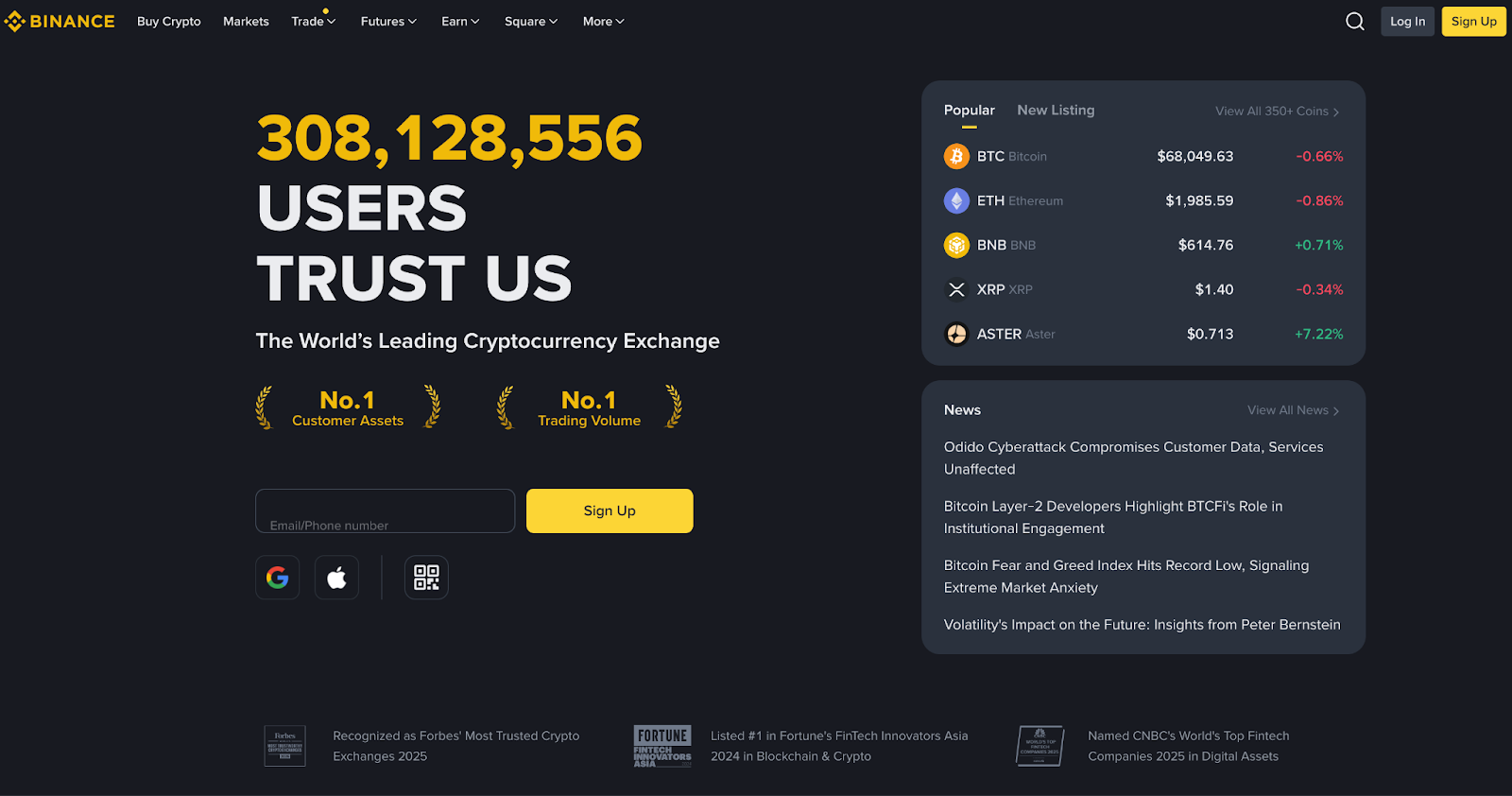
One of the most popular exchanges in the crypto ecosystem, Binance, was launced in 2017. It offers over 900 cryptocurrencies and trading pairs, providing traders with numerous opportunities to diversify their portfolios. The platform offers spot, margin, futures, and options trading, as well as a peer-to-peer marketplace and fiat deposit services.
Over the years, Binance has expanded from a simple trading platform into a full-fledged ecosystem with its own BNB token, Web3 wallet, NFT marketplace, crypto loans, and institutional services. The platform is renowned for its robust security measures, including the Secure Asset Fund for Users (SAFU), two-factor authentication, and advanced encryption technologies, ensuring the reliable protection of user assets.
To comply with regulatory requirements in various countries, Binance has recently accelerated its localization efforts, taking a number of measures to ensure the smooth operation of its business. In Europe, Binance is actively engaged in dialogue with financial regulators in several countries, seeking licenses and permits in accordance with applicable laws. Furthermore, Binance has established compliance teams in several emerging markets, focusing on adjusting its business model to local laws and regulations to ensure long-term operations in these regions.
Bitget
Bitget is a global cryptocurrency exchange founded in 2018, known for its trading features and security protocols. Bitget stands out with its unique copy trading feature, which allows users to replicate the trades of experienced traders, and also offers leverage and token discounts. The exchange features cold wallet storage and two-factor authentication (2FA) designed to ensure security and transparency.
In 2026, Bitget holds all necessary licenses in Australia, Italy, Poland, El Salvador, the United Kingdom, Bulgaria, Lithuania, the Czech Republic, Georgia (Tbilisi Free Economic Zone), and Argentina. Bitget's security fund includes $500 million and transparent proof of reserves (PoR), updated monthly using Merkle tree verification.
BTCC

BTCC, known as one of the longest-running Bitcoin exchanges in the world since its founding in 2011, attracts users with its fiat-to-crypto trading services and Bitcoin mining solutions.
Its trading platform offers leverage up to 500x and a variety of order types. Its mobile apps, available on Android and iOS, replicate the functionality of the web interface. The exchange offers a variety of deposit and withdrawal methods, including bank transfers and credit/debit cards.
BTCC is regulated by a Tier 1 financial authority (e.g., in the US, UK, Germany, Spain, France, Australia, Singapore, or other jurisdictions with strict financial supervision). It is authorized or licensed under local regulations in the following regions: FCIS (Lithuania), FinCEN (US), and FINTRAC (Canada). Cold storage ensures optimal protection of user funds, mitigating the risks typically associated with online wallets.
In 2026, BTCC announced the launch of BTCC TradFi, a new cross-market trading feature that provides users with direct access to forex, commodities, indices, and stocks, margined and settled in USDT.
OKX
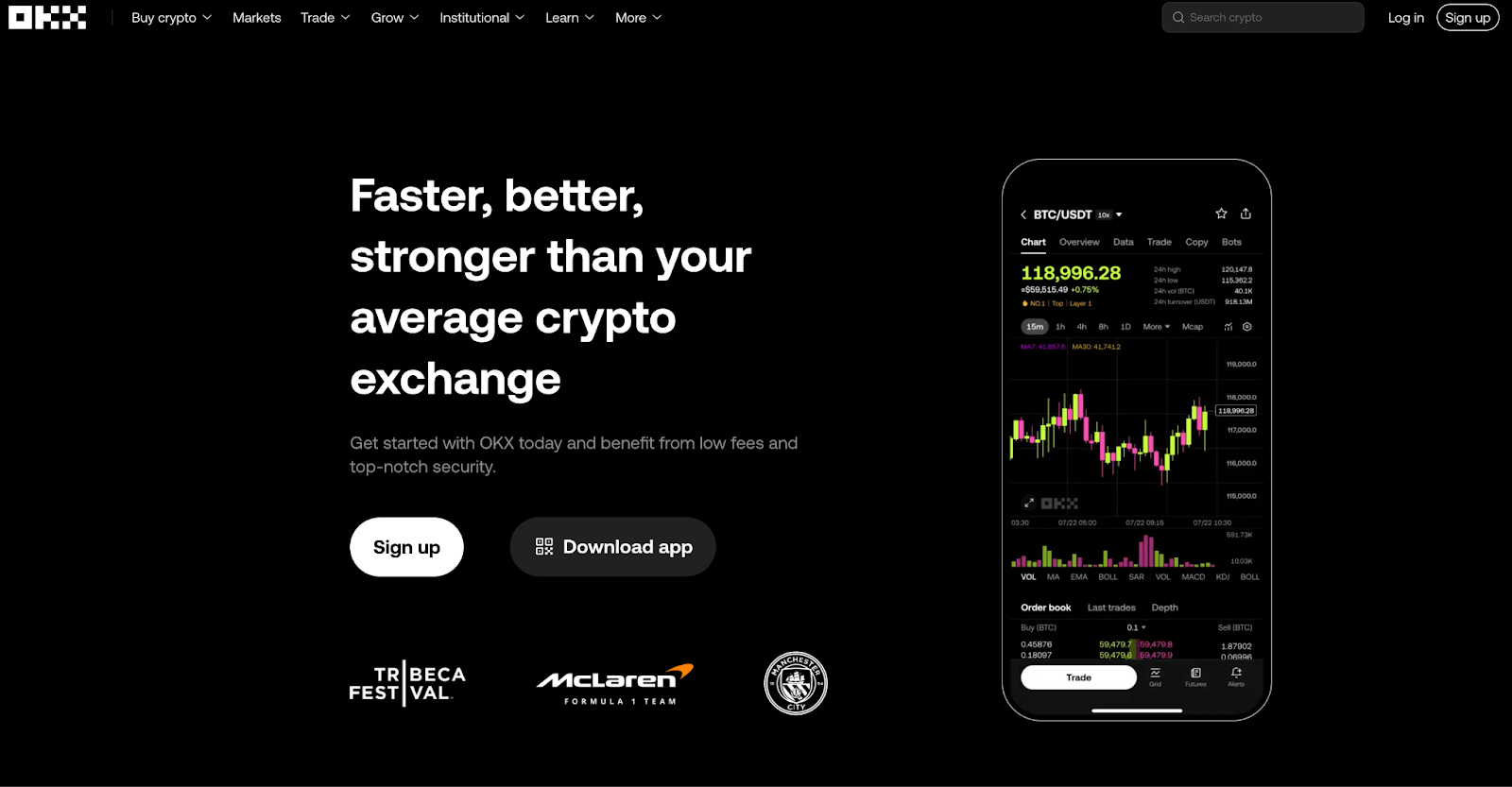
It is a global crypto trading platform initiated in 2017 and rebranded in 2022 from OKEx to OKX to expand its offerings beyond simple trading.
OKX supports spot trading, leveraged margin trading, futures, and perpetual swaps with up to 100x leverage. Options trading with automated strategies and an algorithmic trading API are also available. The platform supports over 350 cryptocurrencies and over 500 trading pairs, complemented by decentralized finance features via a Web3 wallet.
In terms of security, the company publishes proof-of-reserve reports and has implemented basic identity verification, transaction monitoring, and geo-blocking protocols.
Its international headquarters are located in Victoria, Seychelles, although the company is in the process of establishing a new regional office in San Jose, California, by 2026.
Bybit
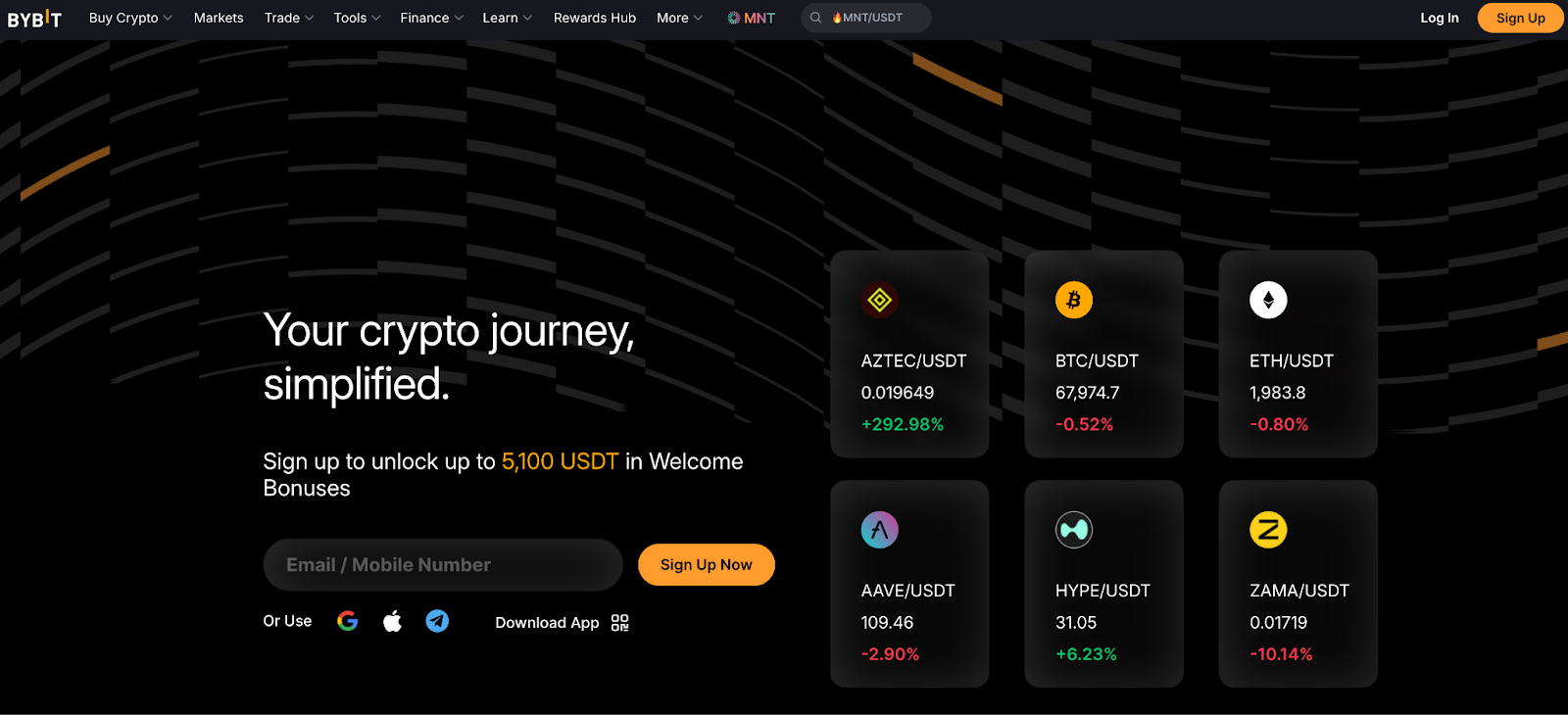
Bybit launched in 2018 as a derivatives-focused exchange offering leveraged perpetual contracts on Bitcoin, Ethereum, and Solana. Now Bybit supports over 100 cryptocurrencies and offers a tiered fee structure.
It operates in over 160 countries, offering spot trading, derivatives trading, and additional features such as copy trading and passive income products. Despite operating legally in many countries, the platform is currently restricted in the US, Canada, France, and the UK.
In February, Bybit announced a strategic partnership with Doppler Finance, an XRP income platform that combines institutional-grade security and liquidity. This collaboration will enable the introduction of XRP income products on Bybit Earn.
"XRP remains a key asset for our users, and expanding its capabilities was a major priority," said Jerry Lee, Head of Earn and Asset Management at Bybit.
Crypto.com

Crypto.com is a global cryptocurrency exchange, established in 2016 and headquartered in Singapore. It offers a cryptocurrency trading platform that allows users to buy and sell over 400+ cryptocurrencies, as well as leverage up to 100x on futures and perpetual contracts.
The platform's user base exceeds 100 million worldwide. They also have their own NFT marketplace, where users can create, buy, sell, and trade NFTs.
Crypto.com Visa Card is the exchange’s unique proposal on the market, with cashback up to 5% depending on the card tier. The wallet is also non-custodial, allowing users to store their private keys and directly interact with decentralized exchanges, DeFi swaps, and mining protocols.
Crypto.com recently became the first digital asset platform to receive ISO/IEC 42001:2023 certification, the international standard for Artificial Intelligence Management Systems (AIMS). The certification ensures that the organization manages AI-related risks by considering ethical considerations, transparency, accountability, and the impact of AI on individuals and society.
MEXC
MEXC was launched in 2018 and registered in Seychelles to provide an easy-to-use cryptocurrency trading platform that meets the needs of novice traders. The platform operates in over 170 countries, serving over 40 million users, and offers zero maker fees and competitive taker fees, as well as high leverage options. It is known for listing new and illiquid altcoins before many other exchanges and offers over 2,000 cryptocurrencies.
It offers futures and spot trading, as well as network bots and cold storage for user funds. Experienced traders have access to graphical tools and similar tools, while demo accounts are available for beginners.
A comparison table of the main trading fees for popular centralized crypto exchange platforms:
Final word
Centralized exchanges are typically best suited for users who prioritize convenience and integrated services over full self-custody. They are typically best suited for beginners, casual investors, fiat-focused users, and traders who require speed and tools. Users seeking maximum autonomy and minimal trust often prefer decentralized exchanges.
 Kataryna Dyl
Disclaimer: All materials on this site are for informational purposes only. None of the material should be interpreted as investment advice. Please note that, despite the nature of much of the material created and hosted on this website, HODL FM operates as a media and informational platform, not a provider of financial advisory services. The opinions of authors and other contributors are their own and should not be taken as financial advice. If you require advice, HODL FM strongly recommends contacting a qualified industry professional.