





As Bitcoin adoption accelerated, questions about its transaction capacity moved from developer forums into mainstream discussion.
During the 2017 surge, the network struggled under a wave of new users: mempools jammed, fees spiked, and confirmations slowed, turning routine transfers into a waiting game. Bitcoin is built to protect security and decentralization, even if that limits transaction throughput.
As Bitcoin’s popularity grew, its transaction limits became impossible to ignore.
What is Bitcoin scaling?
Bitcoin scaling refers to efforts aimed at increasing the network’s ability to process transactions efficiently while preserving its security model and decentralized structure.
At the center of the discussion is a broader concept often called the blockchain trilemma.
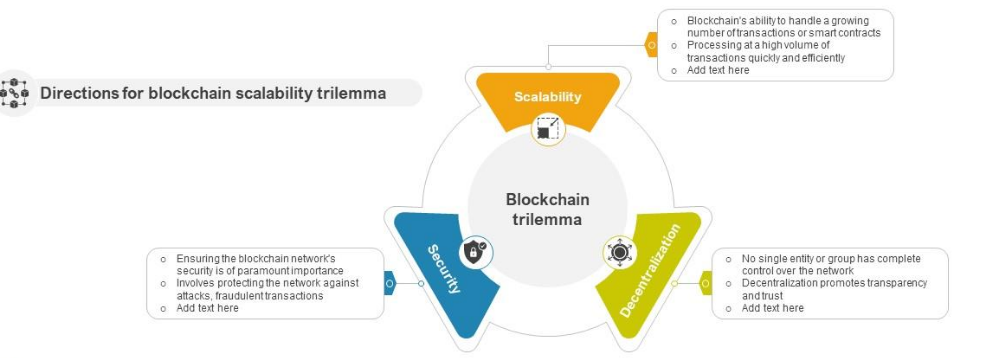
In simplified terms, blockchain systems attempt to balance three goals: decentralization, security, and scalability.
Security: The network’s ability to protect data and resist manipulation, ensuring transaction integrity.
Scalability: The capacity to handle increasing transactions efficiently, without delays or higher costs.
Decentralization: Distribution of control across participants rather than a central authority, ensuring transparency and fairness.
Improving one of these areas often affects the others. Bitcoin’s architecture leans strongly toward decentralization and security, which means throughput on the base layer remains limited. Scaling strategies therefore tend to fall into two categories: improvements made directly to the base blockchain (on-chain scaling) and systems built on top of it that handle activity outside the main chain (off-chain or Layer 2 scaling).
Why Bitcoin has a scalability problem
Bitcoin’s throughput is constrained by a few core design parameters.
Blocks are produced roughly every ten minutes. Each block has a limit on how much transaction data it can include, originally set around 1 MB in the early protocol design.
Together, these factors restrict the number of transactions the network can confirm in a given period, typically averaging a few transactions per second.
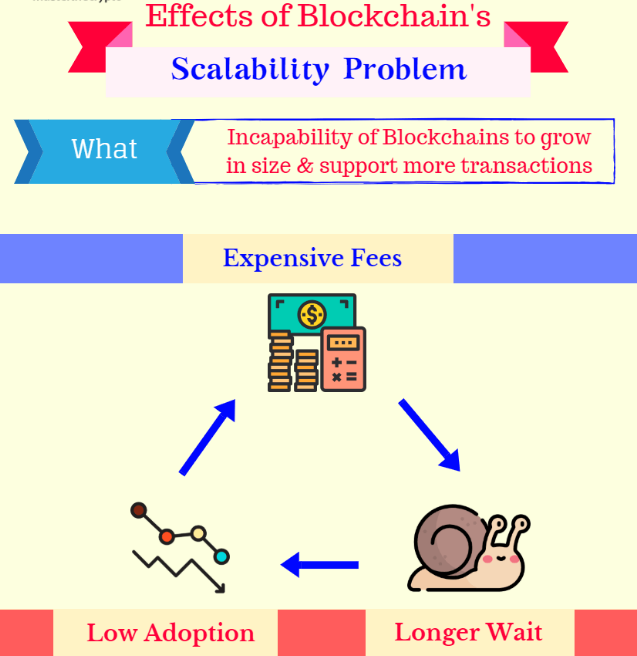
When demand rises above that capacity, transactions compete for inclusion in blocks.
Users attach fees to incentivize miners to confirm their transfers sooner. During periods of heavy usage, this fee market becomes more aggressive, pushing transaction costs higher and leaving low-fee transactions waiting longer in the mempool.
During periods of high demand, such as the 2017 bull market or the 2021 surge, the network experiences congestion.
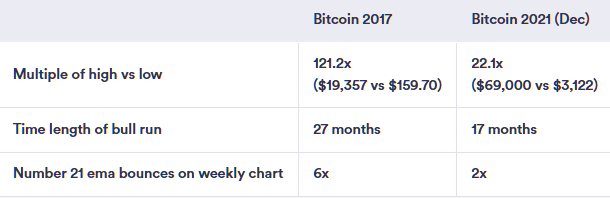
Unconfirmed transactions pile up in the mempool, creating a competitive “fee auction” where users must pay higher fees to have their transactions prioritized by miners. This can lead to multi-day delays for low-fee transfers, making small or frequent payments impractical.
This behavior is not accidental.
Every full node in the network independently verifies and stores the blockchain. Keeping blocks relatively small helps ensure that running a node remains accessible without specialized hardware or large data infrastructure.
Increasing throughput directly on the base layer risks raising the cost of participation, which could reduce decentralization over time.
In short, Bitcoin’s scalability limits are a natural outcome of its architecture: throughput is constrained by block size and block interval, while congestion and rising fees emerge when usage spikes. Solving this requires careful balancing between transaction capacity, network security, and decentralization, a challenge that continues to drive both on-chain and Layer 2 innovations.
On-chain scaling solutions
On-chain scaling focuses on improving the blockchain itself, enabling more transactions per block or reducing the data footprint of transactions.
SegWit
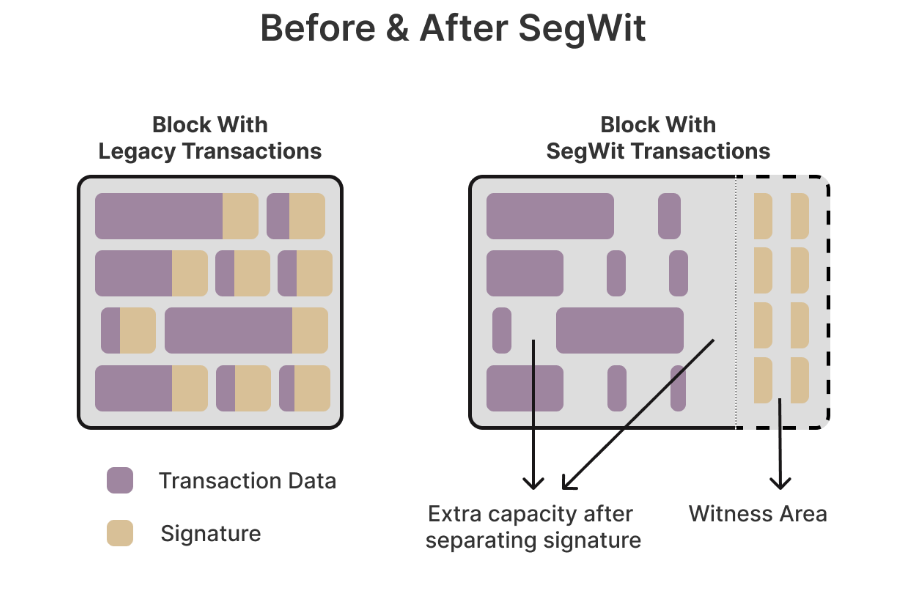
Segregated Witness (SegWit), implemented in 2017, separates transaction signatures from transaction data. By moving signatures to a separate part of the block, SegWit effectively increases the block’s capacity without increasing its nominal size, allowing more transactions per block.
SegWit also enables future upgrades like Taproot.
Taproot
Taproot, activated in 2021, is a major Bitcoin protocol upgrade designed to improve privacy, flexibility, and scalability for on-chain transactions.
It consists of three distinct Bitcoin Improvement Proposals (BIPs):
- BIP 340 – Schnorr Signatures: This reduces the data size of complex transactions, lowers transaction fees, and improves efficiency, especially in multi-signature setups.
- BIP 341 – Pay-to-Taproot (P2TR): The Merkle tree structure lets users hide unused spending conditions, which enhances privacy and reduces the amount of on-chain data for smart contract-like transactions.
- BIP 342 – Tapscript: Tapscript enables more efficient and flexible smart contracts while maintaining backward compatibility, allowing developers to implement advanced conditional transactions without revealing unnecessary details on-chain.
By compressing complex transactions into smaller, indistinguishable on-chain data, Taproot enhances privacy and lowers costs.
Increasing block size
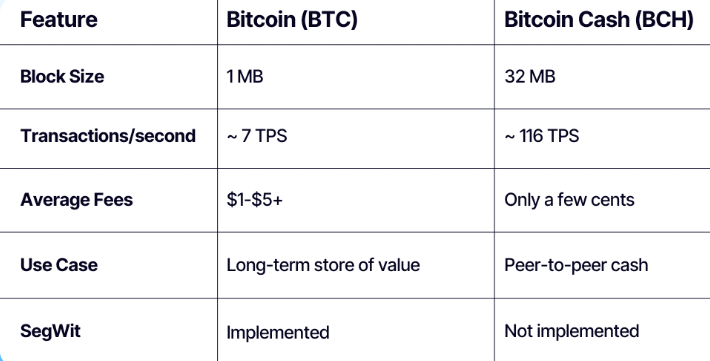
Some developers argued for increasing the block size itself, which led to the creation of Bitcoin Cash (BCH) via a hard fork in 2017. BCH initially allowed 8 MB blocks and now supports up to 32 MB blocks, enabling higher throughput at the cost of larger blockchain storage and potential centralization risks.
Bitcoin Cash increases block size to boost transaction throughput, offering faster confirmations and lower fees than Bitcoin. Its design targets everyday payments and microtransactions, prioritizing speed and cost efficiency.
Off-chain scaling solutions
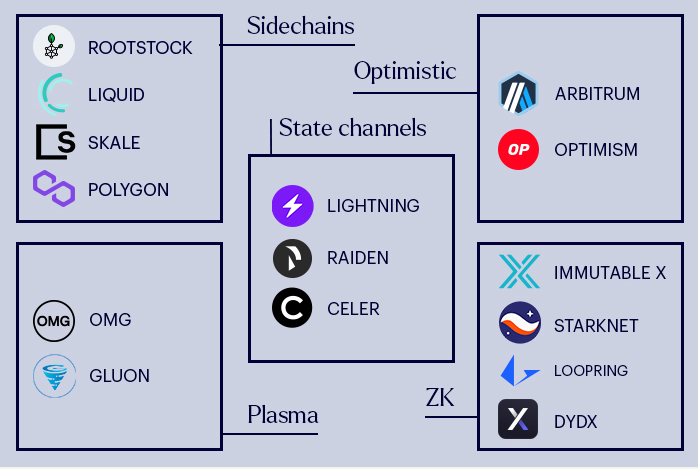
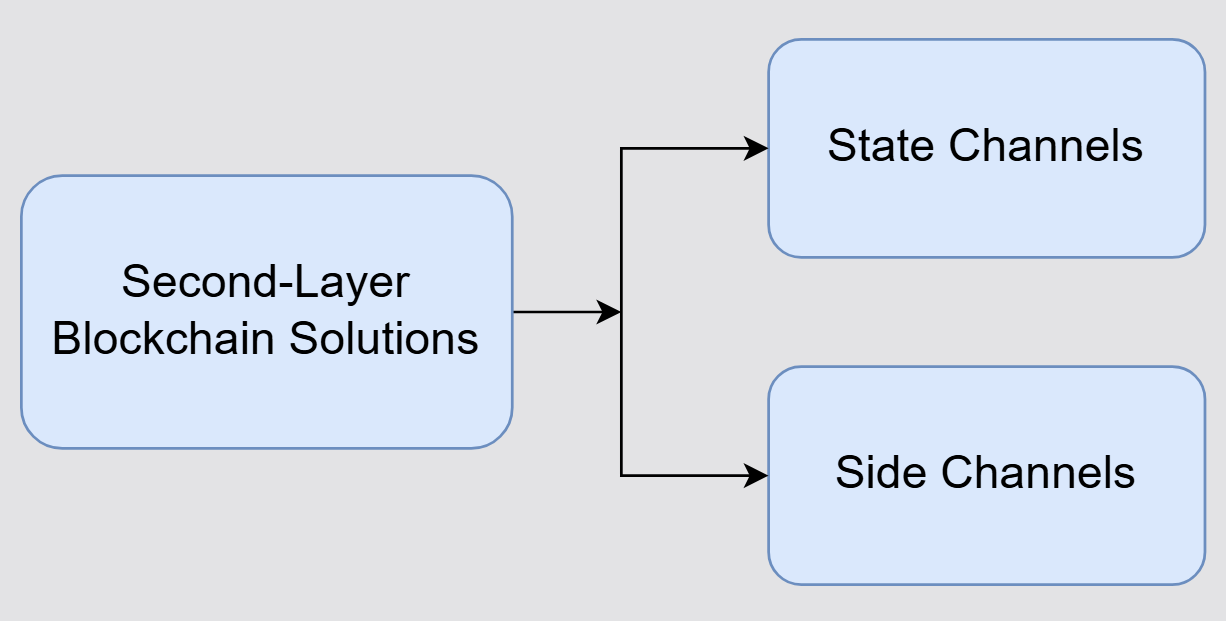
Off-chain scaling, or Layer 2 (L2) solutions, moves transactions off the main blockchain, recording only final settlement on-chain.
Lightning Network
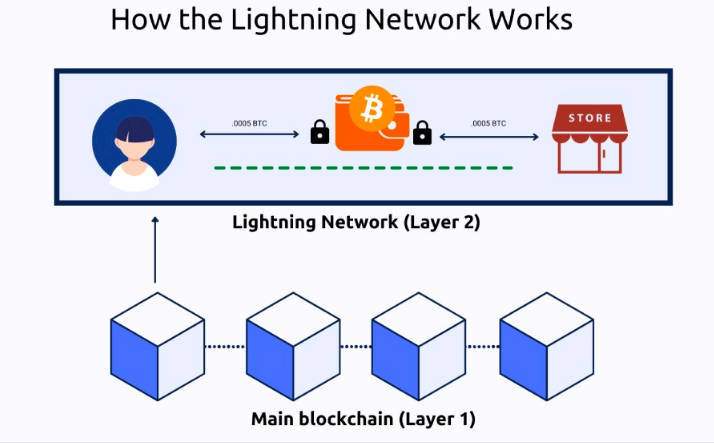
The Lightning Network operates on top of Bitcoin, running its own software to process and record transactions across a network of independent nodes. These nodes establish payment channels, allowing users to transact off-chain while avoiding on-chain fees and delays.
To use the network, two users first deposit Bitcoin into a channel, creating an off-chain ledger that tracks all subsequent transactions between them. They can send unlimited payments within the channel at minimal cost. When the channel closes, the final balances are consolidated into a single on-chain transaction, updating the Bitcoin blockchain.
Only the channel’s opening and closing are recorded on the blockchain.
Sidechains
Sidechains like Rootstock (RSK) and the Liquid Network operate as independent blockchains pegged to Bitcoin. They provide faster confirmation times and lower fees, enabling smart contracts and other functionalities while anchoring security to Bitcoin.
State channels and rollups
It enables a group of participants to conduct virtually unlimited transactions off-chain, keeping them private from the broader network. Only the initial setup and the final balances are recorded on the main blockchain, while all intermediate activity remains off-chain.
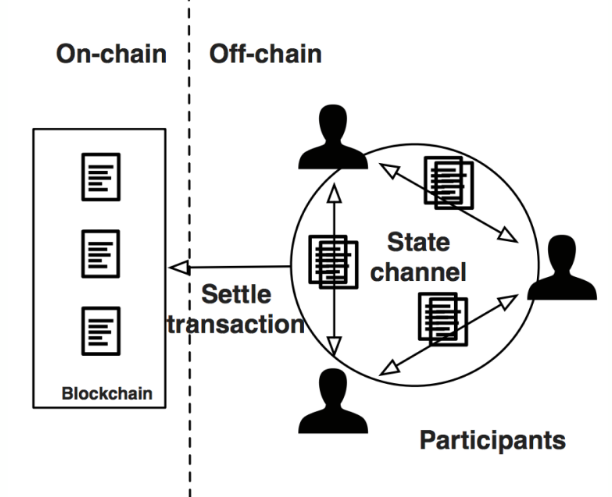
Some newer rollups employ zero-knowledge proofs to validate transactions efficiently, reducing space and cost on the base layer.
Other Layer 2 approaches
Some variations of state channels allow multiple participants to transact off-chain with more complex patterns, supporting smart-contract-like functionality while keeping most activity off the main blockchain.
Protocols, such as Build on Bitcoin (BoB) solutions, combine rollups and specialized sidechains to enable faster, cheaper, and more programmable Bitcoin transactions without altering the base layer.
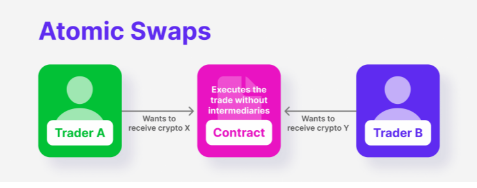
Additionally, atomic swaps and cross-chain bridges, though not strictly Layer 2 act as scalability enablers by allowing Bitcoin to interact with other blockchains or Layer 2 networks, facilitating quicker settlements and broader interoperability.
The block size debate
The scaling debate reached its peak during the years leading up to the 2017 network split. Some prioritize small blocks for decentralization, while others favor larger blocks for throughput.
Pro-large block camp: Argues that increasing block size directly allows more transactions per block, lowering fees and improving usability for everyday payments. Advocates often prioritize scaling Bitcoin as a medium of exchange.
Pro-small block camp: Emphasizes decentralization and security. Larger blocks require more storage, bandwidth, and processing power, making it harder for average participants to run full nodes. This camp favors off-chain or protocol-level optimizations (e.g., SegWit, Lightning) instead of increasing base-layer blocks.
Bitcoin Cash exemplifies the larger-block philosophy, aiming for high transaction throughput at the expense of increased storage and bandwidth requirements. Bitcoin itself has maintained smaller blocks, relying on SegWit and L2 solutions to scale.
Since then, development on the original Bitcoin network has largely favored layered scaling rather than large block expansions.
Current state of Bitcoin scalability
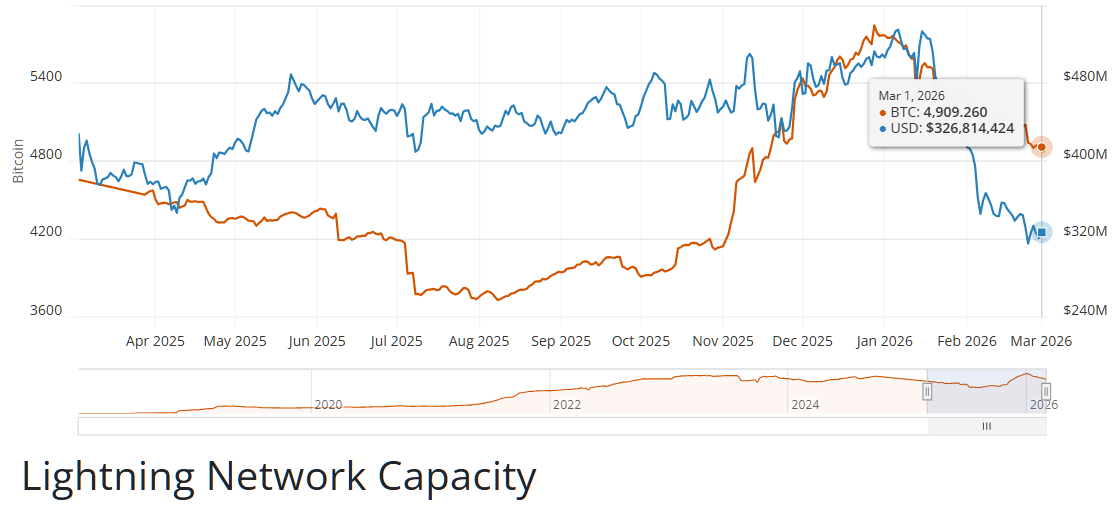
The Lightning Network has reached over 5,600 BTC in total locked capacity, supporting millions of transactions per month with average payment sizes exceeding $200. Major exchanges and businesses increasingly use Lightning channels, demonstrating its viability for both small and large transactions.
By mid-2025, overall capacity had declined about 20%, yet usage across merchant payments, apps, wallets, and exchanges remained steady. Under optimal routing conditions, transactions can settle in less than a second. By Q2 2024, Lightning was already used in more than 15% of Bitcoin payments.
Over the past four years, the network has also seen a rise in capital efficiency, with average channel capacity increasing by roughly 214% and typical channel flows around $9,000.
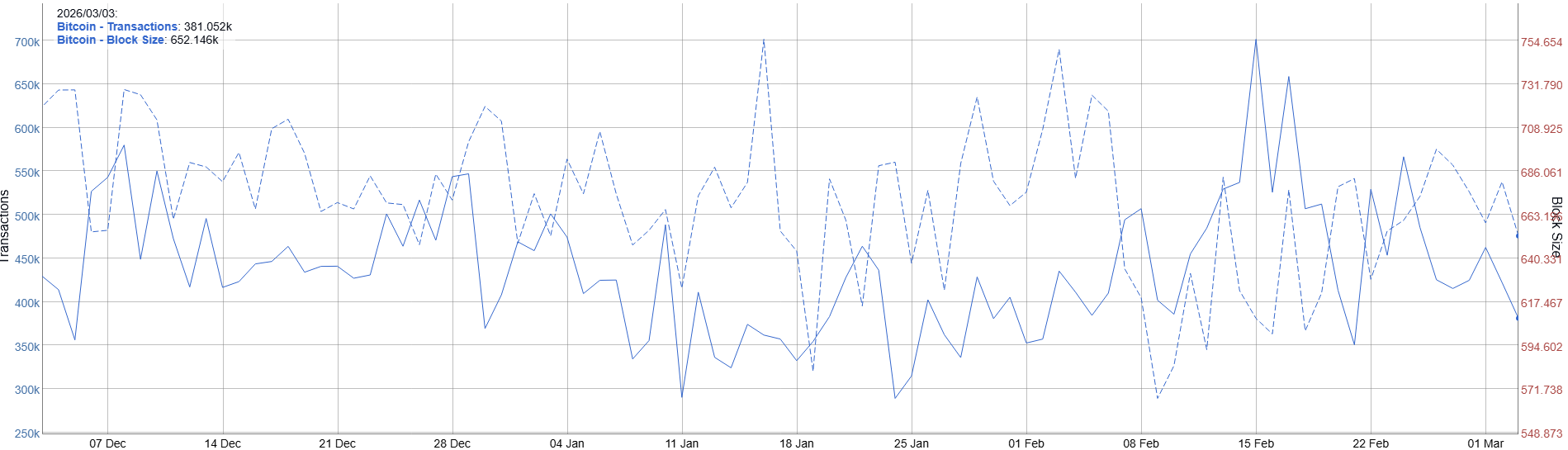
On-chain transaction volumes remain manageable for Bitcoin’s base layer, though debate persists in technical forums and BIPs about the potential for future block size adjustments if Layer 2 adoption plateaus. SegWit and Taproot scripting improvements, and professional Lightning infrastructure indicate the network is scaling “horizontally” expanding capacity via smarter transaction processing rather than simply enlarging blocks.
At the same time, the block size debate now serves more as a guiding principle in protocol design than a day-to-day controversy: the focus has shifted to balancing decentralization, security, and Layer 2 efficiency.
This layered approach allows the network to handle high throughput while preserving security and decentralization.
Conclusion
As adoption grew, Bitcoin’s scalability limits pushed a broader question: what is the base layer actually for? Over time, two views emerged. One side treats Bitcoin primarily as a store of value, where limited block space is reserved for high-value settlement and long-term security. The other focuses on payments, arguing the network should support frequent, low-cost transactions.
In practice, Bitcoin has moved toward a layered model that connects directly to the scaling approaches discussed in this article.
The base chain increasingly functions as a settlement layer, while faster and cheaper activity shifts to second layers and related infrastructure. This is where many of the scaling efforts, payment channels, sidechains, and newer Layer 2 experiments fit into the broader design of the network.
Market behavior reinforces this direction.
A significant share of bitcoin supply is held long term, and large transfers between exchanges, custodians, and institutions now make up a visible portion of on-chain activity. At the same time, payment use cases continue to develop in environments where speed and fee predictability matter, which is exactly what scaling solutions are trying to enable.
Scalability is not fixed; it is shaped by technology, operational demand, and ongoing innovation.
 Maryna Hornieieva
Disclaimer: All materials on this site are for informational purposes only. None of the material should be interpreted as investment advice. Please note that, despite the nature of much of the material created and hosted on this website, HODL FM operates as a media and informational platform, not a provider of financial advisory services. The opinions of authors and other contributors are their own and should not be taken as financial advice. If you require advice, HODL FM strongly recommends contacting a qualified industry professional.