


Block, Inc. has rolled out a broad set of bitcoin-focused updates across custody, payments, and transparency systems, signaling a continued push to embed bitcoin into everyday financial activity through Cash App, Square, and Bitkey. The company also confirmed a new Proof of Reserves framework covering corporate and customer-held assets.
The announcements span hardware upgrades, new consumer earning tools, merchant payment infrastructure, and publicly verifiable reserve reporting.
Bitkey introduces secure touchscreen for self-custody
Block introduced a redesigned Bitkey hardware wallet featuring a secure touchscreen interface. The company stated that the screen functions as the main verification layer for all security-critical actions, including transaction approval and system configuration.
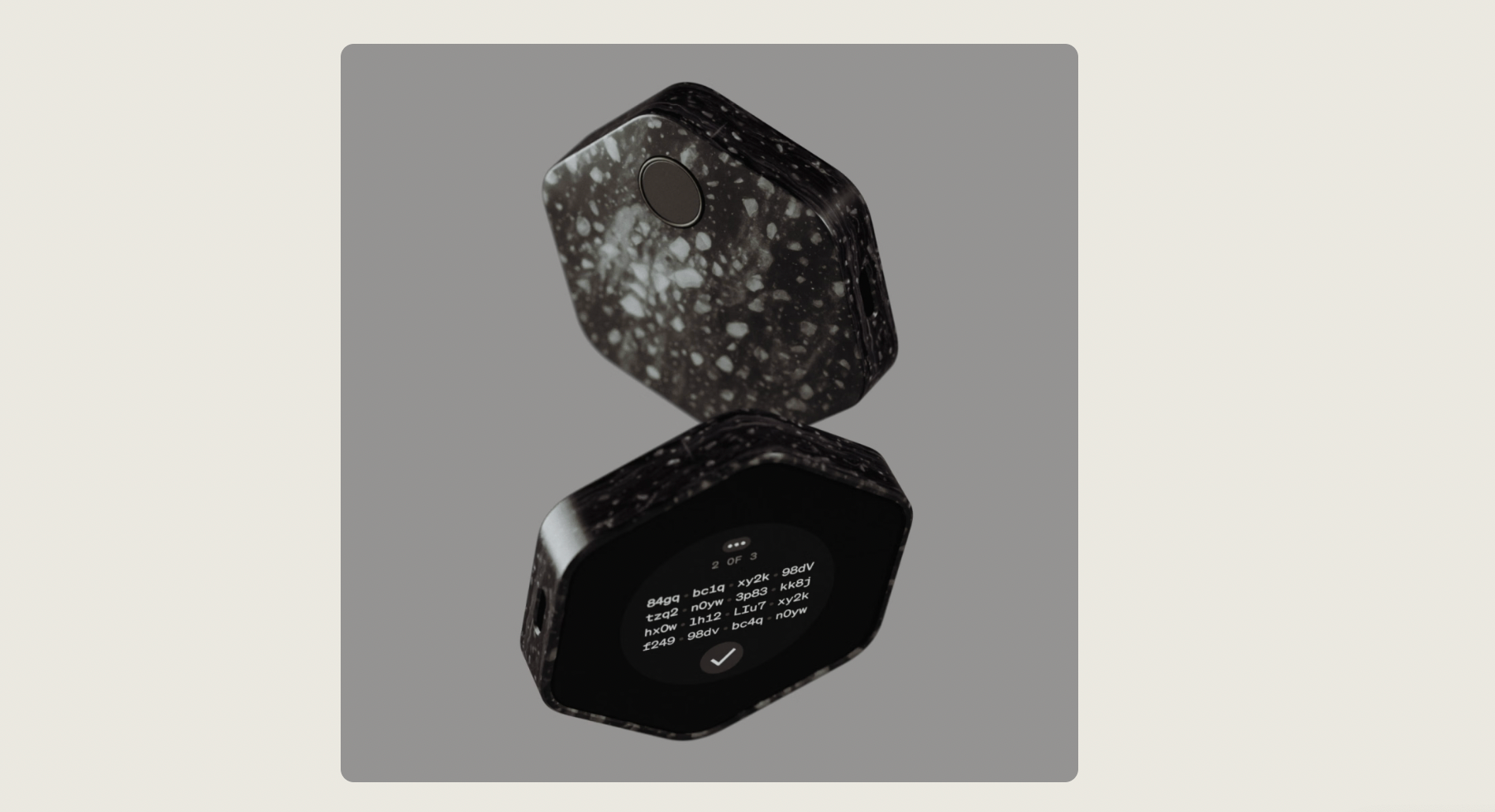
The design aims to address a common issue in hardware wallets, where users often secure signatures on-device but still rely on external systems for configuration and risk management. In Bitkey’s updated model, security controls and transaction authorization remain fully embedded in the device.
Bitkey continues to operate on a 2-of-3 multisignature system without seed phrases. It also includes inheritance planning and privacy-oriented architecture. Block opened preorders for the device and released a technical document outlining its approach across security, recovery, privacy, and usability.
Cash App adds automatic bitcoin accumulation and higher limits
Cash App introduced new features focused on making bitcoin accumulation more automatic and integrated into daily transactions. Eligible users can now convert incoming peer-to-peer payments directly into bitcoin, turning routine transfers into recurring accumulation flows.
The platform also launched “Bitcoin Back,” offering 5% bitcoin rewards at eligible Square merchants. A disclaimer notes the program runs through December 31, 2026, with a monthly reward cap of $30 per customer.
Additional changes include increased bitcoin withdrawal limits of $10,000 per day and $25,000 per week for eligible users. Cash App also enables bitcoin direct deposit without fees or spreads.
For larger purchases above $2,000, Block removed fees and spreads, while expanding funding rails to improve transaction reliability. The company stated that bitcoin functionality depends on ease of movement and practical usability in everyday financial behavior.
Proof of Reserves system covers $2.2 billion in bitcoin holdings
Block launched a Proof of Reserves system spanning Cash App, Square, and its corporate treasury. The company reported total holdings of 28,355 BTC as of the end of March 2026, valued at approximately $2.2 billion.
Of that total, about 19,357 BTC were held on behalf of customers, while roughly 8,997 BTC were held as corporate assets. The report was confirmed by third-party auditors and uses on-chain signatures for verification.
Block stated that users should be able to verify holdings independently rather than rely on trust-based disclosures. The system allows public confirmation of reserves through blockchain-based validation.
The company positioned reserves as actively controlled rather than historically recorded balances.
Square prepares bitcoin tap-to-pay rollout
Block announced a demonstration planned for Bitcoin Las Vegas 2026 showing Square’s NFC-based bitcoin tap-to-pay system. The feature allows merchants to accept bitcoin payments by tapping a phone or card, removing the need for QR codes.
The system uses the Lightning Network for near-instant settlement, while Square handles payment processing in the background. Block said merchants will pay 0% processing fees through 2026.
The company described the feature as part of an effort to make bitcoin payments function similarly to traditional contactless card payments.
Early operational challenges and infrastructure buildout
Block’s bitcoin expansion arrives alongside continued infrastructure development across its ecosystem, including Proto, the company’s mining division. Proto is building modular mining hardware and open-source fleet management software hosted on GitHub.
The company framed these efforts as part of a broader attempt to decentralize mining operations and strengthen underlying network resilience.
The rollout of custody tools, payment rails, and mining infrastructure reflects a gradual integration process rather than a single product launch cycle. Each component operates independently but feeds into Block’s broader bitcoin strategy.
Building a connected bitcoin financial stack
Across Cash App, Square, Bitkey, and Proto, Block is assembling a vertically integrated bitcoin ecosystem. Cash App focuses on earning and spending, Square targets merchant acceptance, Bitkey supports self-custody, and Proto develops mining infrastructure.
The company stated that bitcoin becomes more usable when custody, payments, and infrastructure work together in a unified system. The updates position Block as one of the few major financial firms attempting to combine consumer fintech and bitcoin-native infrastructure under a single product framework.
 Tanya Petrusenko
Disclaimer: All materials on this site are for informational purposes only. None of the material should be interpreted as investment advice. Please note that, despite the nature of much of the material created and hosted on this website, HODL FM operates as a media and informational platform, not a provider of financial advisory services. The opinions of authors and other contributors are their own and should not be taken as financial advice. If you require advice, HODL FM strongly recommends contacting a qualified industry professional.