



What began nine years ago as a single platform on a single blockchain has given rise to a massive industry, estimated by The Business Research Company to reach $60.82 billion in 2025. The growing demand for NFTs has quickly spread beyond single-chain ecosystems, leading to the popularity of cross-chain NFT marketplaces.
The ability to trade non-fungible tokens across chains eliminates silos and creates accessibility and interoperability across communities for all users across different networks. NFT marketplaces directly connect creators and owners of digital art, such as music, metaverse, gaming, trading cards, virtual worlds, domain names, and more, with buyers, enabling peer-to-peer interaction.
This article examines the top NFT marketplaces available today for digital art collectibles, Web3 games, or investments (if you're an NFT Whale).
The criteria for evaluating NFT marketplaces in 2026
The following criteria are essential to consider when evaluating NFT marketplaces in 2026:
- Reputation and security: Start by determining the marketplace's overall reputation and security. Choose a platform with a proven track record in the industry, open and transparent operations, and security features like KYC and two-factor authentication.
- Blockchain compatibility and token standards: Identify whether your NFTs will be hosted on Ethereum, Solana, Polygon, or any other blockchain platform you'll be using for your NFTs, and which token standard they support (ERC-721 or ERC-1155).
- Fee structure and cost transparency: Check the platform's fees for listing or issuing. This includes service fees/seller fees, as well as any gas or network fees. Lower and more transparent fees will help protect the artist's profits.
- Liquidity and market activity: The platform should have liquidity and trading volume, as well as a large and active user base. The more active sellers and users, the higher the likelihood you'll be able to sell your NFTs, find buyers, and complete trades.
- User experience and accessibility: User experience should be considered, including supported wallets, an intuitive interface, and how well the platform simplifies the NFT listing and minting processes.
The best NFT marketplaces of 2026
Blur
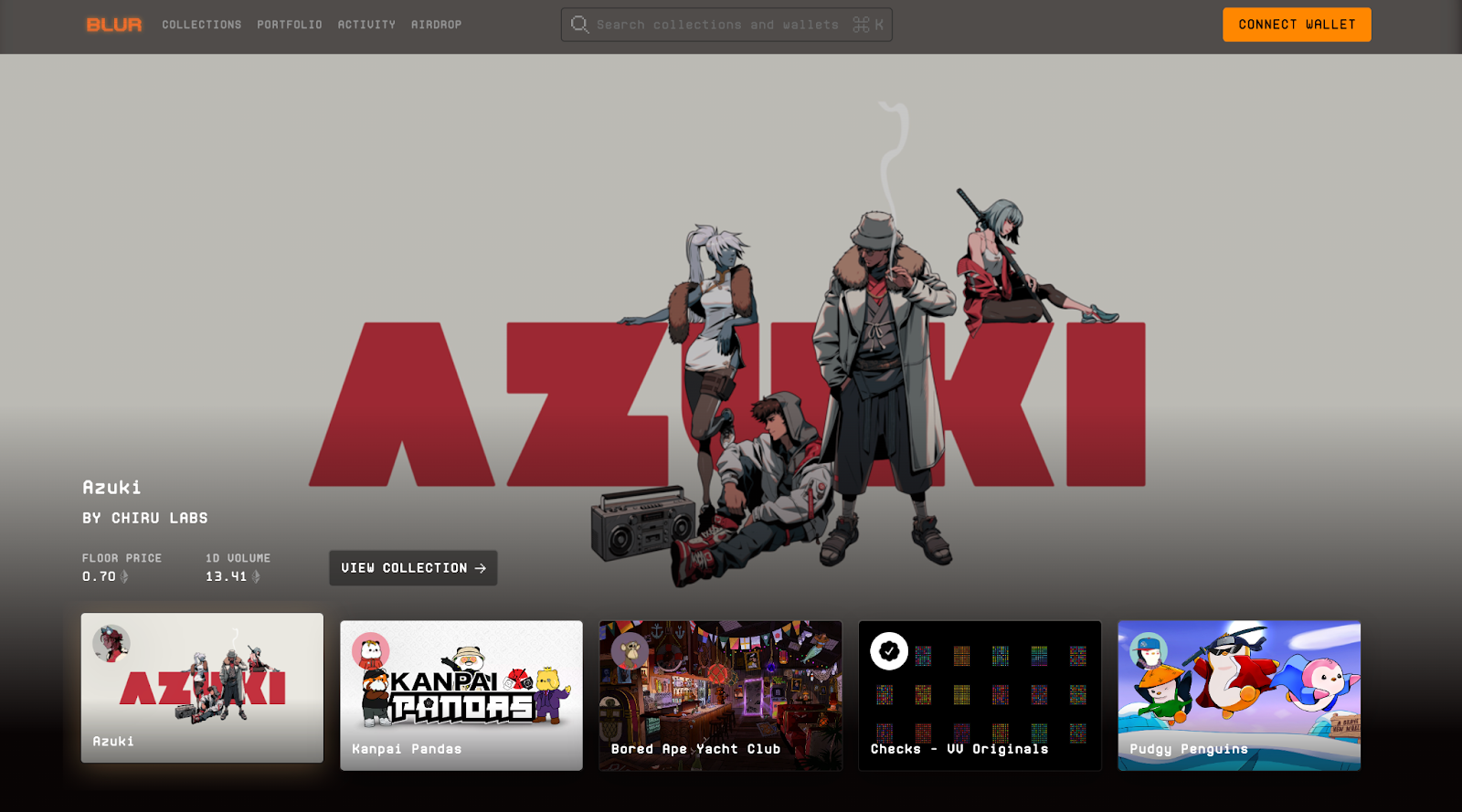
Blur was founded by a pseudonymous team and launched in 2022. It's a non-custodial NFT marketplace and a marketplace aggregator protocol built on Ethereum. The marketplace has a governance token, BLUR, which is distributed through airdrops. Blur rewards users with points for participating in auctions, sweepstakes, and listings, and encourages users to participate in auctions and token placements. Points awarded for activity influence how many BLUR tokens you can receive in the upcoming airdrop. By holding tokens, you can vote on future protocol changes and improvements.
The Blur interface allows users to switch between collector and trader viewing modes as needed, so users can get the big picture before making a purchase. A collector's view that shows larger NFT images with the current price and the last sale price.
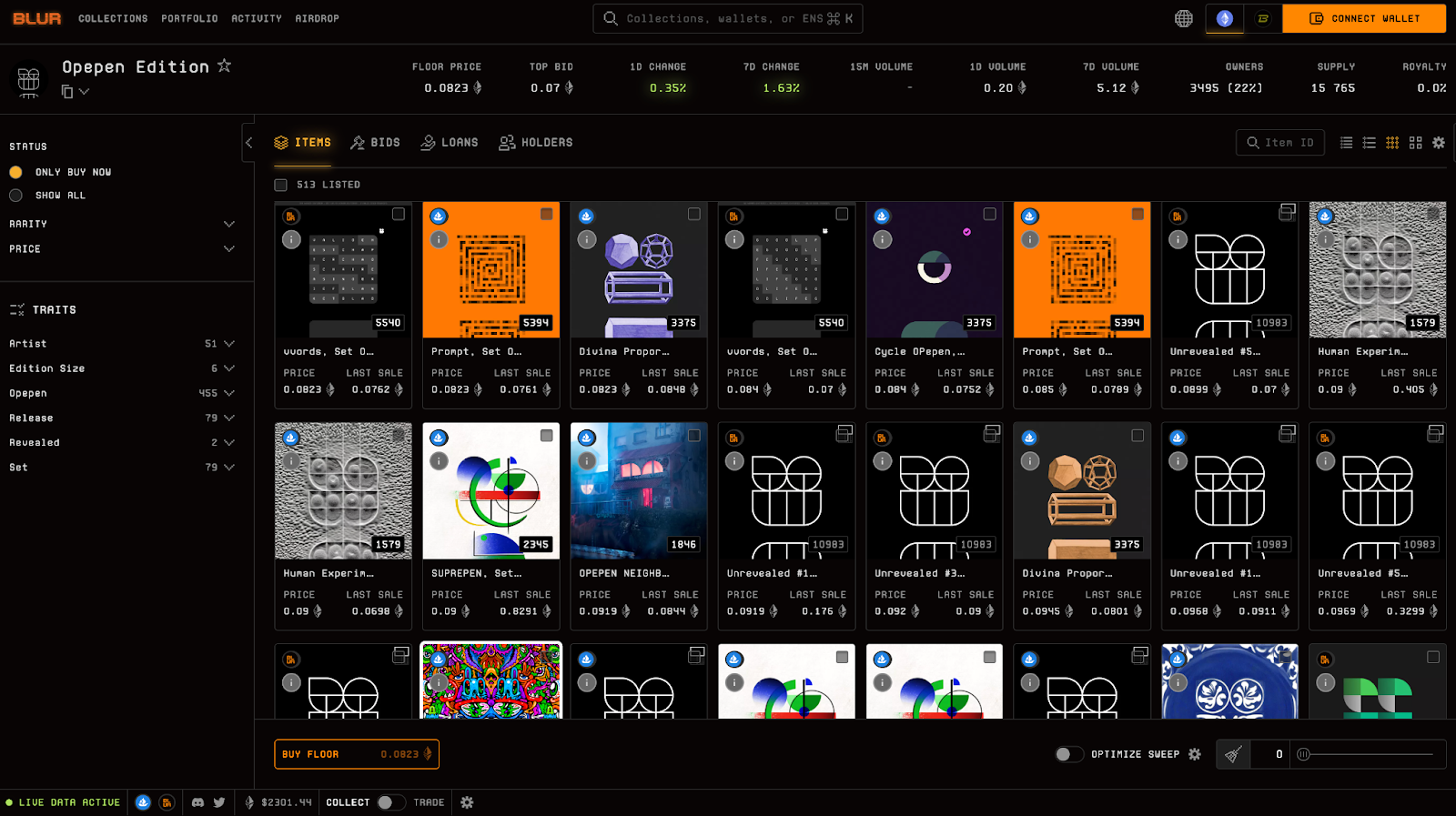
Trader mode displays statistics, including bids, rarity ratings, recent sales, and the floor price. A graph in the lower right corner allows users to hover over the NFT to see which NFTs were sold at what price.
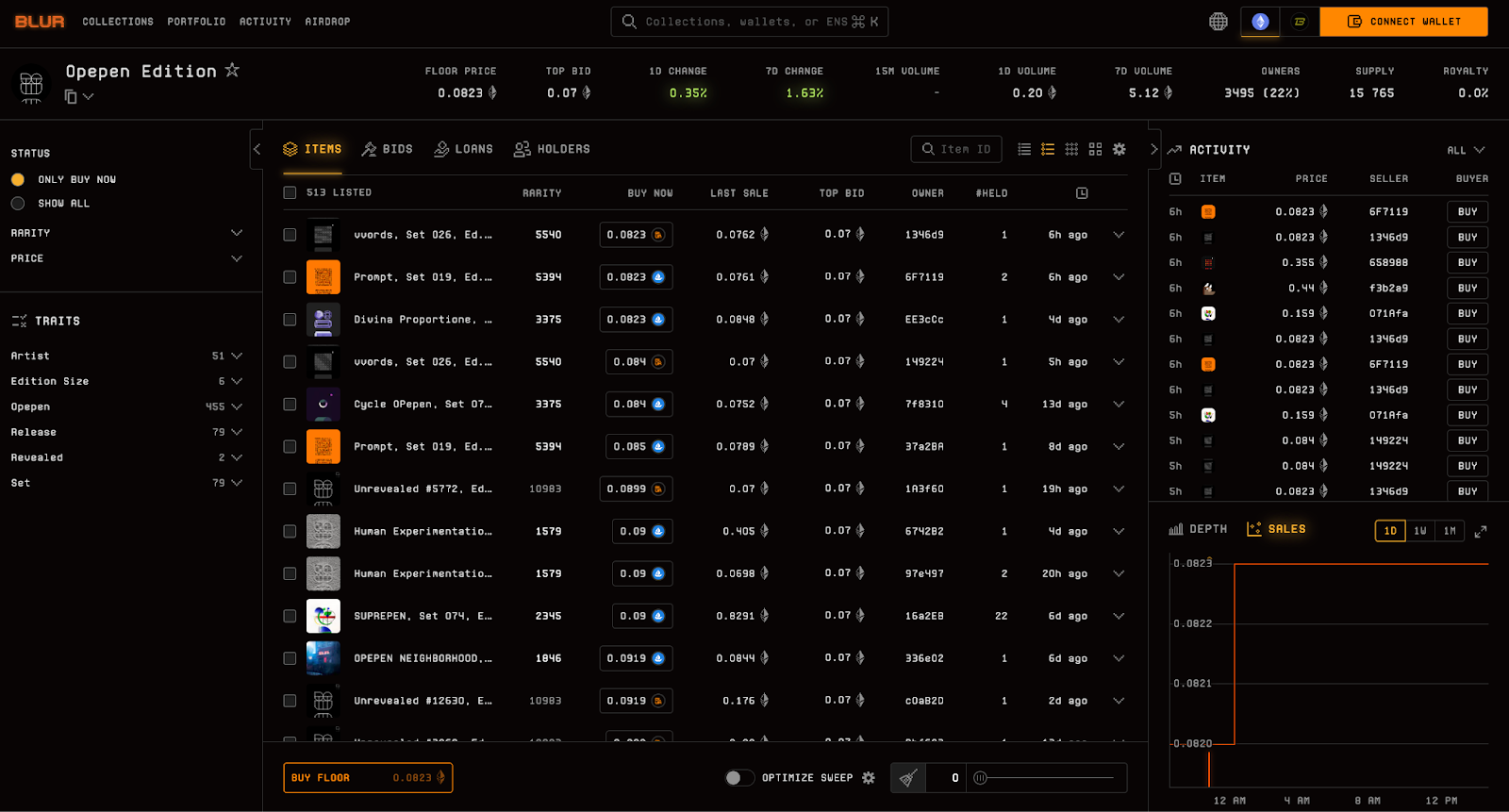
Blur marketplace features:
- Allows manual selection of one of three gas fee levels.
- Pulls data directly from the blockchain, displaying NFT prices in real time without delays.
- Operates exclusively on the Ethereum network, but also acts as an aggregator: it displays NFTs listed not only on Blur but also on other marketplaces. Users can purchase these NFTs without going to third-party sites.
- Supports the purchase of up to 30 NFTs from a single collection in a single transaction.
- Displays open bids to show how much other users are willing to pay for the NFT and how many tokens in the collection have been bid on.
- Analyzes the attributes of each NFT and calculates its rarity within the collection.
Blur roadmap focuses on several key milestones:
- Potential Blend updates to boost utility.
- DAO proposals for platform features and protocol upgrades.
- Final unlock of investor/contributor tokens.
OpenSea
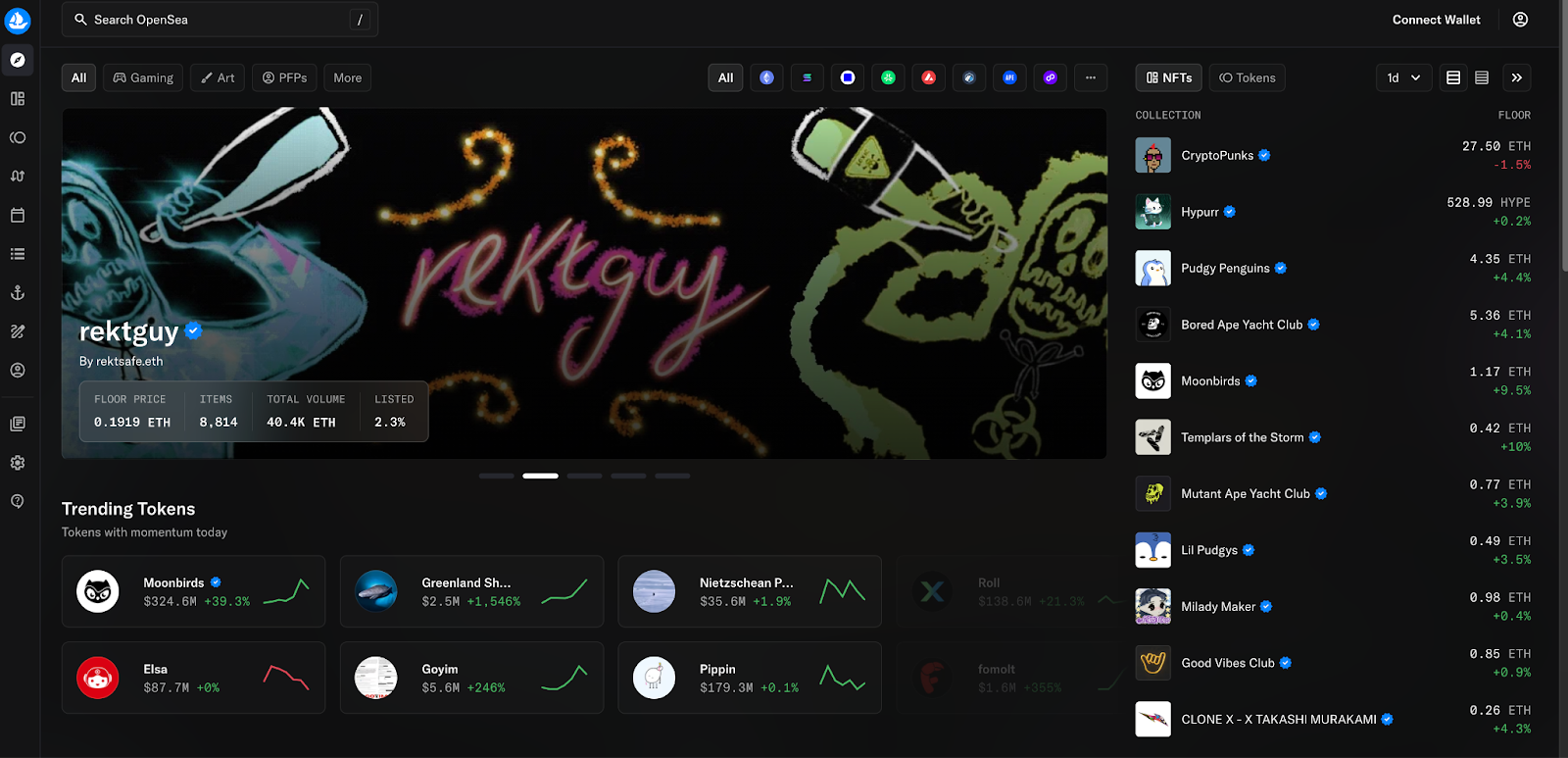
OpenSea is the world's first and biggest NFT marketplace, launched in December 2017. In 2022, OpenSea acquired Gem, an NFT aggregator, which was later renamed OpenSea Pro. It offers NFTs from over 170 marketplaces, displayed in a vibrant and well-designed user interface.
It may be particularly appealing to new artists looking to test their digital art for free. To avoid gas fees when creating NFTs, OpenSea allows users to create NFTs using the Collection Manager tool without upfront gas fees. Instead of immediately recording the NFT on the blockchain, the creator places the item "off-chain," and the actual creation process is deferred until the moment of purchase.
OpenSea Pro's other features may be similar to Blur's, which is what has made it such a resounding success:
- Real-time updates show current prices and the latest NFT listings on over 170 marketplaces.
- Filtering by rarity or characteristics with the updated interface is easier to use than on the original OpenSea platform.
- Advanced search capabilities allow for up to 100 NFTs per collection.
- Posting listings on multiple platforms allows you to list items on OpenSea, LooksRare, and X2Y2 from a single listing page.
- In Pro mode, users can view sales activity charts and see a sales trend line, showing what was sold, when, and for how much.
OpenSea's reputation was worsened by the indictment of Nathaniel Chastain, a former product manager at the NFT marketplace, in 2023. Prosecutors accused him of abusing his position at OpenSea by purchasing NFTs shortly before they were to appear on the main page. The court ruled this year that information about which NFTs would be featured on OpenSea's main page didn't constitute "property" under federal wire fraud statutes and overturned the conviction.
Following a successful court case, the platform is making bold plans for the future. As part of its transformation, the OpenSea Foundation will launch the long-awaited SEA token in the first quarter of 2026. Additionally, CEO and co-founder Devin Finzer announced that the platform will expand its reach to "trade everything" on the blockchain, including tokens, art, culture, and even real-world assets.
Rarible
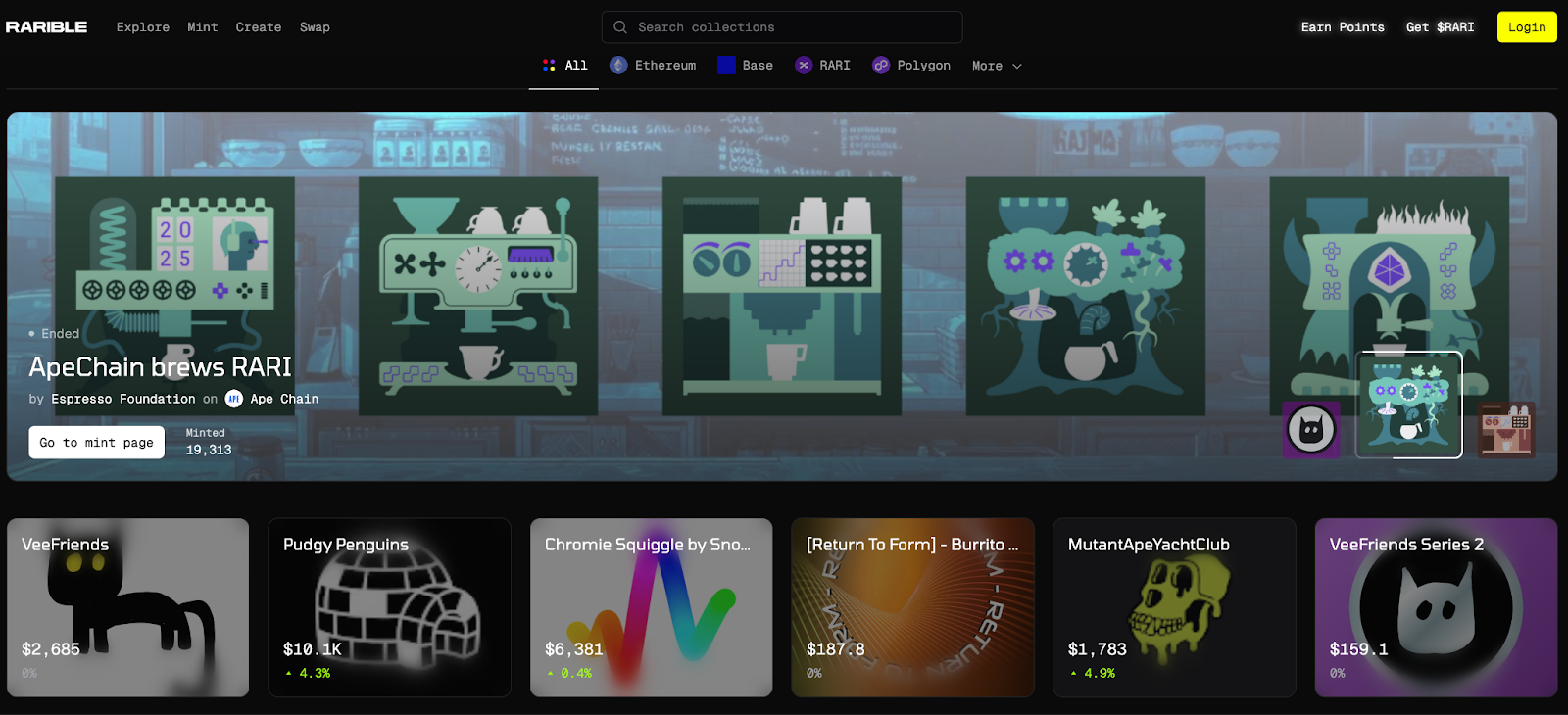
Rarible NFT marketplace, launched in 2020, positions itself as a community-oriented NFT marketplace. The entire Rarible ecosystem is powered by its native governance token, RARI. Approximately 40% of the RARI supply is reserved for the DAO treasury to support development, for voting, approving grants and new tools, rewarding participants, and the overall development of the protocol.
One of its distinctive features is its NFT marketplace builder, which allows communities and brands to create their own storefronts using Rarible's infrastructure.
Other features include:
- NFT creators can set up royalty payments of up to 50% and receive compensation every time their work is sold.
- Rarible's partnership with Adobe ensures metadata verification of artists' work and simplifies the NFT creation process on the platform.
- If the NFT is not auctioned, Rarible allows payment for NFTs at a fixed price using credit cards, but NFTs must be sent to a wallet.
In January 2025, the Telos Foundation announced the integration with Rarible. This integration with Rarible opens new horizons for Telos-based projects and creates new opportunities for users to create, purchase, and trade Telos-based NFTs.
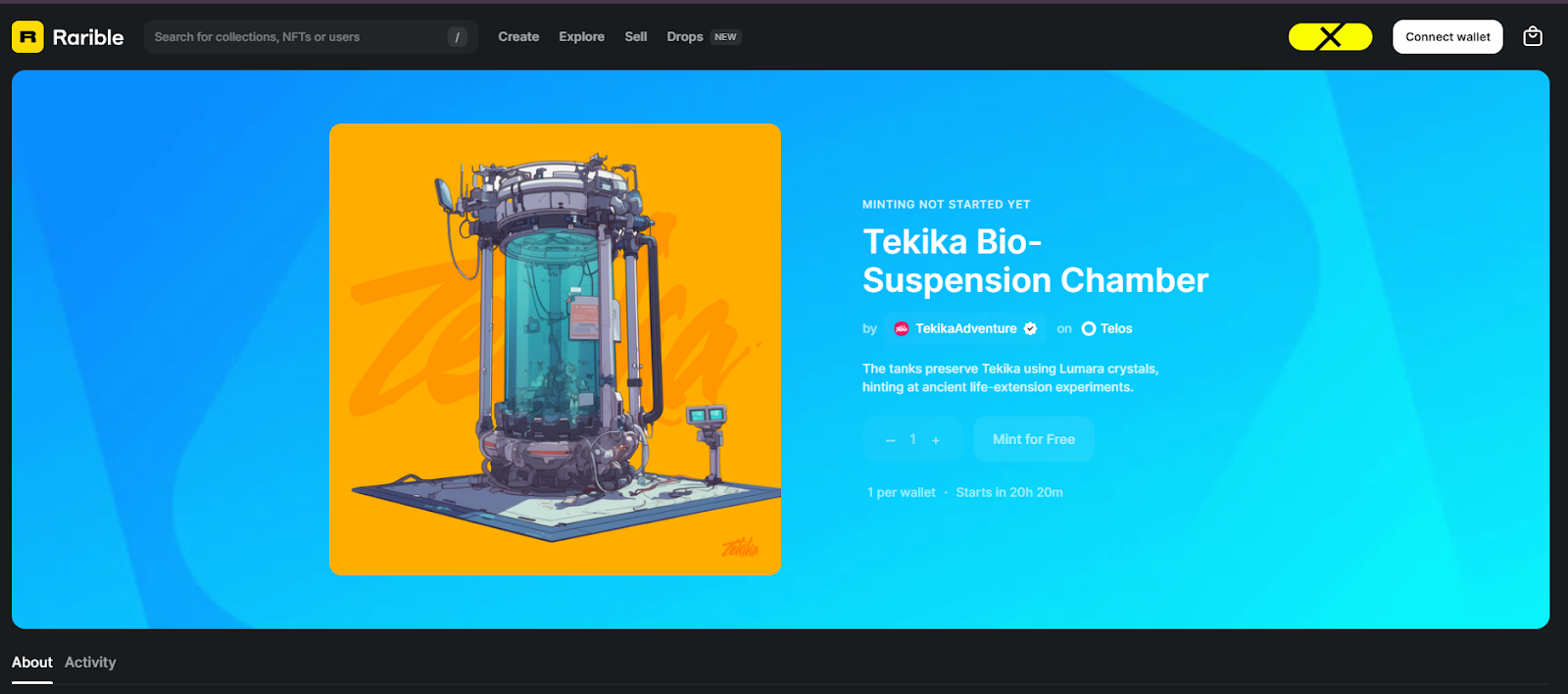
The first Telos NFT mint on Rarible. Image Source: Telos
Foundation
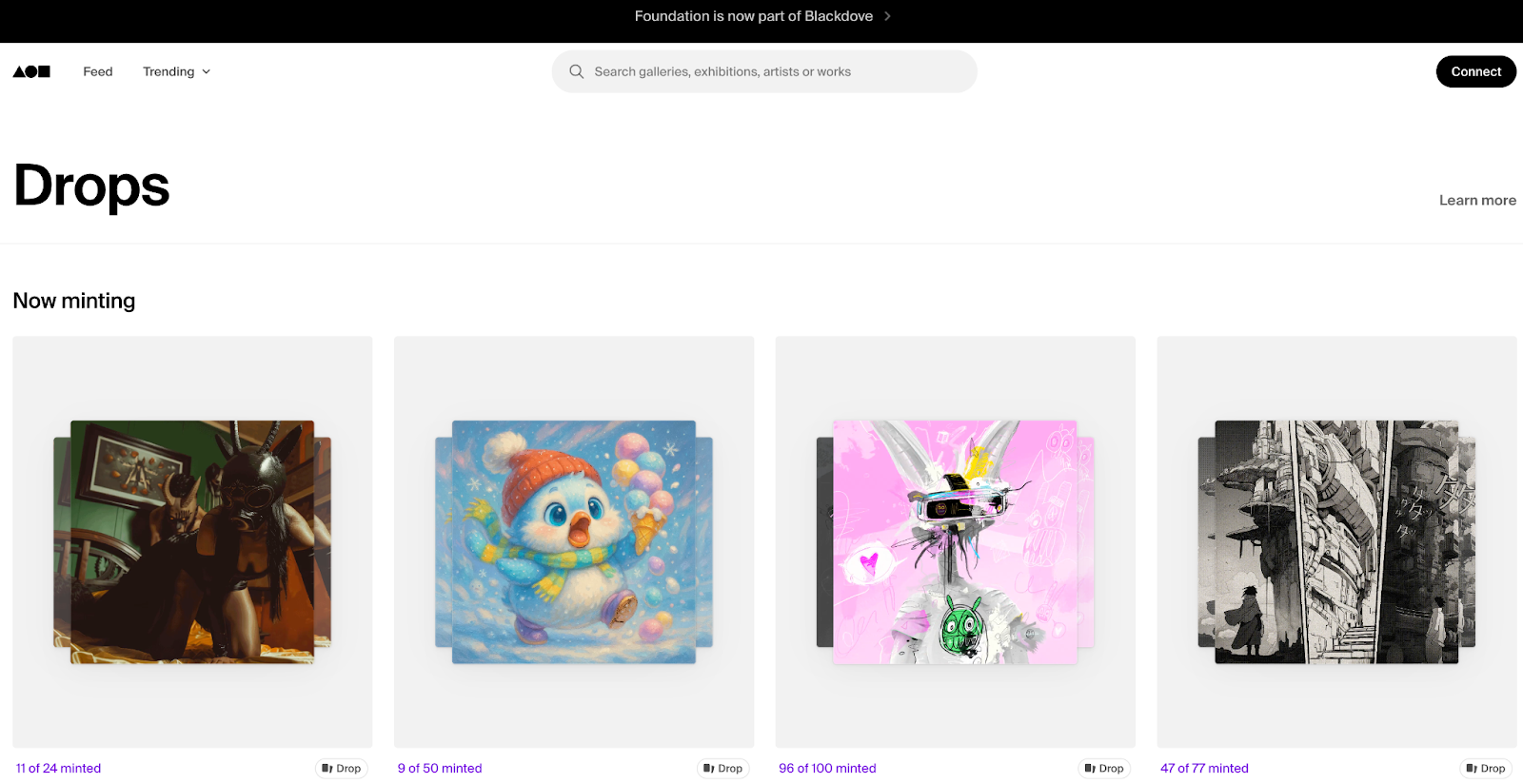
The Foundation NFT marketplace, launched in February 2021, initially operated on an invitation-based system, with artists inviting other artists, like a private club for creatives and digital art enthusiasts.
‘We hand-selected artists, who became our muses, and our platform quickly took off. We realized there was a term for that—curation—and we became known for it. It was the key to our collective success,’ - shared the Foundation Team.
Outstanding features on Foundation are Worlds and Moments. Worlds are permanent, on-chain galleries that curators, artists, or brands create to showcase and sell NFTs. A World defines the overall theme and identity of a space and can include works from multiple creators.
Moments are temporary, time-based exhibitions that happen inside a World. They’re used to spotlight specific works or artists, such as a solo show, seasonal drop, or live event, through a dedicated landing page. Moments can be repeated over time to create a calendar of events.
The Foundation team recently announced the transfer of management of the NFT marketplace to Blackdove. The platform is being transferred to a new operator, while key on-chain elements remain unchanged. Smart contracts and artist royalties will remain unaffected, and all existing NFTs will retain their value and history. Blackdove will assume responsibility for the long-term development, moderation, support, and storage of media content, and the transfer of user data will only occur with the explicit consent of creators.
OKX NFT
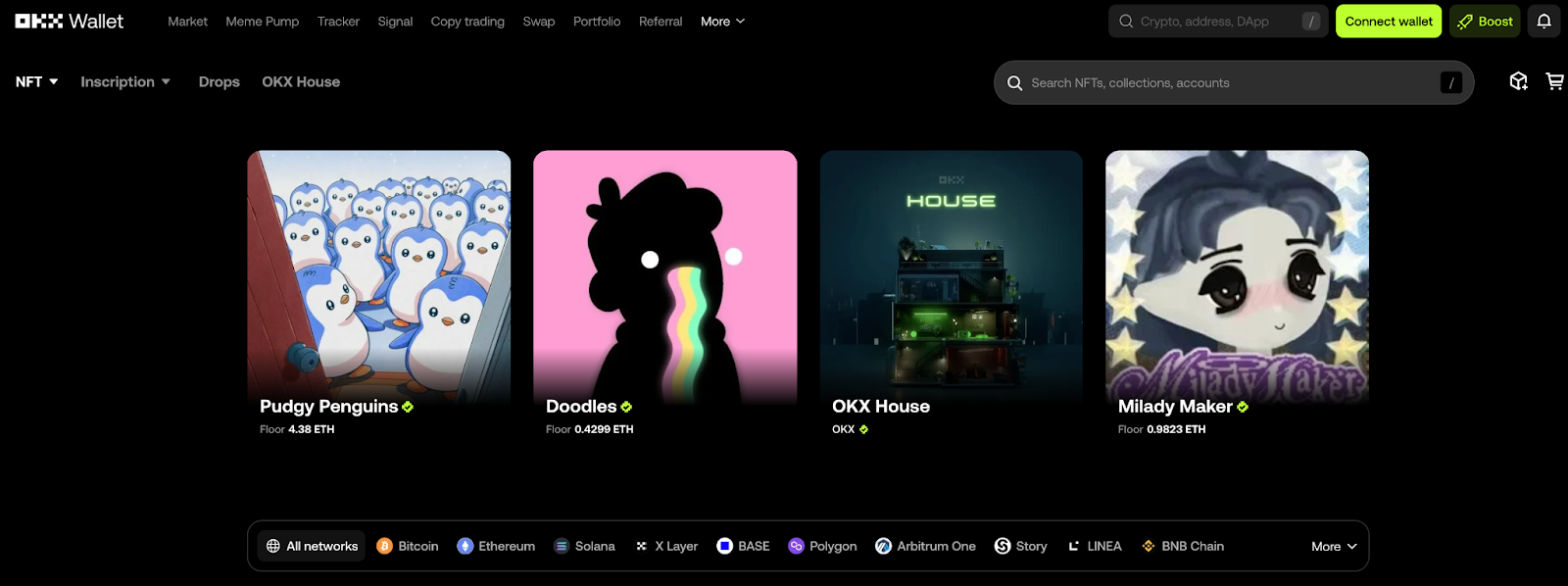
OKX is a multifunctional platform that initially launched as a cryptocurrency exchange in 2017 but later integrated a cross-chain NFT marketplace, allowing users to explore, create, buy, and sell NFTs across various blockchains.
The OKX NFT marketplace enables interaction with tokens on blockchains such as Ethereum, Solana, BNB Chain, Bitcoin, and others, and offers a suite of innovative tools designed to enhance the platform experience. The OKX NFT marketplace's cross-chain compatibility makes the NFT management process as simple and intuitive as possible.
The OKX marketplace also features collections from other major marketplaces, including OpenSea, LooksRare, and Magic Eden, among many others. OKX recently updated its platform, simplifying trading of Solana-based NFTs. Users can now view and bid on Tensor, a Solana NFT Marketplace, directly through the OKX NFT marketplace.
Final thoughts
NFT marketplaces have become less active than during the sector's peak in 2021, and not all remain active. Gemini, as market conditions change, is shutting down its traditional Nifty Gateway marketplace in favor of a broader development strategy.
However, the remaining platforms continue to offer the same excellent opportunities for buying, selling, and creating NFTs. OpenSea remains the most popular NFT marketplace among newcomers due to its ease of use, NFT diversity, and cross-chain support. Meanwhile, platforms like Foundation and Rarible focus on more curated NFTs.
If you're new to the space, consider marketplaces with an intuitive interface, cross-chain support, transparent fees, and a large community. If you're a creator, look for platforms that offer royalty control and high liquidity.
There's no single best NFT marketplace, as your ideal choice depends on the NFTs you're working with. Try out a few of the top platforms to see what best suits your goals.
 Matvii Diadkov
Disclaimer: All materials on this site are for informational purposes only. None of the material should be interpreted as investment advice. Please note that, despite the nature of much of the material created and hosted on this website, HODL FM operates as a media and informational platform, not a provider of financial advisory services. The opinions of authors and other contributors are their own and should not be taken as financial advice. If you require advice, HODL FM strongly recommends contacting a qualified industry professional.