



Google announced a formal timeline for transitioning its infrastructure to post-quantum cryptography (PQC) by 2029, citing rapid advances in quantum computing hardware and error correction. The company warned that quantum computers could break current encryption and digital signatures if action does not occur now.
“Quantum computers will pose a significant threat to current cryptographic standards, and specifically to encryption and digital signatures,” Google said. “It’s our responsibility to lead by example and share an ambitious timeline.”
The 2029 target marks the first time Google set a clear deadline for its PQC rollout. The decision reflects updated estimates on how quickly quantum machines could compromise existing cryptography, including so-called store-now-decrypt-later attacks that allow adversaries to steal encrypted data today and decrypt it in the future.
Google’s efforts include integrating PQC digital signature protection using ML-DSA in Android 17, aligning with National Institute of Standards and Technology (NIST) standards. Cloud services and internal systems will also adopt PQC solutions, providing early examples for the broader tech industry.
Urgency grows as quantum hardware advances
The timeline aligns with gains in quantum hardware, such as Google’s Willow chip, which operates with 105 qubits. IBM also targets fault-tolerant quantum systems by 2029. Rapid hardware improvements have compressed previous estimates for when encryption may become vulnerable.
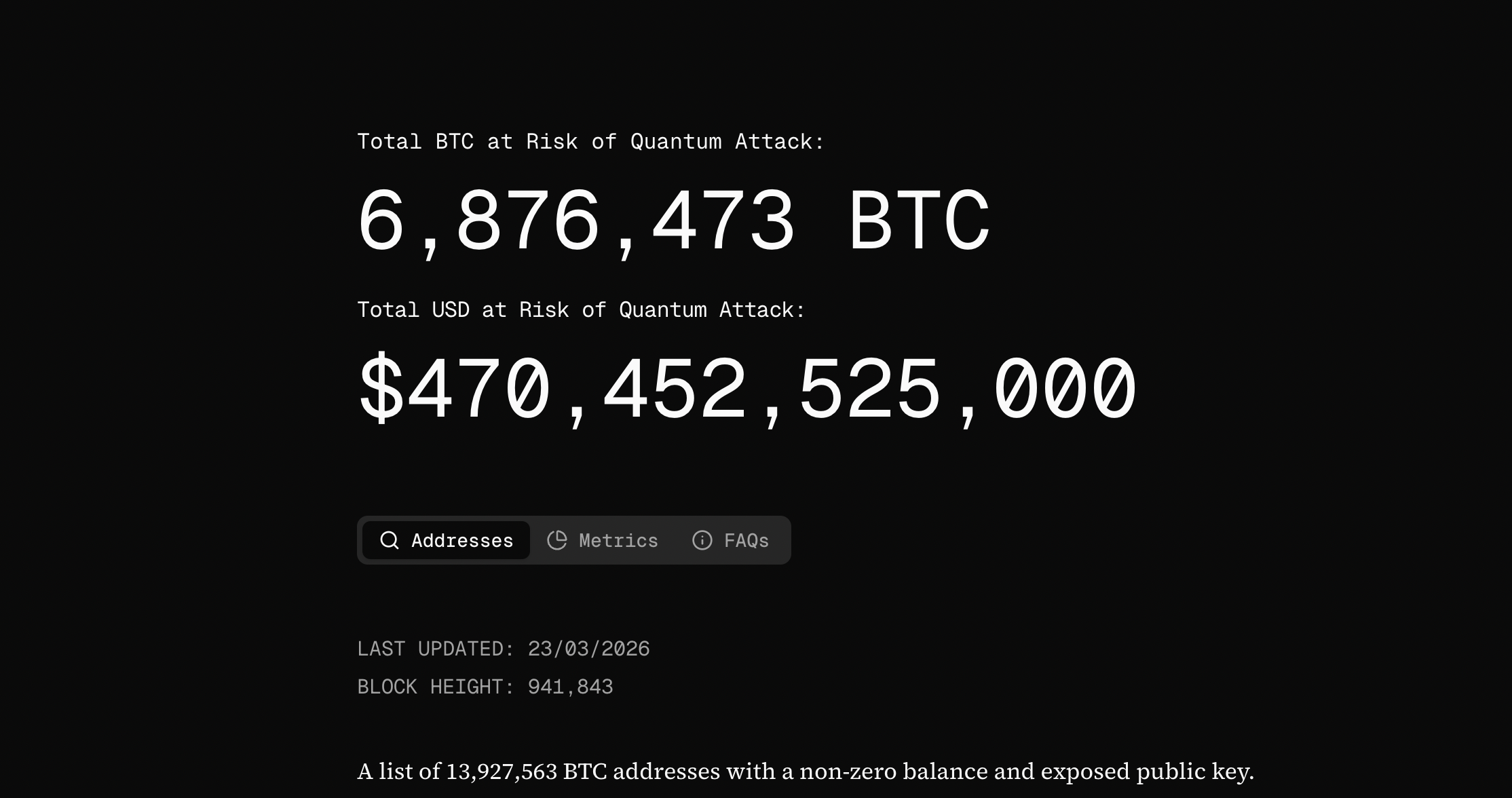
Researchers at Iceberg Quantum estimate that the qubit count needed to break Bitcoin’s cryptography could fall to roughly 100,000, compared with earlier estimates of 20 million. Project Eleven calculated that over 6.8 million Bitcoin, worth more than $470 billion, reside in addresses theoretically exposed to quantum threats.
Crypto networks plan post-quantum upgrades
Ethereum launched a Post-Quantum Ethereum resource hub, aiming for protocol-level quantum-resistant solutions by 2029. Execution-layer improvements will follow, ensuring billions of dollars in value remain protected.
Solana introduced a quantum-resistant vault in January 2025. The system uses hash-based signatures with a new key for each transaction. Users must store funds in specialized Winternitz vaults, as the feature does not cover the entire network.
Bitcoin remains divided on urgency. Blockstream CEO Adam Back stated that quantum risks are overstated and no immediate action is needed.
Probably not for 20-40 years, if then. And there are quantum secure signatures, NIST standardized SLH-DSA last year. Bitcoin can add over time, as the evaluation continues and be quantum ready, long before cryptographically relevant quantum computers arrive.
— Adam Back (@adam3us) November 15, 2025
Security researcher Ethan Heilman supports BIP 360, introducing a new Pay-to-Merkle-Root output to limit short-term exposure. Jameson Lopp of Casa emphasized that even with quantum computers years away, protocol upgrades and user migration may take five to ten years.
The path ahead for Google and crypto
Google’s timeline reflects the asymmetry between centralized platforms and decentralized networks. While Google can enforce migration across its infrastructure, decentralized cryptocurrencies rely on coordinated adoption by miners, wallet developers, exchanges, and individual users.
Google’s proactive approach aims to provide clarity and urgency for the industry, encouraging adoption of quantum-safe solutions. The move also signals that post-quantum security is no longer a distant concern but a necessary step to protect digital infrastructure and user assets.
The company plans ongoing updates on PQC deployment and recommended actions for developers and organizations.
 Jordan V.
Disclaimer: All materials on this site are for informational purposes only. None of the material should be interpreted as investment advice. Please note that, despite the nature of much of the material created and hosted on this website, HODL FM operates as a media and informational platform, not a provider of financial advisory services. The opinions of authors and other contributors are their own and should not be taken as financial advice. If you require advice, HODL FM strongly recommends contacting a qualified industry professional.