




The Solana Foundation, in partnership with Asymmetric Research, has rolled out a series of advanced security measures aimed at reinforcing the Solana blockchain’s integrity. These initiatives, announced Monday, include the launch of the STRIDE (Solana Trust, Resilience, and Infrastructure for DeFi Enterprises) security program and the Solana Incident Response Network (SIRN). These efforts are intended to raise the security bar for decentralized finance (DeFi) projects on Solana, as the network faces growing threats from increasingly sophisticated attackers.
STRIDE: A new framework for DeFi security
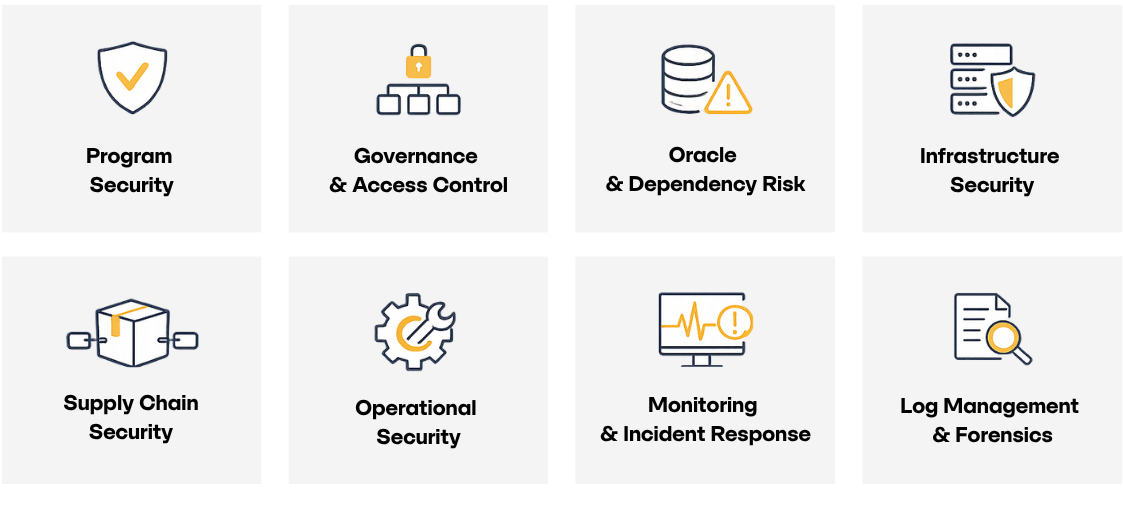
STRIDE is a comprehensive security program designed to evaluate, monitor, and escalate security practices across Solana’s DeFi ecosystem. Asymmetric Research, the security firm responsible for implementing STRIDE, has set up a rigorous framework encompassing eight key security pillars. These include program security, governance and access control, oracle and dependency risk, infrastructure security, supply chain security, operational security, monitoring, incident response, and forensic log management.
Each protocol participating in STRIDE will undergo independent evaluations based on these criteria, and the findings will be made publicly available. Asymmetric Research emphasizes the importance of this transparency for users, investors, and developers, as it guarantees that stakeholders have clear insight into the security posture of the protocols they engage with.
"By publishing these findings, we aim to give real transparency into the security state of Solana protocols," said Asymmetric Research.
Monitoring and active threat management
A key component of STRIDE is its focus on proactive security measures. For protocols with over $10 million in total value locked (TVL), the program will provide ongoing operational security (opsec) support and active threat monitoring. This coverage is tailored to the risk profiles of the protocols, with those securing higher amounts of value receiving more stringent protection. The Solana Foundation will fund these activities through grants.
For protocols with more than $100 million in TVL, STRIDE goes a step further by offering formal verification tools. These tools ensure smart contract correctness by mathematically verifying every possible execution path and state, providing an additional layer of security against potential vulnerabilities.
SIRN: A rapid response network for active threats
Alongside STRIDE, the Solana Foundation also introduced the Solana Incident Response Network (SIRN), and it is dedicated to responding swiftly to any security incidents across the Solana ecosystem. SIRN is a membership-based network consisting of leading security firms, including Asymmetric Research, OtterSec, and Neodyme.
SIRN’s role is to facilitate real-time coordination and provide immediate support during security breaches. The network will also contribute to refining and evolving the STRIDE framework, to make sure that the security practices continue to address emerging threats effectively.
While SIRN will be available to all protocols within the Solana ecosystem, it will prioritize projects based on their TVL. By providing a fast response to security incidents, SIRN aims to minimize the potential damage caused by vulnerabilities and threats, leading to a safer environment for users and investors alike.
The growing need for robust security in DeFi
The launch of these initiatives comes at a time when the DeFi space is grappling with an increase in exploits. Just days prior to the announcement, the Drift Protocol suffered a significant security breach, losing $270 million due to a social engineering attack linked to North Korean-affiliated hackers. This event emphasizes the necessity of stronger security practices across the ecosystem.
Data from DeFiLlama reveals that over $168 million was stolen from 34 DeFi protocols in Q1 of 2026, which points out the ongoing risks faced by decentralized platforms. While this is a significant decrease from the $1.58 billion stolen during the same period in 2025, the persistent nature of these attacks points to the evolving threat landscape in the crypto space.
In January 2026, Step Finance, a Solana-based DeFi platform, lost $40 million in an exploit that involved AI-driven agents executing rapid, automated transfers, amplifying the scale of the attack. This marks a new phase in cyberattacks, where adversaries leverage artificial intelligence to enhance the speed and effectiveness of their exploits.
Solana’s ongoing commitment to security
The Solana Foundation is still dedicated to keeping its ecosystem safe, even though things are getting harder. The organization has long provided free resources and tools to developers, including access to Hypernative for threat detection, Range Security for real-time risk monitoring, and Riverguard by Neodyme for simulating potential attacks.
The Foundation emphasizes that while these resources are designed to support security efforts, the responsibility for maintaining secure protocols ultimately lies with the project teams themselves. Solana encourages all protocols, especially those managing significant user funds, to adopt robust security practices from day one.
"These resources are offered to ensure security, not to replace what individual teams must do themselves," the Solana Foundation stated.
A proactive stance on security
With the launch of STRIDE and SIRN, Solana is taking significant steps to address the security challenges facing its growing ecosystem. These programs show that people are taking the initiative to watch out for, respond to, and stop possible threats, which means that developers and users can keep building and interacting with confidence.
As Solana's network grows to meet the needs of the global DeFi ecosystem, its ongoing investment in security infrastructure is a key step toward making sure the network stays healthy and stable in the long term.
 Anastasiia G
Disclaimer: All materials on this site are for informational purposes only. None of the material should be interpreted as investment advice. Please note that, despite the nature of much of the material created and hosted on this website, HODL FM operates as a media and informational platform, not a provider of financial advisory services. The opinions of authors and other contributors are their own and should not be taken as financial advice. If you require advice, HODL FM strongly recommends contacting a qualified industry professional.