


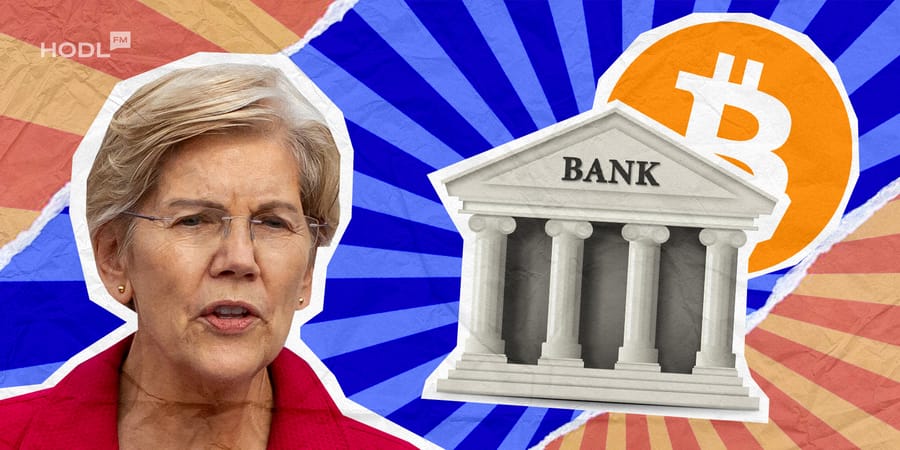



Elizabeth Warren confronted Jonathan Gould during a Senate Banking Committee hearing over a national bank charter application filed by World Liberty Financial, a crypto venture tied to Donald Trump.
The exchange placed the Office of the Comptroller of the Currency at the center of a political and regulatory dispute that blends digital assets, foreign investment, and presidential business interests.
Warren urged Gould to deny or at least pause review of the company’s application for a national trust bank charter. She framed the issue as a matter of law and national security.
“President Trump’s crypto company is now at the center of perhaps the most disgraceful Presidential corruption scandal in U.S. history. An American president who sells out our national security to make money for himself.”
Warren has previously called for scrutiny of a reported $500 million investment in World Liberty Financial tied to a United Arab Emirates entity. She cited a Wall Street Journal report that alleged a vehicle linked to a senior UAE official acquired a 49% stake in the firm shortly before Trump returned to office.
Disclosure questions and oversight demands
During the hearing, Warren questioned whether World Liberty Financial properly disclosed the foreign stake in its application to the OCC. She noted that agency rules require disclosure of any principal shareholder with a 10% or greater direct or indirect interest. Failure to disclose such an interest could warrant dismissal of an application.
“Did World Liberty disclose that the UAE official’s company was a shareholder?” Warren asked.
Gould declined to discuss the specifics of any pending application. He stated that the OCC would handle the matter under standard procedures.
When Warren pressed him on whether he would delay or reject the application, Gould responded that the agency would process it “as we process all applications.”
He also pushed back on allegations of political influence.
“The only political pressure I have felt from any part of the U.S. government, Senator, is from you,” he said.
Warren answered sharply.
“Well it is pressure to follow the law. If you follow the law, you will reject the President’s application. As soon as you approve that application, and we all know you’re going to approve it, you go from being a cheerleader for President Trump to an accomplice in his corruption.”
She requested access to an unredacted version of the application for committee oversight. Gould said he would consider the request in line with established protocols.
Broader political fallout
The clash did not occur in isolation. Forty-one House Democrats wrote to Treasury Secretary Scott Bessent last week to warn that approval of the charter could threaten the legitimacy of the U.S. banking system and its independence from foreign actors. Representative Ro Khanna launched a separate inquiry and urged federal prosecutors to examine the UAE transaction.
The dispute also unfolded as World Liberty Financial prepared to launch an FX platform called World Swap, which will operate within the USD1 stablecoin ecosystem. That development adds a digital payments dimension to a company that now seeks entry into the national banking framework.
Crypto, charters, and conflicts
Bank charters grant access to the federal banking system and place institutions under direct regulatory supervision. A national trust bank charter, in particular, can allow custody and fiduciary services without traditional lending operations. For a crypto company, such a charter can provide legitimacy, regulatory clarity, and access to payment rails.
Warren’s criticism centers on whether foreign ownership and presidential financial ties create risks that regulators must weigh under existing law. Gould’s response reflects the OCC’s longstanding practice of not commenting on pending applications.
The hearing highlighted tension between congressional oversight and agency independence. It also underscored the scrutiny that follows crypto firms with political connections. The outcome of World Liberty Financial’s application will test how regulators apply disclosure standards and conflict-of-interest considerations in a sector that now intersects directly with the presidency.
 Kristian Koch
Disclaimer: All materials on this site are for informational purposes only. None of the material should be interpreted as investment advice. Please note that, despite the nature of much of the material created and hosted on this website, HODL FM operates as a media and informational platform, not a provider of financial advisory services. The opinions of authors and other contributors are their own and should not be taken as financial advice. If you require advice, HODL FM strongly recommends contacting a qualified industry professional.