

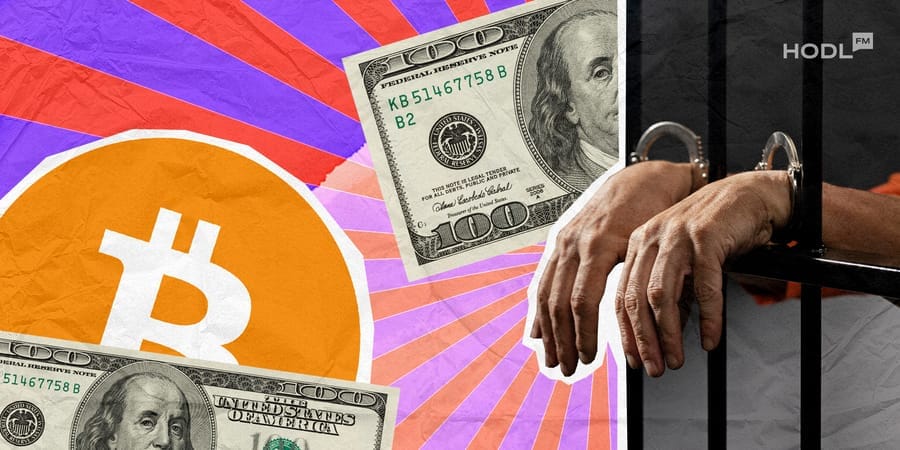



Braden John Karony, former chief executive officer of SafeMoon US LLC, has received a 100-month prison sentence after a federal court in Brooklyn found him guilty of conspiracy to commit securities fraud, wire fraud, and money laundering tied to a scheme involving the SafeMoon digital asset. United States District Judge Eric Komitee delivered the sentence and ordered Karony to forfeit about $7.5 million. A restitution figure for victims remains pending.
A federal jury convicted Karony after a three-week trial in May 2025. The jury also approved forfeiture of two residential properties tied to the case. Authorities described the prosecution as part of a wider effort to pursue financial crimes in digital asset markets.
Joseph Nocella, Jr., United States Attorney for the Eastern District of New York, said:
"Karony lied to investors from all walks of life—including military veterans and hard working-Americans—and defrauded thousands of victims in order to buy mansions, sports cars, and custom trucks."
He added:
"Today’s sentence demonstrates that there are significant consequences for financial crimes. Our Office will continue to vigorously prosecute economic crimes that harm investors and weaken societal trust in the stability and security of digital asset markets."
SafeMoon’s rapid rise and structure
SafeMoon tokens launched in March 2021 through a public blockchain and relied on a smart contract that imposed a 10% tax on each transaction. Half of that tax went back to holders in proportion to their existing balances. The other half went to liquidity pools meant to support trading activity and stabilize the market.
Marketing around the project framed these liquidity pools as locked and insulated from insider withdrawals. Investors received assurances that funds served defined operational purposes rather than personal enrichment. The token gained rapid traction during the 2021 crypto boom and reached a market capitalization above $8 billion at its peak.
Prosecutors detail alleged deception
Federal prosecutors argued that Karony and his co-conspirators misrepresented core elements of the SafeMoon system. Court filings described how insiders retained access to liquidity pools despite public claims about restrictions. Funds moved into personal accounts and financed luxury purchases.
FBI Assistant Director in Charge James C. Barnacle, Jr. said:
"Not only did Braden John Karony abuse his position as CEO, but he also betrayed his investors’ trust by stealing more than nine million dollars in digital assets from his company to fund his lavish lifestyle."
IRS Criminal Investigation officials said Karony diverted and misappropriated millions in cryptocurrency through complex transaction routes and pseudonymous exchange accounts. The agency described how financial tracing techniques revealed the flow of assets.
Harry T. Chavis, Jr., Special Agent in Charge at IRS-CI New York, said:
"Braden Karony exploited his access to SafeMoon’s liquidity pool to divert and misappropriate millions in cryptocurrency. He deceived investors, using their funds to lavishly expand his portfolio with million-dollar homes and luxury cars."
Purchases and asset forfeiture
Court records described major purchases linked to proceeds from the scheme. Authorities listed a $2.2 million home in Utah, additional properties in Utah and Kansas, an Audi R8 sports car valued at about $277,000, another Audi R8, a Tesla, and customized pickup trucks.
Prosecutors stated that Karony masked the movement of funds through private crypto wallets and complex routing across platforms. These actions helped obscure the origin of assets during the period under investigation.
Michael Alfonso, Acting Special Agent in Charge at Homeland Security Investigations New York, said:
"Braden John Karony’s sentencing exposes the deep betrayal at the heart of a scheme that preyed on the hopes and trust of SafeMoon investors. He and his co-conspirators orchestrated a scheme fueled by greed, and exploited the faith of over a million victims."
Co-conspirators and ongoing proceedings
Thomas Smith, SafeMoon’s former chief technology officer, pleaded guilty in February 2025 to conspiracy to commit securities fraud and wire fraud. He awaits sentencing. Project creator Kyle Nagy remains at large, according to the Department of Justice.
The case drew attention to internal control failures and investor protections tied to decentralized finance projects. Prosecutors emphasized the risks faced by retail participants during the rapid expansion of digital assets in 2021 and 2022. The SafeMoon token later lost most of its value after the project’s collapse and bankruptcy in late 2023.
The government’s case moved forward through the Business and Securities Fraud Section of the U.S. Attorney’s Office for the Eastern District of New York. Several assistant U.S. attorneys handled prosecution, forfeiture, and restitution matters in coordination with federal investigative agencies and the U.S. Securities and Exchange Commission.
Market trust and enforcement
Law enforcement officials framed the sentence as a signal about accountability in the crypto sector. Investigators highlighted cooperation between agencies and the growing technical expertise required for financial tracing in blockchain environments. The prosecution relied on transaction analysis, court testimony, and asset tracking.
Enforcement actions will continue against financial misconduct tied to digital assets. The outcome leaves open the final restitution amount, which will determine how compensation reaches affected investors.
 Anastasiia G
Disclaimer: All materials on this site are for informational purposes only. None of the material should be interpreted as investment advice. Please note that despite the nature of much of the material created and hosted on this website, HODL FM is not a financial reference resource, and the opinions of authors and other contributors are their own and should not be taken as financial advice. If you require advice, HODL FM strongly recommends contacting a qualified industry professional.