


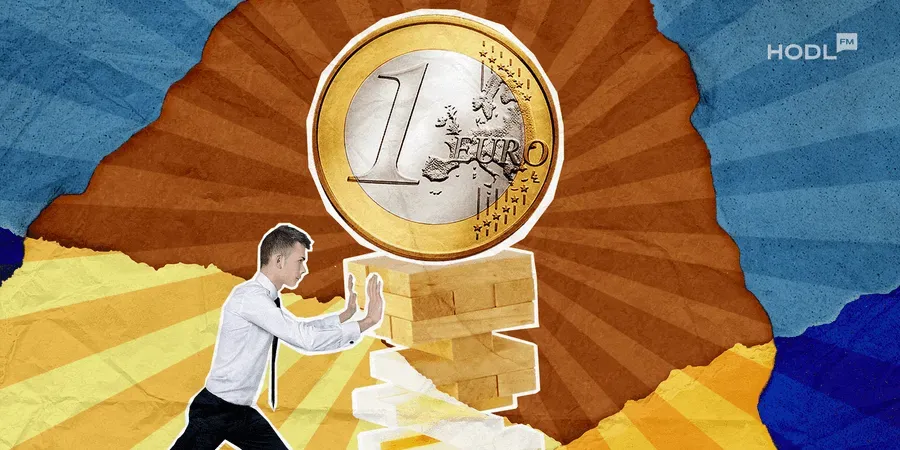


Qivalis, a consortium of 12 leading European banks, is in advanced talks with crypto exchanges and liquidity providers ahead of its planned euro-pegged stablecoin launch in the second half of 2026, Spanish business newspaper Cinco Días reported.
Participating banks include ING, UniCredit, BBVA, and several others, with discussions focused on distribution partnerships and market integration.
Shareholder banks themselves will also be able to distribute the stablecoin once it launches.
Strategic partnerships across borders
Jan Sell, CEO of Qivalis and former head of Coinbase Germany, said the consortium is exploring both European and international partnerships.
“It’s essential for our core use cases, such as facilitating real-time, cross-border business-to-business payments and global trade,”
The consortium seeks partners that comply with European Union regulations, including the Markets in Crypto-Assets Regulation (MiCA). Bit2Me, a MiCA-licensed exchange in Spain, is reportedly among the platforms in discussions with Qivalis banks.
“Europe is building its own on-chain payment infrastructure. Qivalis brings together leading banks to create a credible alternative to USD-dominated rails. Institutional-grade. Fully regulated. Financial autonomy in the digital age,”
Major banks acknowledge inefficiencies in the current financial infrastructure, seeing stablecoins as a potential solution, though their effectiveness hinges on scalable adoption.
Floris Lugt, Qivalis’ CFO, explained that the stablecoin’s reserves will be fully backed, with at least 40% in bank deposits and the remainder in high-quality, short-term sovereign bonds from across the eurozone to avoid concentration in any single country, Sell noted.
BBVA has decided to abandon its standalone project before to avoid excessive fragmentation.
“This decision reflects the evolution of the market, where initiatives from the financial industry itself offer greater scale, interoperability, and value for customers than independent solutions,” the bank said.
Euro-pegged stablecoins are part of Europe’s broader push, The European Central Bank is focused on developing a community-based system to reduce eurozone reliance on the United States, including the planned digital euro, a virtual cash built on European infrastructure.
At the same time, the private sector is working on a pan-European payment platform, akin to Bizum, that connects national banking systems, prevents fragmentation, and offers an alternative to U.S. giants like Visa and Mastercard.
Consortium background
The Qivalis project traces back to September 2025, when nine European banksincluding CaixaBank, Danske Bank, DekaBank, ING, KBC, Raiffeisen Bank International, SEB, Banca Sella, and UniCredit announced plans to form a MiCAR-compliant stablecoin issuer under the supervision of the Dutch Central Bank. BNP Paribas joined in December 2025, expanding the initiative.
The Amsterdam-based company’s leadership team is led by Jan-Oliver Sell, leveraging his experience at Coinbase Germany, Binance, and in asset management to guide regulatory approval and commercial launch.
 Oleksii Shumak
Disclaimer: All materials on this site are for informational purposes only. None of the material should be interpreted as investment advice. Please note that, despite the nature of much of the material created and hosted on this website, HODL FM operates as a media and informational platform, not a provider of financial advisory services. The opinions of authors and other contributors are their own and should not be taken as financial advice. If you require advice, HODL FM strongly recommends contacting a qualified industry professional.