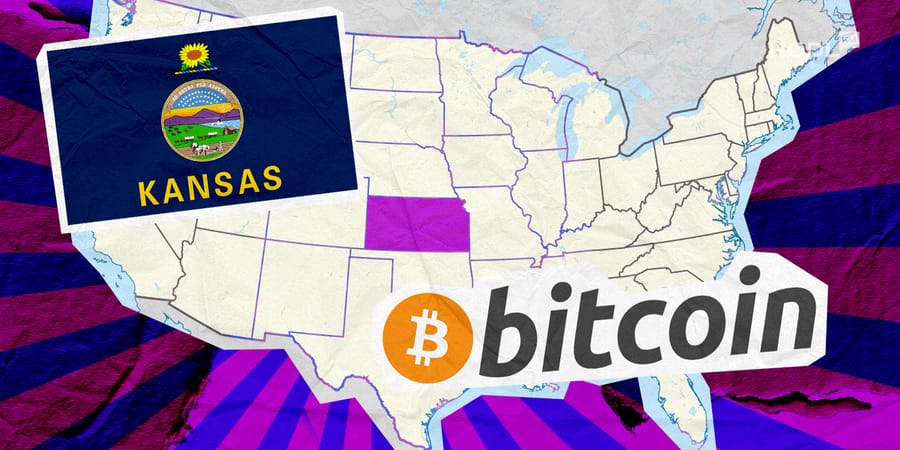



Kansas lawmakers are exploring a formal role for Bitcoin and other digital assets in state finance. On Thursday, State Senator Craig Bowser introduced Senate Bill 352, proposing the creation of a Bitcoin and Digital Assets Reserve Fund within the Kansas state treasury. The measure aims to allow the state to accumulate abandoned or unclaimed digital assets while establishing a framework for their custody, management, and potential use.
Under SB 352, the reserve would be funded through unclaimed digital assets, airdrops, and staking rewards, rather than direct purchases of Bitcoin or other cryptocurrencies by the state. The legislation would amend Kansas’ unclaimed property laws to define digital assets, specify how they should be transferred, and outline procedures for secure custody.
Oversight and allocation rules
The bill assigns oversight of the fund to the Kansas state treasurer. Digital assets transferred to the reserve would generally include cryptocurrencies held by licensed custodians, such as banks, exchanges, and trust companies. Self-custodied wallets would not fall under the bill’s scope. The legislation stipulates that assets become unclaimed after three years of inactivity following undeliverable written or electronic communication to the owner. The abandonment clock stops immediately if the owner demonstrates activity, such as logging in or accessing accounts with the custodian.
Bitcoin itself would remain in the reserve and could not be used for the general fund. Other digital assets may be partially allocated, with 10% of deposits directed to the state’s general fund, subject to legislative appropriations. The remaining assets would remain under reserve management, allowing the state to capture long-term appreciation or yield.
SB 352 also establishes that digital assets may be sold at market prices if listed on exchanges, while assets without active trading markets may be liquidated using commercially reasonable methods. Annual reviews by the KPERS board and reporting to the governor would provide oversight of the investment program.
Complementary pension fund ETF initiative
The reserve fund proposal follows an earlier initiative in Kansas aimed at integrating cryptocurrency into the public employees retirement system. Senate Bill 34, introduced in January 2025, would permit the Kansas Public Employees Retirement System (KPERS) to allocate up to 10% of its portfolio into Bitcoin exchange-traded funds (ETFs). The legislation outlines that KPERS would not be required to sell its holdings if values exceed the allocation limit unless doing so benefits plan beneficiaries. That bill remains under review in the Senate Committee on Financial Institutions and Insurance.
Broader state and national trends
Kansas joins a growing number of U.S. states considering Bitcoin as a strategic asset. Texas purchased $10 million in Bitcoin last November, becoming the first state to integrate crypto into its treasury strategy. North Dakota lawmakers are weighing BTC investments as a hedge against inflation. Oklahoma has proposed the Bitcoin Freedom Act, while Tennessee’s HB1695 and West Virginia’s Senate Bill 143 both suggest allocating up to 10% of state funds toward cryptocurrency reserves. Missouri has advanced House Bill 2080 to establish a Strategic Bitcoin Reserve Fund.
At the federal level, the Trump administration continues to consider a national Bitcoin reserve funded through seized assets. The initiative remains a priority. Internationally, El Salvador and Bhutan have incorporated Bitcoin directly into state financial strategies through mining initiatives, state holdings, and development programs.
Policy significance
The framework treats Bitcoin as a long-term reserve asset rather than a revenue source. The legislation combines modern financial oversight with a path for state-managed digital assets, offering a potential blueprint for other states evaluating the role of cryptocurrencies in public finance.
If enacted, Kansas would formally recognize digital assets as a component of state financial strategy, positioning itself at the forefront of U.S. public-sector cryptocurrency adoption.
 Oleksii Shumak
Disclaimer: All materials on this site are for informational purposes only. None of the material should be interpreted as investment advice. Please note that despite the nature of much of the material created and hosted on this website, HODL FM is not a financial reference resource, and the opinions of authors and other contributors are their own and should not be taken as financial advice. If you require advice. HODL FM strongly recommends contacting a qualified industry professional.