


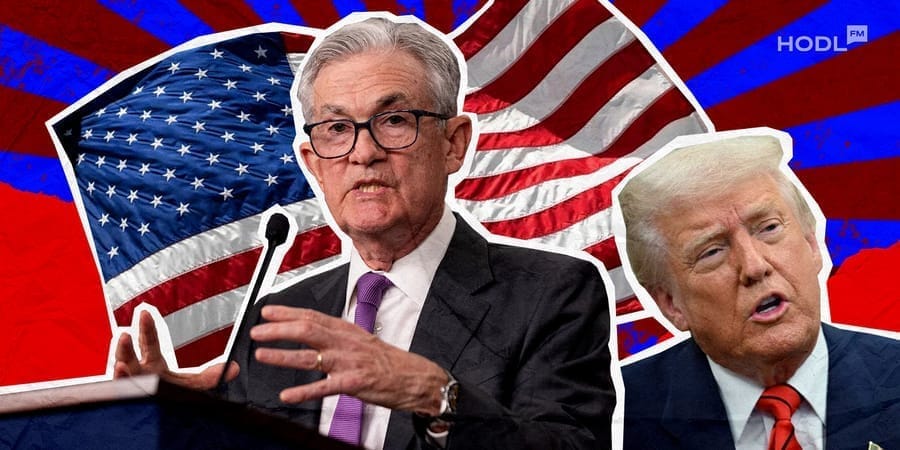



The Federal Reserve is expected to leave interest rates unchanged at its 18th March meeting today, maintaining the target range between 3.5% and 3.75%, according to the CME Group’s Fed Watch Tool. Chair Jerome Powell faces a difficult path as inflation remains elevated, economic growth slows, and geopolitical tensions drive oil prices higher.
Investors had been anticipating rate cuts earlier this year, but recent data have reshaped expectations. Core inflation, which excludes food and energy, reached 3.1% in January, the highest in nearly two years, while service prices remain high. At the same time, GDP grew only 0.7% in the fourth quarter of 2025, half the original estimate, and hiring and consumer spending have softened, which signals slowing economic momentum.
“The bar for cuts has risen,” said Naomi Fink, chief global strategist at Amova Asset Management. “The Fed is facing a conflicting set of signals.”
Global tensions put pressure on inflation
The rising conflict in the Middle East has pushed oil prices up to about $100 per barrel, according to Trading Economics. This has made inflation worse and made it harder to make decisions about monetary policy. Central banks traditionally look past temporary energy-driven shocks, but the current combination of persistent inflation and slowing growth limits the Fed’s flexibility.
Former Fed Vice Chair Roger Ferguson emphasized the importance of price stability.
“I’m more worried about higher inflation. You know, the Fed has a 2% target. They’ve been away from that target for multiple years now, actually,” he told CNBC. “At some point, it’s going to start to come into question whether or not the 2% target is really what the Fed’s aiming at, and so I am much more worried about that.”
Markets currently price in almost no chance of a rate cut this week, with futures suggesting the first cut may come in October at the earliest. The Fed’s latest economic projections, including the dot plot, will be closely watched for signs of future policy.
“Looking at their communications, they will likely emphasize that the conflict in the Middle East has added further uncertainty to the outlook for both inflation and employment,” David Kelly, chief global strategist at JPMorgan Asset Management, said.
Cryptocurrency markets show resilience amid rate uncertainty
Bitcoin trades around $72,000 ahead of the FOMC meeting, according to TradingView data. FOMC meetings often trigger short-term volatility for BTC, with negative returns following seven of eight meetings in 2025.
The most typical $BTC price action on the #FOMC day. https://t.co/NTVPIhl8es pic.twitter.com/5xwW5kxClR
— HodlFM (@Hodl_fm) March 18, 2026
The market’s recent optimism coincides with easing geopolitical fears, a drop in oil and gold prices, and improving stablecoin liquidity. The Crypto Fear & Greed Index has risen to 26, which indicates reduced fear among investors.
Regulatory developments also support market sentiment. The U.S. Securities and Exchange Commission (SEC) and Commodity Futures Trading Commission (CFTC) issued a crypto token taxonomy classifying major cryptocurrencies such as Bitcoin, Ethereum, XRP, Solana, Cardano, and Dogecoin as digital commodities. This clarification is expected to encourage institutional adoption and investment.
Fed dissent signals possible future cuts
While the March meeting is expected to hold rates steady, dissent among Fed governors may hint at eventual easing. Stephen Miran, Christopher Waller, and Michelle Bowman are reportedly poised to vote against holding, suggesting they favor rate cuts in the near term. Powell’s next-to-last meeting as chair could influence market interpretation of these signals.
The combination of persistent inflation, slowing growth, and global shocks points to a cautious approach.
“The Fed is essentially flying with limited visibility,” Erasmus Kersting, economist at Villanova University, said. “In that environment, the safest course is to stay the course.”
 Roman Zaika
Disclaimer: All materials on this site are for informational purposes only. None of the material should be interpreted as investment advice. Please note that, despite the nature of much of the material created and hosted on this website, HODL FM operates as a media and informational platform, not a provider of financial advisory services. The opinions of authors and other contributors are their own and should not be taken as financial advice. If you require advice, HODL FM strongly recommends contacting a qualified industry professional.